Case 1
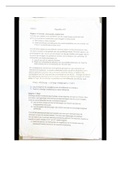
Learning goals:
1. What is the structure of fats?
2. What is the function of fats?
3. Digestion of fats?
4. What is the structure of sugar?
5. What is the function of sugar?
6. What are refined, natural and synthetic sugars?
7. Nomenclature of fats and sugars
8. Digestion of fats and sugars
, 1. Structure of fats
Lipids consist of fatty acids.
- Fatty acids: - Molecules with a long fat tail and an acid head
group.
- Fat tail: apolar carbon tail (hydrophobic)
- Head: hydrophilic (charged)
Unsaturated fats (oils)
- Lower melting temperature
- They increase the level of HDL
HDL secretes the LDL out of the artery and makes sure that there
is less LDL stored.
steroid fats
Trans fats
- First they were unsaturated, but got changed to saturated fats.
- This can occur via a natural or chemical process
- They have a higher melting point, but are still unsaturated.
Vitamin A, D, E, K can only be digested, absorbed and transported in
conjunction with fat.
2. Function of fats
- Help absorb Vitamin A, D, E and K
- Store energy
- Maintain the body temperature
- Protect vital organs
- Building the cell membrane
- Myelin
- Helps growth and development of tissue and organs
Learning goals:
1. What is the structure of fats?
2. What is the function of fats?
3. Digestion of fats?
4. What is the structure of sugar?
5. What is the function of sugar?
6. What are refined, natural and synthetic sugars?
7. Nomenclature of fats and sugars
8. Digestion of fats and sugars
, 1. Structure of fats
Lipids consist of fatty acids.
- Fatty acids: - Molecules with a long fat tail and an acid head
group.
- Fat tail: apolar carbon tail (hydrophobic)
- Head: hydrophilic (charged)
Unsaturated fats (oils)
- Lower melting temperature
- They increase the level of HDL
HDL secretes the LDL out of the artery and makes sure that there
is less LDL stored.
steroid fats
Trans fats
- First they were unsaturated, but got changed to saturated fats.
- This can occur via a natural or chemical process
- They have a higher melting point, but are still unsaturated.
Vitamin A, D, E, K can only be digested, absorbed and transported in
conjunction with fat.
2. Function of fats
- Help absorb Vitamin A, D, E and K
- Store energy
- Maintain the body temperature
- Protect vital organs
- Building the cell membrane
- Myelin
- Helps growth and development of tissue and organs