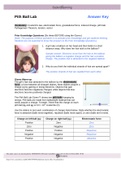
Schizophrenia Sam Harris
Your assessment of Mr. Tyler's case and the characteristics of thought disorders reflects a solid
understanding of psychiatric nursing principles. Below, I will clarify your responses and provide
additional insights regarding key concepts related to his behavior and symptoms.
1. Most Important Nursing Intervention
Response: Establish rapport and trust.
- Rationale: As you indicated, in cases where a client is suspicious and guarded, establishing rapport and
trust is crucial. Building a trusting relationship facilitates open communication, allowing for more
effective assessment and intervention. Nonverbal communication, active listening, and empathetic
responses are important strategies here. Trust is foundational in engaging clients who may have
difficulty processing information or are experiencing cognitive disturbances.
2. Accurate Assessment of Beliefs about FBI Agents
Response: Delusions.
- Rationale: Delusions are indeed fixed false beliefs that are resistant to reasoning or contrary evidence.
In Mr. Tyler's case, believing that healthcare providers are FBI agents and that his apartment is under
surveillance represents a delusional thought process. It's essential for nurses to approach these beliefs
with sensitivity, ensuring that they do not challenge the client directly, which can lead to increased
distrust or distress.
3. Characteristic of a Thought Disorder
Response: Blunted affect.
- Rationale: Blunted affect is a negative symptom associated with thought disorders, particularly
schizophrenia. It represents a diminished emotional expression and can indicate underlying cognitive
deficits. This characteristic is often seen alongside other symptoms such as hallucinations, delusions, and
disorganized behaviors. As you've mentioned, while blunted affect can appear in mood disorders, it is
particularly relevant in the context of thought disorders.
4. Symptoms of Schizophrenia
, You've effectively outlined the criteria that differentiate schizophrenia from other mental health
disorders, particularly mood disorders and substance-related causes. Here’s a brief summary of those
criteria:
- Characteristic Symptoms: At least two of the following must be present for a significant portion of time
during a 1-month period (or less if successfully treated):
- Delusions
- Hallucinations
- Disorganized speech
- Grossly disorganized or catatonic behavior
- Negative symptoms (e.g., blunted affect, apathy, anhedonia)
- Social/Occupational Dysfunction: Work, interpersonal, and self-care functioning must be markedly
below the level achieved prior to the onset of symptoms.
- Duration: Continuous signs of disturbance for at least 6 months, which must include at least 1 month of
active-phase symptoms.
- Exclusion of Schizoaffective and Mood Disorders: The symptoms cannot be attributed to
schizoaffective disorder or a mood disorder, nor can they be due to substance abuse or a general
medical condition.
5. Observations from the Mental Status Examination (MSE)
In your observation of Sam:
- Grooming and Hygiene: Fair grooming might indicate some level of self-care but could also suggest
apathy or lack of interest, commonly seen in thought disorders.
- Pacing and Inability to Sit Still: This can signify agitation or restlessness, which may be due to anxiety or
as a negative symptom.
- Rapid Speech: Such behavior can indicate disorganized thoughts often associated with thought
disorders.
- Mood Described as "Blasé": This could reflect a lack of emotional engagement or a flat affect typical of
thought disorders.
Your assessment of Mr. Tyler's case and the characteristics of thought disorders reflects a solid
understanding of psychiatric nursing principles. Below, I will clarify your responses and provide
additional insights regarding key concepts related to his behavior and symptoms.
1. Most Important Nursing Intervention
Response: Establish rapport and trust.
- Rationale: As you indicated, in cases where a client is suspicious and guarded, establishing rapport and
trust is crucial. Building a trusting relationship facilitates open communication, allowing for more
effective assessment and intervention. Nonverbal communication, active listening, and empathetic
responses are important strategies here. Trust is foundational in engaging clients who may have
difficulty processing information or are experiencing cognitive disturbances.
2. Accurate Assessment of Beliefs about FBI Agents
Response: Delusions.
- Rationale: Delusions are indeed fixed false beliefs that are resistant to reasoning or contrary evidence.
In Mr. Tyler's case, believing that healthcare providers are FBI agents and that his apartment is under
surveillance represents a delusional thought process. It's essential for nurses to approach these beliefs
with sensitivity, ensuring that they do not challenge the client directly, which can lead to increased
distrust or distress.
3. Characteristic of a Thought Disorder
Response: Blunted affect.
- Rationale: Blunted affect is a negative symptom associated with thought disorders, particularly
schizophrenia. It represents a diminished emotional expression and can indicate underlying cognitive
deficits. This characteristic is often seen alongside other symptoms such as hallucinations, delusions, and
disorganized behaviors. As you've mentioned, while blunted affect can appear in mood disorders, it is
particularly relevant in the context of thought disorders.
4. Symptoms of Schizophrenia
, You've effectively outlined the criteria that differentiate schizophrenia from other mental health
disorders, particularly mood disorders and substance-related causes. Here’s a brief summary of those
criteria:
- Characteristic Symptoms: At least two of the following must be present for a significant portion of time
during a 1-month period (or less if successfully treated):
- Delusions
- Hallucinations
- Disorganized speech
- Grossly disorganized or catatonic behavior
- Negative symptoms (e.g., blunted affect, apathy, anhedonia)
- Social/Occupational Dysfunction: Work, interpersonal, and self-care functioning must be markedly
below the level achieved prior to the onset of symptoms.
- Duration: Continuous signs of disturbance for at least 6 months, which must include at least 1 month of
active-phase symptoms.
- Exclusion of Schizoaffective and Mood Disorders: The symptoms cannot be attributed to
schizoaffective disorder or a mood disorder, nor can they be due to substance abuse or a general
medical condition.
5. Observations from the Mental Status Examination (MSE)
In your observation of Sam:
- Grooming and Hygiene: Fair grooming might indicate some level of self-care but could also suggest
apathy or lack of interest, commonly seen in thought disorders.
- Pacing and Inability to Sit Still: This can signify agitation or restlessness, which may be due to anxiety or
as a negative symptom.
- Rapid Speech: Such behavior can indicate disorganized thoughts often associated with thought
disorders.
- Mood Described as "Blasé": This could reflect a lack of emotional engagement or a flat affect typical of
thought disorders.