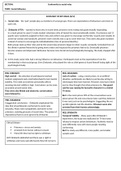
NASM Nutrition Certification (EXAM) 2-Compartment Model - ANSWER -Any method of body -composition assessment that divides the body into two major parts - typically, these parts are fat mass and fat -free mass. Most common methods of body -composition assessment use a 2 -compartment model. 3 Principles of Healthy Eating Patterns - ANSWER -1. An eating pattern represents the totality of all foods and beverages consumed 2. Nutritional needs should be met primarily from nutrient -dense foods 3. Healthy eating patterns are adaptable 3-Compartment Model - ANSWER -A method of body composition assessment that divides the body into three major parts - typically, these parts are fat mass, water, and everything else (i.e., the residual). 4-Compartment Model - ANSWER -A method of body composition assessment that divides the body into four major parts - typically, these parts are fat mass, water, bone, and everything else (i.e., the residual). These models are viewed as a gold -standard method of body -composition assessme nt. Acceptable Macronutrient Distribution Range (AMDR) - ANSWER -A range of intakes for carbohydrates, protein, and fats set by the Food and Nutrition Board of the National Academy of Medicine recommended to meet the nutritional needs of most individuals and reduce risk of chronic disease. Acceptable Macronutrient Distribution Range (AMDR) - ANSWER -A range of intakes for carbohydrates, protein, and fats set by the Food and Nutrition Board of the National Academy of Medicine recommended to meet the nutritional needs of most individuals and reduce risk of chronic disease. Carbs: 45 -65% Fat: 25 -35% Protein: 10 -35% Acetaldehyde - ANSWER -The toxic product of ethanol metabolism, which has to be further metabolized immediately to avoid its toxic effects. Acetaldehyde Dehydrogenase - ANSWER -The enzyme used to metabolize toxic acetaldehyde . Acetyl -CoA - ANSWER -A molecule that participates in biochemical reactions in protein, carbohydrate, and lipid metabolism, producing energy. Acid -Base Balance - ANSWER -The process of achieving, or the state of, equilibrium between acidic and alkaline molecules. Acrylamide - ANSWER -An extremely hazardous chemical that can be produced by the cooking of starchy foods (e.g., French fries). Active Listening - ANSWER -Act of mindfully hearing and attempting to comprehend the meaning of words spoken in a conversation. Ad Libitum - ANSWER -Translates to "as desired" and refers to eating or drinking as you are normally driven to (i.e., not purposely overeating or undereating). Added Sugar - ANSWER -The amount of sugar that has been added to a food product (does not include sugar that is a natural part of the food). Added Sugar Recommendations - ANSWER -Some health authorities recommend that no more than 5% of energy intake comes from added sugars. For a standard 2,000 -kcal diet, this amounts to about 25 grams of added sugar or roughly ½ of a can of soda pop. That is not a lot and speaks volumes on how qu ickly these hidden sugars can add up. Adenosine Triphosphate (ATP) - ANSWER -The energy currency of life. chemical compound that provides energy to drive muscle contraction, transmission of nerve impulses, and the vast majority of chemical reactions that facilitate human life. Adequate Intake (AI) - ANSWER -The recommended average daily intake level based on observed or experimentally determined estimates of nutrient intake by groups of apparently healthy people that are assumed to be adequate - the AI is used when an RDA cannot be determined. Adipocytes - ANSWER -Cells specialized in the storage of fat that makes up adipose tissue. Adipose Tissue - ANSWER -The loose connective tissue composed of fat cells for stored energy. Adiposity - ANSWER -A condition of being severely overweight or obese. Aerobic Energy System - ANSWER -virtually unlimited capacity for making ATP, uses carbs, fat, protein for fuel. Slow to produce ATP. Lasts anywhere from 2 minutes to a few hours . Affirmation - ANSWER -A positive statement about a client's character that acknowledges their efforts. Air Displacement Plethysmography (ADP) - ANSWER -A body composition assessment method that involves the estimation of the 3 -dimensional volume of the body through measurement of an individual's displacement of air while they sit in a sealed chamber. Albumin - ANSWER -A protein found in the blood stream that helps draw water into the blood vessel from surrounding tissue. Alcohol Dehydrogenase (ADH) - ANSWER -The primary enzyme involved in metabolism of ethanol. Alpha -Linolenic Acid (ALA) - ANSWER -An essential omega -3 fatty acid that is converted into EPA and DHA within the body, albeit in limited amounts. Ambivalence - ANSWER -The state of having mixed feelings about change - a client with ambivalence wants to change and at the same time does not want to change. Amino Acids - ANSWER -The organic building blocks of proteins containing both a carboxyl and an amino group. Aminopeptidases - ANSWER -Enzymes that cleave individual amino acids from a peptide chain so they may be absorbed. Amotivation - ANSWER -A state in which a person is not motivated to behave. Amylopectin - ANSWER -A branched -chain and digestible form of starch containing glucose molecules. Amylose - ANSWER -A straight -chain and digestible form of starch containing glucose molecules. Anabolic Resistance - ANSWER -A blunted muscle synthesis response to resistance training, amino acids, and protein - observed more in older adults than younger populations. Anabolic Response - ANSWER -Where there is net -positive protein balance (i.e., there is more protein synthesis than there is protein breakdown) - there is a net building of protein. Anaerobic Glycolytic System - ANSWER -Glucose is used for fuel and is either blood glucose or muscle glycogen, broken down in to pyruvic acid, when there is insufficient oxygen it then is transformed into lactic acid. Energy up to 2 minutes. Anaerobic System - ANSWER -This describes energy production systems/pathways in the body in which oxygen is not present. Activity that leads to energy production via the anaerobic system will cause an accumulation in hydrogen ions and lactic acid. Anecdote - ANSWER -an account of a person's experience or event Anorexia Nervosa - ANSWER -Eating disorder characterized by extremely low body BMI. <15 extremely dangerous Anti-Fat Bias - ANSWER -Placing a negative judgment on overweight and obese individuals. Antioxidant System - ANSWER -A series of chemical reactions in the body that help balance out molecular damage due to increase levels of oxidative stress, also responsible for maintaining enough oxidants for the body to function properly. Artificial Sweetener - ANSWER -A synthetic nonnutritive sweetener.
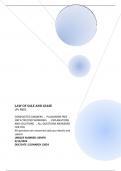
Tentamen (uitwerkingen)
NASM Nutrition Certification (EXAM) UPDATED 2024
Beoordeling
Verkocht
-
Pagina's
48
Cijfer
A+
Geüpload op
21-07-2024
Geschreven in
2023/2024
2-Compartment Model - ANSWER-Any method of body-composition assessment that divides the body into two major parts - typically, these parts are fat mass and fat-free mass. Most common methods of body-composition assessment use a 2-compartment model. 3 Principles of Healthy Eating Patterns - ANSWER-1. An eating pattern represents the totality of all foods and beverages consumed 2. Nutritional needs should be met primarily from nutrient-dense foods 3. Healthy eating patterns are adaptable 3-Compartment Model - ANSWER-A method of body composition assessment that divides the body into three major parts - typically, these parts are fat mass, water, and everything else (i.e., the residual). 4-Compartment Model - ANSWER-A method of body composition assessment that divides the body into four major parts - typically, these parts are fat mass, water, bone, and everything else (i.e., the residual). These models are viewed as a gold-standard method of body-composition assessment. Acceptable Macronutrient Distribution Range (AMDR) - ANSWER-A range of intakes for carbohydrates, protein, and fats set by the Food and Nutrition Board of the National Academy of Medicine recommended to meet the nutritional needs of most individuals and reduce risk of chronic disease. Acceptable Macronutrient Distribution Range (AMDR) - ANSWER-A range of intakes for carbohydrates, protein, and fats set by the Food and Nutrition Board of the National Academy of Medicine recommended to meet the nutritional needs of most individuals and reduce risk of chronic disease. Carbs: 45-65% Fat: 25-35% Protein: 10-35% Acetaldehyde - ANSWER-The toxic product of ethanol metabolism, which has to be further metabolized immediately to avoid its toxic effects.
Meer zien
Lees minder
Instelling
NASM Nutrition
Vak
NASM Nutrition
Oeps! We kunnen je document nu niet laden. Probeer het nog eens of neem contact op met support.

Geschreven voor
- Instelling
- NASM Nutrition
- Vak
- NASM Nutrition
Documentinformatie
- Geüpload op
- 21 juli 2024
- Aantal pagina's
- 48
- Geschreven in
- 2023/2024
- Type
- Tentamen (uitwerkingen)
- Bevat
- Vragen en antwoorden
Onderwerpen
-
nasm nutrition certification exam
Voorbeeld van de inhoud
€31,14
Krijg toegang tot het volledige document:
100% tevredenheidsgarantie
Direct beschikbaar na je betaling
Lees online óf als PDF
Geen vaste maandelijkse kosten
Maak kennis met de verkoper

aliciabernado2001