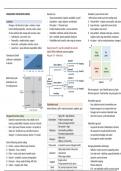
HORMONAL COMMUNICATION Glucose regulation
Low blood glucose conc
Endocrine system 1) Respiration – glucose for energy, ↑ activity
1) Pituitary – ADH, growth (close to hypothal = coord) 2) Glycogenesis – glycogen production, stored liver
2) Thyroid – thyroxine (metabolism)
3) Adrenal gland – adrenaline Glucagon ↑ blood glucose
4) Thymus – thymosin – WBC - A cells detect conc + ↓ secretion once normal
5) Pancreas – insulin, glucagon - Only liver + fat cells have glucagon receptors
6) Ovary – oestrogen, progesterone > Glycogenolysis
7) Testis – testosterone > ↓ amount of glucose absorbed by liver
> ↑ gluconeogenesis
Hormones = chemical messengers
- Due to conc change/hormone/nerve impulse High blood glucose conc
- Diffuse into blood + specific receptor target cells 1) Diet – carbs, sweet foods
2) Adrenaline – respiration
Protein hormone = hydrophilic 3) Glycogenolysis – glycogen to glucose
- Bind to receptors on cell surface membrane 4) Gluconeogenesis – gluc from non carbos (glycerol, aa)
- Triggers cascade by secondary messengers
Insulin ↓ blood glucose
Steroid hormones = lipid soluble - B cells detect rise in blood sugar
- Through membrane to cyto/nucleus (TF) - Most body cells have insulin receptors + protein
- Hormone receptor complex attaches to DNA channels change shape ↑ glucose into cell
- Polypeptide synthesis > ↑ rate of glucose absorption be cells
> ↑ respiratory rate of cells
Adrenal glands (kidney) > ↑ glycogenesis rate (tyrosine kinase cascade)
Adrenal cortex (steroid) > ↑ glucose to fat conversion
Hormones vital to life, triggered by pituitary gland > Inhibits release of glucagon from A cells
1) Aldosterone – blood p, Na+ K+ concentrations
2) Cortisol – liver metabolism of carbs, proteins, fat Insulin secretion
3) Androgens – precursor sex hormones, cortisol 1) At resting K+ channels open + diffuse out -70mV
2) ↑ glucose conc = enters cell, metabolised in mito
Adrenal medulla (peptide) 3) ATP binds to potassium channels = close
Non-essential hormones, sympathetic, polar molec 4) K+ not diffuse out, -30mV + depolarisation
1) Adrenaline – ↑ heart rate, ↑ blood glucose by 5) Depolar = voltage gated Ca2+ channels open
glycogen to glucose in liver 6) Ca2+ enter = secretory vesicles exocytosis insulin
2) Noradrenaline - ↑ heart rate, widen pupils + air
passage, narrow blood vessels ↑ pressure
Pancreas
Exocrine = produce enzymes + release in duct
- Acini / acinus (darker stained)
- Pancreatic duct to small intestine
- Digestive enzymes: amylase (starch - sugar), protease
(proteins - aa), lipase (lipids - fatty acids + glycerol)
Endocrine = hormones + directly into blood
- Islets of Langerhans (lightly stained)
- Alpha = glucagon (pink), beta = insulin (blue)
Effect of insulin on
liver cells:
Low blood glucose conc
Endocrine system 1) Respiration – glucose for energy, ↑ activity
1) Pituitary – ADH, growth (close to hypothal = coord) 2) Glycogenesis – glycogen production, stored liver
2) Thyroid – thyroxine (metabolism)
3) Adrenal gland – adrenaline Glucagon ↑ blood glucose
4) Thymus – thymosin – WBC - A cells detect conc + ↓ secretion once normal
5) Pancreas – insulin, glucagon - Only liver + fat cells have glucagon receptors
6) Ovary – oestrogen, progesterone > Glycogenolysis
7) Testis – testosterone > ↓ amount of glucose absorbed by liver
> ↑ gluconeogenesis
Hormones = chemical messengers
- Due to conc change/hormone/nerve impulse High blood glucose conc
- Diffuse into blood + specific receptor target cells 1) Diet – carbs, sweet foods
2) Adrenaline – respiration
Protein hormone = hydrophilic 3) Glycogenolysis – glycogen to glucose
- Bind to receptors on cell surface membrane 4) Gluconeogenesis – gluc from non carbos (glycerol, aa)
- Triggers cascade by secondary messengers
Insulin ↓ blood glucose
Steroid hormones = lipid soluble - B cells detect rise in blood sugar
- Through membrane to cyto/nucleus (TF) - Most body cells have insulin receptors + protein
- Hormone receptor complex attaches to DNA channels change shape ↑ glucose into cell
- Polypeptide synthesis > ↑ rate of glucose absorption be cells
> ↑ respiratory rate of cells
Adrenal glands (kidney) > ↑ glycogenesis rate (tyrosine kinase cascade)
Adrenal cortex (steroid) > ↑ glucose to fat conversion
Hormones vital to life, triggered by pituitary gland > Inhibits release of glucagon from A cells
1) Aldosterone – blood p, Na+ K+ concentrations
2) Cortisol – liver metabolism of carbs, proteins, fat Insulin secretion
3) Androgens – precursor sex hormones, cortisol 1) At resting K+ channels open + diffuse out -70mV
2) ↑ glucose conc = enters cell, metabolised in mito
Adrenal medulla (peptide) 3) ATP binds to potassium channels = close
Non-essential hormones, sympathetic, polar molec 4) K+ not diffuse out, -30mV + depolarisation
1) Adrenaline – ↑ heart rate, ↑ blood glucose by 5) Depolar = voltage gated Ca2+ channels open
glycogen to glucose in liver 6) Ca2+ enter = secretory vesicles exocytosis insulin
2) Noradrenaline - ↑ heart rate, widen pupils + air
passage, narrow blood vessels ↑ pressure
Pancreas
Exocrine = produce enzymes + release in duct
- Acini / acinus (darker stained)
- Pancreatic duct to small intestine
- Digestive enzymes: amylase (starch - sugar), protease
(proteins - aa), lipase (lipids - fatty acids + glycerol)
Endocrine = hormones + directly into blood
- Islets of Langerhans (lightly stained)
- Alpha = glucagon (pink), beta = insulin (blue)
Effect of insulin on
liver cells: