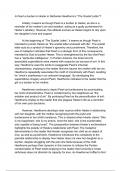
Is Pearl a burden to Hester in Nathaniel Hawthorne’s “The Scarlet Letter”?
Initially, it seems as though Pearl is a burden to Hester, as she is a
reminder of her mother’s sin and isolation, acting as a godly punishment for
Hester’s adultery. However, this attitude evolves as Hester begins to rely upon
her daughter’s love and support.
At the beginning of “The Scarlet Letter”, it seems as though Pearl is
intended to punish Hester as “the scarlet letter endowed with life”. The scarlet
letter acts as a symbol of Hester’s ignominy and punishment. Therefore, the
use of metaphor indicates that Pearl is a stranger form of this consequence,
intended by God to burden Hester. This is strengthened by the fact that Pearl
has a “sprite-like intelligence”. In Puritan America, the forest and its
associated superstitions were viewed with suspicion as sources of evil. In this
way, Hawthorne uses the simile to exaggerate Pearl’s inhuman
characteristics, implying to the reader that she haunts her mother with her sin.
Hawthorne repeatedly associates this motif of monstrosity with Pearl, recalling
he “witch’s anathemas in an unknown language”. By developing this
superstitious imagery around Pearl, Hawthorne indicates to the reader that the
girl is a burden to her mother.
Hawthorne continues to depict Pearl as burdensome by accentuating
her sinful characteristics. Pearl is condemned by her neighbours as “the
emblem and product of sin”. By portraying Pearl as the personification of evil,
Hawthorne implies to the reader that she plagues Hester’s life as a reminder
of her own poor decisions.
However, Hawthorne develops clear nuance within Hester’s relationship
with her daughter, with the mother recognising both the joyful and
burdensome in her child’s existence. This is clearest when Hester claims “She
is my happiness!- she is my torture, none the less!- she is the scarlet letter,
only capable of being loved”. The juxtaposition between Hester’s exclamations
highlights the polarity of Heste’s relationship with Pearl. The metaphor
demonstrates to the reader that Hester recognises her child as an object of
love, as well as punishment. Hawthorne introduces this complexity to the
parental relationship to display how Hester does not view her daughter as a
burden, despite struggling with the pain she feels because of the child.
Hawthorne portrays their dynamic in this manner to criticise the Puritan
condemnation of Pearl whilst implying to the reader that humanity’s innate
sinfulness does not diminish its capacity for love. As Hawthorne truffled to find
, a religious theory that he agreed with (rejecting new-age Transcendentalism
as well as old-fashioned Puritanism), he explores this complicated relationship
between God and man through the complex parent child relationship seen
between Hester and Pearl.
It becomes clear that Hester sees her daughter as a gift, rather than a
burden. She believes her daughter “worthy to have been brought forth from
Eden”. The religious metaphor counters the interpretation that Pearl exists
purely as a burden to her mother, connoting a loving, affectionate tone to the
reader. For Hester, Pearl is “of great value, her mother’s only treasure”. The
metaphor creates an emphatic tone, asserting that Hester finds more joy in
Pearl’s presence than pain. This contradicts the image of Pearl as a burden. In
Pearl’s name, Hawthorne alludes to “the pearl of great price” in the gospel of
Matthew, demonstrating to the reader that Hester finds a religious ecstasy in
motherhood, heightening the pleasure brought to her by Pearl. Hawthorne
contradicts the view that Pearl is a burden in this way to condemn the Puritan
notion of moral absolutism by demonstrating how goodness (in the form of
Pearl) can come from sin.
In fact, not only is Pearl lovable, but Hawthorne portrays the child as her
mother’s saviour. Therefore, Pearl is a help, rather than a burden, in Hester’s
life. This is evident when Pearl had “saved her mother from Satan’s snare”.
The religious metaphor portrays Pearl as a sign of salvation, rather than a
symbol of an unshakable burden of damnation. This interpretation is
supported by the use of sibilance, which conveys an ominous tone to the
reader. This suggests that Pearl has saved Hester from an infinitely worse
fate.
Moreover, Hawthorne demonstrates that Pearl changes across the
course of the novel. Therefore, whilst Pearl begins life as a burdensome
figure, she evolves to become a comfort. Hawthorne portrays the child in this
way to demonstrate his disapproval of eternal punishment, by suggesting that
morality can shift and improve as time progresses. This is clearest in the
novel’s conclusion, where Pearl is “humanised” by her father’s recognition. As
a result, “her errand as a messenger of anguish was all complete”. The
metaphor portrays Pearl as an object of divine punishment, confirming her
position as a burden at the start of the novel. However, upon receiving her
parents’ love, she adapts to become a vehicle of love. This suggests that her
burdensome behaviour was a result of her environment and circumstances,
rather than from an inherent flaw. This builds pathos around the child, so that
Initially, it seems as though Pearl is a burden to Hester, as she is a
reminder of her mother’s sin and isolation, acting as a godly punishment for
Hester’s adultery. However, this attitude evolves as Hester begins to rely upon
her daughter’s love and support.
At the beginning of “The Scarlet Letter”, it seems as though Pearl is
intended to punish Hester as “the scarlet letter endowed with life”. The scarlet
letter acts as a symbol of Hester’s ignominy and punishment. Therefore, the
use of metaphor indicates that Pearl is a stranger form of this consequence,
intended by God to burden Hester. This is strengthened by the fact that Pearl
has a “sprite-like intelligence”. In Puritan America, the forest and its
associated superstitions were viewed with suspicion as sources of evil. In this
way, Hawthorne uses the simile to exaggerate Pearl’s inhuman
characteristics, implying to the reader that she haunts her mother with her sin.
Hawthorne repeatedly associates this motif of monstrosity with Pearl, recalling
he “witch’s anathemas in an unknown language”. By developing this
superstitious imagery around Pearl, Hawthorne indicates to the reader that the
girl is a burden to her mother.
Hawthorne continues to depict Pearl as burdensome by accentuating
her sinful characteristics. Pearl is condemned by her neighbours as “the
emblem and product of sin”. By portraying Pearl as the personification of evil,
Hawthorne implies to the reader that she plagues Hester’s life as a reminder
of her own poor decisions.
However, Hawthorne develops clear nuance within Hester’s relationship
with her daughter, with the mother recognising both the joyful and
burdensome in her child’s existence. This is clearest when Hester claims “She
is my happiness!- she is my torture, none the less!- she is the scarlet letter,
only capable of being loved”. The juxtaposition between Hester’s exclamations
highlights the polarity of Heste’s relationship with Pearl. The metaphor
demonstrates to the reader that Hester recognises her child as an object of
love, as well as punishment. Hawthorne introduces this complexity to the
parental relationship to display how Hester does not view her daughter as a
burden, despite struggling with the pain she feels because of the child.
Hawthorne portrays their dynamic in this manner to criticise the Puritan
condemnation of Pearl whilst implying to the reader that humanity’s innate
sinfulness does not diminish its capacity for love. As Hawthorne truffled to find
, a religious theory that he agreed with (rejecting new-age Transcendentalism
as well as old-fashioned Puritanism), he explores this complicated relationship
between God and man through the complex parent child relationship seen
between Hester and Pearl.
It becomes clear that Hester sees her daughter as a gift, rather than a
burden. She believes her daughter “worthy to have been brought forth from
Eden”. The religious metaphor counters the interpretation that Pearl exists
purely as a burden to her mother, connoting a loving, affectionate tone to the
reader. For Hester, Pearl is “of great value, her mother’s only treasure”. The
metaphor creates an emphatic tone, asserting that Hester finds more joy in
Pearl’s presence than pain. This contradicts the image of Pearl as a burden. In
Pearl’s name, Hawthorne alludes to “the pearl of great price” in the gospel of
Matthew, demonstrating to the reader that Hester finds a religious ecstasy in
motherhood, heightening the pleasure brought to her by Pearl. Hawthorne
contradicts the view that Pearl is a burden in this way to condemn the Puritan
notion of moral absolutism by demonstrating how goodness (in the form of
Pearl) can come from sin.
In fact, not only is Pearl lovable, but Hawthorne portrays the child as her
mother’s saviour. Therefore, Pearl is a help, rather than a burden, in Hester’s
life. This is evident when Pearl had “saved her mother from Satan’s snare”.
The religious metaphor portrays Pearl as a sign of salvation, rather than a
symbol of an unshakable burden of damnation. This interpretation is
supported by the use of sibilance, which conveys an ominous tone to the
reader. This suggests that Pearl has saved Hester from an infinitely worse
fate.
Moreover, Hawthorne demonstrates that Pearl changes across the
course of the novel. Therefore, whilst Pearl begins life as a burdensome
figure, she evolves to become a comfort. Hawthorne portrays the child in this
way to demonstrate his disapproval of eternal punishment, by suggesting that
morality can shift and improve as time progresses. This is clearest in the
novel’s conclusion, where Pearl is “humanised” by her father’s recognition. As
a result, “her errand as a messenger of anguish was all complete”. The
metaphor portrays Pearl as an object of divine punishment, confirming her
position as a burden at the start of the novel. However, upon receiving her
parents’ love, she adapts to become a vehicle of love. This suggests that her
burdensome behaviour was a result of her environment and circumstances,
rather than from an inherent flaw. This builds pathos around the child, so that