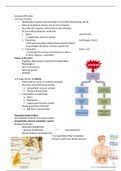
Summary #8 stress
Concept of stress
o Physiological reaction by perception of aversive/threatening stimuli
o State of emotional tension due to circumstances
o Non-specific response of the body to any demand
generalized adaption syndrome
1. Alarm {short term}
= sympathetic nervous system
2. Resistance {prolonged stress}
= HPA axis (secretion cortisol from adrenal cortex)
prolonged alertness, immune system etc.
3. Exhaustion {burn out}
= no energy for nervous and immune systems
tired, inactive, vulnerable
Types of stressors
- Cognitive (discrepancy outcome & expectation)
- Physiological
- New environment
- External stimuli
- isolation
Is it really stress? 4 criteria:
o Action fails to correct a stressful situation
o Excessive neurohormonal activity
Sympathetic nervous system
Glucocorticosteroids
o Vulnerability to pathology
Ulcers
Depression
Suppressed immune system
o Showing pointless behavior
Self-harm, stereotypies
Neurohormonal system
Sympathetic Autonomic nervous system
Sympathetic adrenal medullary system
Related hormones
- Adrenalin/epinephrine
= glucose metabolism catecholamines
- Noradrenaline/norepinephrine
= increase blood flow to skeletal
muscles, heart rate, blood pressure
, Hypothalamic pituitary adrenal axis (HPA-axis)
Excitatory imput (nervous system)
Paraventricular nucleus (hypothalamus)
CRH (corticotropin releasing hormone)
Anterior Pituitary negative feedback
ACTH (adrenocorticotropic hormone)
Adrenal cortex
Corticosteroids(=cortisol)
Acute stress situation requires fight/flight (quick response) sympathetic NS
Adverse condition & long-term stress immobilization/slow response HPA axis
EXCEPT is one has an efficient coping strategy.
Animals:
HPA axis and Sympathetic adrenal medullary system active in both (chronic/acute) sorts of
stress
Humans:
Acute stress = SAM system
Chronic stress = HPA axis
Acute stress
- Catabolic effect (mobilize energy)
fats
proteins
- Behavioral responsiveness/alerts body
- Better memory
Brought back to homeostasis by negative feedback reinstall parasympathetic NS
Essential & beneficial/ EUSTRESS
Chronic stress (no negative feedback = RESISTANCE PHASE)
- Decreased immune system
- Clogged arteries = atherosclerosis due to release of fatty acids into bloodstream
(energy metabolism) blood pressure/heart disease
- Decreased sex drive (LH)/menstrual cycle/ infertility/incompetence
- Damaged/smaller hippocampus (more sensitive to toxins) memory loss
- Aging
- Loss of gray matter
- Larger amygdala
- Ulcers
claim: bacteria Helicobacter pylori = responsible for gastric ulcers,
Stress as a cause is still accepted today
DISTRESS (everything not involved in stress response = inhibited)
Concept of stress
o Physiological reaction by perception of aversive/threatening stimuli
o State of emotional tension due to circumstances
o Non-specific response of the body to any demand
generalized adaption syndrome
1. Alarm {short term}
= sympathetic nervous system
2. Resistance {prolonged stress}
= HPA axis (secretion cortisol from adrenal cortex)
prolonged alertness, immune system etc.
3. Exhaustion {burn out}
= no energy for nervous and immune systems
tired, inactive, vulnerable
Types of stressors
- Cognitive (discrepancy outcome & expectation)
- Physiological
- New environment
- External stimuli
- isolation
Is it really stress? 4 criteria:
o Action fails to correct a stressful situation
o Excessive neurohormonal activity
Sympathetic nervous system
Glucocorticosteroids
o Vulnerability to pathology
Ulcers
Depression
Suppressed immune system
o Showing pointless behavior
Self-harm, stereotypies
Neurohormonal system
Sympathetic Autonomic nervous system
Sympathetic adrenal medullary system
Related hormones
- Adrenalin/epinephrine
= glucose metabolism catecholamines
- Noradrenaline/norepinephrine
= increase blood flow to skeletal
muscles, heart rate, blood pressure
, Hypothalamic pituitary adrenal axis (HPA-axis)
Excitatory imput (nervous system)
Paraventricular nucleus (hypothalamus)
CRH (corticotropin releasing hormone)
Anterior Pituitary negative feedback
ACTH (adrenocorticotropic hormone)
Adrenal cortex
Corticosteroids(=cortisol)
Acute stress situation requires fight/flight (quick response) sympathetic NS
Adverse condition & long-term stress immobilization/slow response HPA axis
EXCEPT is one has an efficient coping strategy.
Animals:
HPA axis and Sympathetic adrenal medullary system active in both (chronic/acute) sorts of
stress
Humans:
Acute stress = SAM system
Chronic stress = HPA axis
Acute stress
- Catabolic effect (mobilize energy)
fats
proteins
- Behavioral responsiveness/alerts body
- Better memory
Brought back to homeostasis by negative feedback reinstall parasympathetic NS
Essential & beneficial/ EUSTRESS
Chronic stress (no negative feedback = RESISTANCE PHASE)
- Decreased immune system
- Clogged arteries = atherosclerosis due to release of fatty acids into bloodstream
(energy metabolism) blood pressure/heart disease
- Decreased sex drive (LH)/menstrual cycle/ infertility/incompetence
- Damaged/smaller hippocampus (more sensitive to toxins) memory loss
- Aging
- Loss of gray matter
- Larger amygdala
- Ulcers
claim: bacteria Helicobacter pylori = responsible for gastric ulcers,
Stress as a cause is still accepted today
DISTRESS (everything not involved in stress response = inhibited)