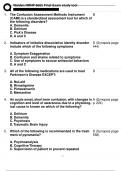
NRNP 6665 FINAL EXAM (VERSION-2, 100 Q & A WITH
RATIONALES, LATEST-2024) / NRNP 6665N FINAL EXAM /
WALDEN UNIVERSITY | 100% VERIFIED Q&A
Question 1:
A patient with depression is started on sertraline. Which of the
following symptoms should prompt the clinician to consider
serotonin syndrome? a. Bradycardia and hypothermia
b. Hyperreflexia and diaphoresis
c. Constipation and dry mouth
d. Hypotension and weight gain
Rationale: Serotonin syndrome is characterized by symptoms like
hyperreflexia, diaphoresis, and agitation due to excessive serotonergic
activity in the CNS.
Question 2:
Which of the following is most important to assess in a patient
presenting with generalized anxiety disorder? a. Alcohol
consumption
b. Family history of schizophrenia
c. Thyroid function
d. Recent travel history
Rationale: Hyperthyroidism can mimic symptoms of generalized
anxiety disorder, making thyroid function an important assessment.
Question 3:
A patient is diagnosed with bipolar disorder. Which medication is
considered first-line treatment for acute mania? a. Fluoxetine
b. Lithium
,c. Amitriptyline
d. Diazepam
Rationale: Lithium is a mood stabilizer commonly used as a first-line
treatment for acute mania in bipolar disorder.
Question 4:
Which of the following side effects is most commonly associated with
the use of atypical antipsychotics? a. Bradykinesia
b. Weight gain
c. Dry cough
d. Insomnia
Rationale: Atypical antipsychotics often cause metabolic side effects,
including weight gain.
Question 5:
A patient reports experiencing frequent panic attacks. Which class
of medication is typically prescribed for immediate relief of acute
panic symptoms? a. SSRIs
b. MAOIs
c. Benzodiazepines
d. Beta-blockers
Rationale: Benzodiazepines are effective for immediate relief of acute
panic symptoms due to their rapid onset of action.
Question 6:
Which therapeutic approach focuses on changing maladaptive
thinking patterns and behaviors? a. Psychoanalytic therapy
b. Cognitive-behavioral therapy (CBT)
c. Humanistic therapy
d. Family therapy
,Rationale: CBT focuses on identifying and changing maladaptive
thoughts and behaviors.
Question 7:
In patients with major depressive disorder, which neurotransmitter
is most commonly targeted by first-line antidepressants? a.
Serotonin
b. GABA
c. Acetylcholine
d. Glutamate
Rationale: First-line antidepressants like SSRIs primarily target
serotonin to alleviate depressive symptoms.
Question 8:
Which of the following is a contraindication for electroconvulsive
therapy (ECT)? a. Recent myocardial infarction
b. History of seizure disorder
c. Chronic kidney disease
d. Major depressive disorder
Rationale: Recent myocardial infarction is a contraindication for ECT
due to the risk of cardiovascular complications.
Question 9:
A patient is prescribed a monoamine oxidase inhibitor (MAOI).
Which dietary restriction should be emphasized to prevent
hypertensive crisis? a. Avoid foods high in potassium
b. Avoid foods high in calcium
c. Avoid foods high in tyramine
d. Avoid foods high in fiber
Rationale: MAOIs can interact with tyramine-rich foods, leading to a
hypertensive crisis.
, Question 10:
Which of the following symptoms is a hallmark of post-traumatic
stress disorder (PTSD)? a. Elevated mood
b. Re-experiencing traumatic events
c. Delusions
d. Anhedonia
Rationale: Re-experiencing traumatic events through flashbacks or
nightmares is a hallmark symptom of PTSD.
Question 11:
A patient presents with symptoms of schizophrenia. Which of the
following symptoms is classified as a negative symptom? a.
Hallucinations
b. Anhedonia
c. Delusions
d. Disorganized speech
Rationale: Negative symptoms of schizophrenia include diminished
emotional expression, anhedonia, and social withdrawal.
Question 12:
Which neurotransmitter is primarily affected by benzodiazepines?
a. GABA
b. Dopamine
c. Serotonin
d. Norepinephrine
Rationale: Benzodiazepines enhance the effect of GABA, a
neurotransmitter that inhibits nerve transmission in the brain, resulting in
a calming effect.
Question 13:
RATIONALES, LATEST-2024) / NRNP 6665N FINAL EXAM /
WALDEN UNIVERSITY | 100% VERIFIED Q&A
Question 1:
A patient with depression is started on sertraline. Which of the
following symptoms should prompt the clinician to consider
serotonin syndrome? a. Bradycardia and hypothermia
b. Hyperreflexia and diaphoresis
c. Constipation and dry mouth
d. Hypotension and weight gain
Rationale: Serotonin syndrome is characterized by symptoms like
hyperreflexia, diaphoresis, and agitation due to excessive serotonergic
activity in the CNS.
Question 2:
Which of the following is most important to assess in a patient
presenting with generalized anxiety disorder? a. Alcohol
consumption
b. Family history of schizophrenia
c. Thyroid function
d. Recent travel history
Rationale: Hyperthyroidism can mimic symptoms of generalized
anxiety disorder, making thyroid function an important assessment.
Question 3:
A patient is diagnosed with bipolar disorder. Which medication is
considered first-line treatment for acute mania? a. Fluoxetine
b. Lithium
,c. Amitriptyline
d. Diazepam
Rationale: Lithium is a mood stabilizer commonly used as a first-line
treatment for acute mania in bipolar disorder.
Question 4:
Which of the following side effects is most commonly associated with
the use of atypical antipsychotics? a. Bradykinesia
b. Weight gain
c. Dry cough
d. Insomnia
Rationale: Atypical antipsychotics often cause metabolic side effects,
including weight gain.
Question 5:
A patient reports experiencing frequent panic attacks. Which class
of medication is typically prescribed for immediate relief of acute
panic symptoms? a. SSRIs
b. MAOIs
c. Benzodiazepines
d. Beta-blockers
Rationale: Benzodiazepines are effective for immediate relief of acute
panic symptoms due to their rapid onset of action.
Question 6:
Which therapeutic approach focuses on changing maladaptive
thinking patterns and behaviors? a. Psychoanalytic therapy
b. Cognitive-behavioral therapy (CBT)
c. Humanistic therapy
d. Family therapy
,Rationale: CBT focuses on identifying and changing maladaptive
thoughts and behaviors.
Question 7:
In patients with major depressive disorder, which neurotransmitter
is most commonly targeted by first-line antidepressants? a.
Serotonin
b. GABA
c. Acetylcholine
d. Glutamate
Rationale: First-line antidepressants like SSRIs primarily target
serotonin to alleviate depressive symptoms.
Question 8:
Which of the following is a contraindication for electroconvulsive
therapy (ECT)? a. Recent myocardial infarction
b. History of seizure disorder
c. Chronic kidney disease
d. Major depressive disorder
Rationale: Recent myocardial infarction is a contraindication for ECT
due to the risk of cardiovascular complications.
Question 9:
A patient is prescribed a monoamine oxidase inhibitor (MAOI).
Which dietary restriction should be emphasized to prevent
hypertensive crisis? a. Avoid foods high in potassium
b. Avoid foods high in calcium
c. Avoid foods high in tyramine
d. Avoid foods high in fiber
Rationale: MAOIs can interact with tyramine-rich foods, leading to a
hypertensive crisis.
, Question 10:
Which of the following symptoms is a hallmark of post-traumatic
stress disorder (PTSD)? a. Elevated mood
b. Re-experiencing traumatic events
c. Delusions
d. Anhedonia
Rationale: Re-experiencing traumatic events through flashbacks or
nightmares is a hallmark symptom of PTSD.
Question 11:
A patient presents with symptoms of schizophrenia. Which of the
following symptoms is classified as a negative symptom? a.
Hallucinations
b. Anhedonia
c. Delusions
d. Disorganized speech
Rationale: Negative symptoms of schizophrenia include diminished
emotional expression, anhedonia, and social withdrawal.
Question 12:
Which neurotransmitter is primarily affected by benzodiazepines?
a. GABA
b. Dopamine
c. Serotonin
d. Norepinephrine
Rationale: Benzodiazepines enhance the effect of GABA, a
neurotransmitter that inhibits nerve transmission in the brain, resulting in
a calming effect.
Question 13: