Concepts Description
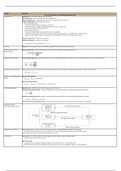
Currency Exchange Rates : Understanding Equilibrium Value
Exchange rate Exchange rate : price of one currency in terms of another
Spot exchange rate : currency exchange rate for immediate deliery
Forward exchange rate : currency exchange rate for an exchange to be done in the future
Foreign exchange spread = offer (ask price) ‐ bib price
‐ Dealer spread depends on :
+ spread in interbank market for the same currency pair
+ Size of the transacton : larger, liquidity‐demanding transaction → larger spread
+ Relationship between the dealer and client
‐ Interbank spread depends on :
+ Currencies involved : higher volum currency pairs → lower spreads
+ Time of day : overlap time when both NY and London currency markets are open → most liquid me → narrower spread
+ Market volatility : Higher volatility → higher spread to compensate for increase risk of holding those currencies
Forward rate premium : Forward price > Spot price
Forward rate discount : Forward price < Spot price
Cross rate Cross rate : FX rate between 2 currencies calculated using their FX rate with a common third currency
Mark‐to‐market value of a Mark‐to‐market value : value of a forward currency contract prior to expiration (using 360 days per year)
forward contract
1
360
Covered interest rate parity Covered interest rate parity : forward rate premium / discount exactly offsets differences in interest rates → investor would earn same return in either currency
/ 1 360
/ 1
360
Uncovered interest rate parity Uncovered interest parity : if forward contracts are not available / or CFs are restricted → expected change in FX rate = difference in interest rate
%∆ /
Domestic / International Fisher Domestic Fisher Relation
Relation
International Fisher Relation
Purchasing power parity Law of one price : identical goods should have same price in all locations
Absolute purchasing power parity : compare average price of a representative basket of consumption goods between countries
/
Relative purchasing power parity : changes in FX rates should offset price effects of any inflation differential between 2 countries
%∆ /
Ex‐ante version of purchasing power parity : same as relative purchasing power, but uses expected inflation instead of actual inflation
Relationship between
international parity conditions Exchange rate Uncovered interest rate parity
Expectation /
Movement
Relative purchasing power parity
Forward rate
parity Inflation rate Interest rate
differential differential
International Fisher Relation
Forward discount /
premium
Covered interest rate parity
Forecast future spot FX rate Forecast future spot rates using : ex‐ante Purchasing Power Parity, uncovered interest rate parity , or forward rate
‐ PPP holds for long time horizons, but does not hold for short‐term → FX rate fluctutate around its mean equilibrium value
International Fisher assumes all countries are equally risky → untrue
FX carry trade FX carry trade : use funds borrowed in a lower yielding currency to invest in a higher yielding currency
‐ Funding currency : lower yielding currency
Risk of carry trade :
‐ Funding currency may appreciate significantly against the investment currency → reduce profit / loss
‐ Return distribution of carry trade is negative skewness and excess kurtosis → probability of large loss > normal distribu on
, Balance‐of‐payments Balance‐of‐payment account : reflect all payments and liabilities to foreigners + paymens and liabilities received from foreigners
Current account = exchange of goods + exchange of services + exchange of investment income + unilateral transfers (gifts)
‐ Selling to foreigners > Buying from foreigners → current account surplus
‐ Selling to foreigners < Buying from foreigners → current account deficit
Financial acount (Capital account) = Debt + Equity investment
(*) Current account deficit → Financial account suplus
Current account surplus → Financial account deficit
Influence of Balance‐of‐payments Current account influences
on exchange rates 1. Flow supply / demand mechanism : Current account deficit → Increase supply of that currency in market → downward pressure on value of that currency. The decrease in value of
that currency may restore the current account deficit, depending on :
‐ Initial deficit : larger initial deficit → larger deprecia on needed
‐ Influence of FX rates on domestic import and export prices : depreciated currency → increase cost of imported goods ; but some may not be passed on to consumers
‐ Price elasticity of demand of traded goods : price inelastic → no change in demand
2. Portfolio balance mechanism : current accoount surplus → Capital account deficit by inves ng in countries with current account deficit → por olio dominated by investee
currencies → significant impact on value of investee currencies when investor rebalance its por olio
3. Debt sustainability mechanism : current account deficit → capital account surplus through foreign debt → ques on the sustainabiity of debt repayment → deprecia on of
borrower's currency
Capital account influences
1. Inflow of capital into a country → increase demand for that country's currency → apprecia on
2. Higher relative real rate of return attract foreign capital
3. Problems with excess of needed investment capital :
‐ Excessive real appreciation of domestic currency
‐ Financial assets / Real estates bubbles
‐ Increases external debt by businesses or gov'.
‐ Excessive consumption in domestic market fueled by credit
Potential effects of monetary and Mundell‐Fleming model : evaluate the impact of monetary / fiscal policies on interest rates and FX rates
fiscal policy on FX rates ‐ Assumptions : sufficient slack in the economy to handle changes in aggregate demand + ignore inflation
Flexible FX rate regimes : FX rates are determined by demand and supply of FX markets
1. High capital mobility
‐ Expansion monetary → ↓ interest rate → ↓ Capital investment inflow in physical and financial assets → ↓ demand for domes c currency → Depreciate domes c currency
‐ Expansion fiscal → ↑ debt → ↑ interest rate → a ract foreign investment → improve capital account → ↑ demand for domes c currency → Appreciate domes c currency
2. Low capital mobility : due to restrict of capital flows
→ Impact of trade imbalance on FX rate > impact of interest rate on FX rate → Expansion monetary / fiscal policy → ↑ net imports → depreciate domes c currency
Fixed FX rate regimes : gov' fixes the FX rate to one major currency
Expansion monetary policy → deprecia on of domes c currency → Gov' purchases its own currency in FX market → apprecia on of domes c currency
Monetary approach to FX rate 1. Pure monetary model : Purchasing power holds at any point in time and output is held constant
determination 2. Dornbusch overshooting model :
‐ Assume price ares are sticky in short‐term, and do not immediately reflect changes in monetary policy
‐ Expansion monetary policy → ↓ interest rates → domes c currency deprecia on > Purchasing power parity due to capital ou low.
‐ In long‐term, FX rates gradually increase toward Purchasing power parity
Portfolio balance approach to FX Portfolio balance approach : evaluate the effects of a sustained fiscal deficit surplus on currency value over long‐term
rate determination ‐ Focus only on fiscal policy
‐ Gov' pursues a long‐term stance of expansionary / restrictive fiscal policy → should evaluate the implica ons of the policy on expected risk and return
‐ Sufficient yield / currency return → purchase he bond
‐ Insufficient yield / currency return → stop funding the deficit → currency deprecia on
Objectives and effectiveness of Objectives in FX markets :
central banks ‐ Ensure domestic currency does not appreciate excessively
‐ Allow pursuit of independent monetary policies without being affected by their impact on currency values
‐ Reduce aggregate volume of inflow capital
Effectiveness of central banks : depend on the size of official FX reserve relative to trading volume in the domestic currency
‐ Developed markets : ineffective at intervening in the FX markets, due to lack of sufficient FX reserve
‐ Emerging markets : may hav sufficient FX reserve to affect the supply / demand of their currency in FX markets
Warning signs of currency crisis ‐ Deteriorate terms of trad (ratio of exports to imports)
‐ Fixed / Partially‐fixed FX rates (Vs. floating rate)
‐ Dramatically decline of official FX reserves
‐ Currency value rise above its historical mean
‐ Inflation increases
‐ Liberalised capital markets, that allow for free flow of capital
‐ Increase money supply relative to bank reserves
‐ Banking crises
Currency Exchange Rates : Understanding Equilibrium Value
Exchange rate Exchange rate : price of one currency in terms of another
Spot exchange rate : currency exchange rate for immediate deliery
Forward exchange rate : currency exchange rate for an exchange to be done in the future
Foreign exchange spread = offer (ask price) ‐ bib price
‐ Dealer spread depends on :
+ spread in interbank market for the same currency pair
+ Size of the transacton : larger, liquidity‐demanding transaction → larger spread
+ Relationship between the dealer and client
‐ Interbank spread depends on :
+ Currencies involved : higher volum currency pairs → lower spreads
+ Time of day : overlap time when both NY and London currency markets are open → most liquid me → narrower spread
+ Market volatility : Higher volatility → higher spread to compensate for increase risk of holding those currencies
Forward rate premium : Forward price > Spot price
Forward rate discount : Forward price < Spot price
Cross rate Cross rate : FX rate between 2 currencies calculated using their FX rate with a common third currency
Mark‐to‐market value of a Mark‐to‐market value : value of a forward currency contract prior to expiration (using 360 days per year)
forward contract
1
360
Covered interest rate parity Covered interest rate parity : forward rate premium / discount exactly offsets differences in interest rates → investor would earn same return in either currency
/ 1 360
/ 1
360
Uncovered interest rate parity Uncovered interest parity : if forward contracts are not available / or CFs are restricted → expected change in FX rate = difference in interest rate
%∆ /
Domestic / International Fisher Domestic Fisher Relation
Relation
International Fisher Relation
Purchasing power parity Law of one price : identical goods should have same price in all locations
Absolute purchasing power parity : compare average price of a representative basket of consumption goods between countries
/
Relative purchasing power parity : changes in FX rates should offset price effects of any inflation differential between 2 countries
%∆ /
Ex‐ante version of purchasing power parity : same as relative purchasing power, but uses expected inflation instead of actual inflation
Relationship between
international parity conditions Exchange rate Uncovered interest rate parity
Expectation /
Movement
Relative purchasing power parity
Forward rate
parity Inflation rate Interest rate
differential differential
International Fisher Relation
Forward discount /
premium
Covered interest rate parity
Forecast future spot FX rate Forecast future spot rates using : ex‐ante Purchasing Power Parity, uncovered interest rate parity , or forward rate
‐ PPP holds for long time horizons, but does not hold for short‐term → FX rate fluctutate around its mean equilibrium value
International Fisher assumes all countries are equally risky → untrue
FX carry trade FX carry trade : use funds borrowed in a lower yielding currency to invest in a higher yielding currency
‐ Funding currency : lower yielding currency
Risk of carry trade :
‐ Funding currency may appreciate significantly against the investment currency → reduce profit / loss
‐ Return distribution of carry trade is negative skewness and excess kurtosis → probability of large loss > normal distribu on
, Balance‐of‐payments Balance‐of‐payment account : reflect all payments and liabilities to foreigners + paymens and liabilities received from foreigners
Current account = exchange of goods + exchange of services + exchange of investment income + unilateral transfers (gifts)
‐ Selling to foreigners > Buying from foreigners → current account surplus
‐ Selling to foreigners < Buying from foreigners → current account deficit
Financial acount (Capital account) = Debt + Equity investment
(*) Current account deficit → Financial account suplus
Current account surplus → Financial account deficit
Influence of Balance‐of‐payments Current account influences
on exchange rates 1. Flow supply / demand mechanism : Current account deficit → Increase supply of that currency in market → downward pressure on value of that currency. The decrease in value of
that currency may restore the current account deficit, depending on :
‐ Initial deficit : larger initial deficit → larger deprecia on needed
‐ Influence of FX rates on domestic import and export prices : depreciated currency → increase cost of imported goods ; but some may not be passed on to consumers
‐ Price elasticity of demand of traded goods : price inelastic → no change in demand
2. Portfolio balance mechanism : current accoount surplus → Capital account deficit by inves ng in countries with current account deficit → por olio dominated by investee
currencies → significant impact on value of investee currencies when investor rebalance its por olio
3. Debt sustainability mechanism : current account deficit → capital account surplus through foreign debt → ques on the sustainabiity of debt repayment → deprecia on of
borrower's currency
Capital account influences
1. Inflow of capital into a country → increase demand for that country's currency → apprecia on
2. Higher relative real rate of return attract foreign capital
3. Problems with excess of needed investment capital :
‐ Excessive real appreciation of domestic currency
‐ Financial assets / Real estates bubbles
‐ Increases external debt by businesses or gov'.
‐ Excessive consumption in domestic market fueled by credit
Potential effects of monetary and Mundell‐Fleming model : evaluate the impact of monetary / fiscal policies on interest rates and FX rates
fiscal policy on FX rates ‐ Assumptions : sufficient slack in the economy to handle changes in aggregate demand + ignore inflation
Flexible FX rate regimes : FX rates are determined by demand and supply of FX markets
1. High capital mobility
‐ Expansion monetary → ↓ interest rate → ↓ Capital investment inflow in physical and financial assets → ↓ demand for domes c currency → Depreciate domes c currency
‐ Expansion fiscal → ↑ debt → ↑ interest rate → a ract foreign investment → improve capital account → ↑ demand for domes c currency → Appreciate domes c currency
2. Low capital mobility : due to restrict of capital flows
→ Impact of trade imbalance on FX rate > impact of interest rate on FX rate → Expansion monetary / fiscal policy → ↑ net imports → depreciate domes c currency
Fixed FX rate regimes : gov' fixes the FX rate to one major currency
Expansion monetary policy → deprecia on of domes c currency → Gov' purchases its own currency in FX market → apprecia on of domes c currency
Monetary approach to FX rate 1. Pure monetary model : Purchasing power holds at any point in time and output is held constant
determination 2. Dornbusch overshooting model :
‐ Assume price ares are sticky in short‐term, and do not immediately reflect changes in monetary policy
‐ Expansion monetary policy → ↓ interest rates → domes c currency deprecia on > Purchasing power parity due to capital ou low.
‐ In long‐term, FX rates gradually increase toward Purchasing power parity
Portfolio balance approach to FX Portfolio balance approach : evaluate the effects of a sustained fiscal deficit surplus on currency value over long‐term
rate determination ‐ Focus only on fiscal policy
‐ Gov' pursues a long‐term stance of expansionary / restrictive fiscal policy → should evaluate the implica ons of the policy on expected risk and return
‐ Sufficient yield / currency return → purchase he bond
‐ Insufficient yield / currency return → stop funding the deficit → currency deprecia on
Objectives and effectiveness of Objectives in FX markets :
central banks ‐ Ensure domestic currency does not appreciate excessively
‐ Allow pursuit of independent monetary policies without being affected by their impact on currency values
‐ Reduce aggregate volume of inflow capital
Effectiveness of central banks : depend on the size of official FX reserve relative to trading volume in the domestic currency
‐ Developed markets : ineffective at intervening in the FX markets, due to lack of sufficient FX reserve
‐ Emerging markets : may hav sufficient FX reserve to affect the supply / demand of their currency in FX markets
Warning signs of currency crisis ‐ Deteriorate terms of trad (ratio of exports to imports)
‐ Fixed / Partially‐fixed FX rates (Vs. floating rate)
‐ Dramatically decline of official FX reserves
‐ Currency value rise above its historical mean
‐ Inflation increases
‐ Liberalised capital markets, that allow for free flow of capital
‐ Increase money supply relative to bank reserves
‐ Banking crises