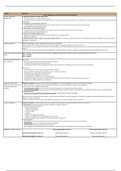
Concepts Description
Portfolio Management Process and Investment Policy Statement
Elements of Portfolio 1. Evaluating investor and market characteristics
Managements ‐ Determine objectives / constraints of the investor
‐ Evaluate the economic environment, including macro factors (growth prospects, inflation expectation, unemployment, etc.) and micro factors (sector, industry and security‐specific
consierations)
2. Developing an investment policy statement
‐ Formalised objectives and constraints into investment policy statement → guide investment and formalised investment strategy
‐ Formalissed the capital market expectation
3. Determining an asset allocation strategy
‐ Evaluate securities as how they might fit into a portfolio that meets the objectives and constraints of the investor
‐ Implement and execute the portfolio decision
4. Measuring and evaluating performance
‐ Measure and evaluate portfolio performance for meeting investor's objectives and IPS
‐ Rebalance the portfolio
5. Monitoring dynamic investor objectives and capital market conditions : Continuously monitor both investor and marketplace characteristics for significant changes that require
adjustments in the portfolio
Portfolio perspective ‐ Equity pricing models : based on principle that only systematic risk is priced
‐ Basic principle of New Prudent Investor Rule : diversification is expected of porfolio managers as a method to reduce risk
‐ Should analyse risk‐return tradeoff of the portfolio as a whole (instead of individual investments), because unsystematic risk can be diversified away by combining investments into a
portfolio
‐ Systematic risk : result of economic fundamentals (GDP growth, unexpected inflation, consumer confidence, unanticipated changes in credit spreads, business cycle)
Steps of the portfolio managment Step 1 : Planning ‐ analyse of objectives and constraints, developing IPS, determining investment strategy, selecting appropriate asset allocation
process Step 2 : Execution
Step 3 : Feedback
Role and elements of investent Roles of IPS:
policy statement ‐ Be readily implemented by current and future investment adviser
‐ Promote long‐term discipline for portfolio decisions
‐ Protect against short‐term shifts in strategy when either market environments or protfolio performance cause panic or overconfidence
Elments of IPS
‐ Client description → common understanding of the client's situa on
‐ Purpose of the IPS, including policies, objectives, goals, restrictions and limitations
‐ Identify duties and responsibilitis of involved parties
‐ Formal statements of objectives and constraints
‐ Calendar schedule for portfolio performance and IPS review
‐ Asset allocation ranges and statements regarding flexibility and rigidity when formulating / modifying strategic asset allocation
‐ Guidelines for portfolio adjustments and rebalancing
Impacts of capital market Strategic asset allocation : combine IPS and capital market expectations → LT target weigh ng for asset classes included in the por olio
expectations and investment time ‐ Need for flexibility → allow for temporary tac cal asset alloca on in response for changes in ST capital market expecta ons
horizon on strategic asset 3 common approaches of strategic asset allocation :
allocation ‐ Passive investment strategies : not response for changes in expectations (e.g.: Indexing, buy‐and‐hold invesment)
‐ Active investment strategies : attempt to capitalise on differences between a portfolio manager's beliefs about security valuations and market value → more responsive for
changing expectations
‐ Semi‐active / risk‐controlled active / enhanced index strategies : hybrids of passive and active strategies.
Forecast risk‐return characteristics of asset classes → connect market expecta ons to investor's objec ves and constraints. If por olio's risk‐return differ significantly from investor's
objectives → need to be reviewed
Investment time horizon influenc investor's asset allocation. Longer horizon → more risky ; Shorter horizon → less risky
Investment objectives Investment objectives : what the investor wants to accomplish with the portfolio, mainly concerned with risk‐return consideration
1. Risk objectives : factors associated with investor's willingness and ability to take risk
‐ Factors that affect ability to take risk
+ Required spending needs
+ Long‐term wealth target
+ Financial strength
+ Liabilities
‐ 2 classes of risk objective measurement
+ Absolute risk objective (e.g.: standard deviation of total return)
+ Relative risk objectves (e.g.: deviation from an underlying index, tracking risk)
2. Return objectives :
‐ Desired return : level of return stated by the client, indicating how much the investor wishes to receive from the portfolio
‐ Required return : level of return must be achieved by the portfolio
‐ Level of return should be consistent with the risk objective
‐ Return objective should be evaluated by total return (return from both income and capital gains) and characteristics of the portfolio
Wilingness vs. Ability to take risk Below average ability to take risk Above average ability to take risk
Below average willingness to take risk Below average tolerance Education / Resolution required
Above average willingness to take risk Below average tolerance Above average tolerance
, Investment constraints Investment constraints : factors restricting / limiting the universe of available investment choices
5 main clase of constraints:
1. Liquidity constraints (Internal) : expected outflows required at some specific time, in excess of available income
‐ Reason for liquidity constraints : depending conmarketibiity, some assets generate ony a portion of their FV if they must be sold quickly
2. Time horizon constraints (internal) : time periods over which a portfolio is expected to generate returns to meet specific future needs
3. Tax constraints (external) : depend on how, when amd if a portfolio returns ov various types are taxed
‐ Depend on which investment vehicle, tax consequences may adversely impact the after‐tax returns
4. Legal and regulatory factors (external) : specify which investment classes are not allowed or dictating any limitations places on allocations to partivular investment classes
5. Unique circumstances (internal) : special concerns of the investor
Investment objectives of Investor Return requirement Risk tolerance
individuals and institutional
investors 1. Individual investor Depend on life‐cycle stage and financial position Depend on life‐cycle stage and financial position
2. Defined benefit pension plan Sufficient to fund pension liability while accounting for inflation Depend on plan features, age of workforce, and funding status of
plan
3. Defined contribution pension plan Depend on life‐cycle stage of beneficiaries Depend on risk tolerance of beneficiaries
4. Endowments and foundations Sufficient to cover spending needs, expenses and inflation Generally average or above average
5. Life insurance companies Function of policyholder reserve rate Below average, due to significant regulatory constraints
6. Non‐life insurance companies Function of policy pricing and financial strength Below average, due to significant regulatory constraints
7. Banks Function of cost of funds Depend on business model and financial strength
Investment time horizon Longer investment time horizon → Higher ability to take risk
Investment horizon of 10+ years : returns will average over economic and market cycles → greater alloca on to equi es
Short term horizon : uncertainty about returns and the inability to fix for poor results → select low‐risk (predictable) securi es
Required ethical conduct for Portfolio managers must meet highest standards of ethical conduct , embodied by the CFA Institute Code and Standards of Practice
managing investment portfolios
Portfolio Management Process and Investment Policy Statement
Elements of Portfolio 1. Evaluating investor and market characteristics
Managements ‐ Determine objectives / constraints of the investor
‐ Evaluate the economic environment, including macro factors (growth prospects, inflation expectation, unemployment, etc.) and micro factors (sector, industry and security‐specific
consierations)
2. Developing an investment policy statement
‐ Formalised objectives and constraints into investment policy statement → guide investment and formalised investment strategy
‐ Formalissed the capital market expectation
3. Determining an asset allocation strategy
‐ Evaluate securities as how they might fit into a portfolio that meets the objectives and constraints of the investor
‐ Implement and execute the portfolio decision
4. Measuring and evaluating performance
‐ Measure and evaluate portfolio performance for meeting investor's objectives and IPS
‐ Rebalance the portfolio
5. Monitoring dynamic investor objectives and capital market conditions : Continuously monitor both investor and marketplace characteristics for significant changes that require
adjustments in the portfolio
Portfolio perspective ‐ Equity pricing models : based on principle that only systematic risk is priced
‐ Basic principle of New Prudent Investor Rule : diversification is expected of porfolio managers as a method to reduce risk
‐ Should analyse risk‐return tradeoff of the portfolio as a whole (instead of individual investments), because unsystematic risk can be diversified away by combining investments into a
portfolio
‐ Systematic risk : result of economic fundamentals (GDP growth, unexpected inflation, consumer confidence, unanticipated changes in credit spreads, business cycle)
Steps of the portfolio managment Step 1 : Planning ‐ analyse of objectives and constraints, developing IPS, determining investment strategy, selecting appropriate asset allocation
process Step 2 : Execution
Step 3 : Feedback
Role and elements of investent Roles of IPS:
policy statement ‐ Be readily implemented by current and future investment adviser
‐ Promote long‐term discipline for portfolio decisions
‐ Protect against short‐term shifts in strategy when either market environments or protfolio performance cause panic or overconfidence
Elments of IPS
‐ Client description → common understanding of the client's situa on
‐ Purpose of the IPS, including policies, objectives, goals, restrictions and limitations
‐ Identify duties and responsibilitis of involved parties
‐ Formal statements of objectives and constraints
‐ Calendar schedule for portfolio performance and IPS review
‐ Asset allocation ranges and statements regarding flexibility and rigidity when formulating / modifying strategic asset allocation
‐ Guidelines for portfolio adjustments and rebalancing
Impacts of capital market Strategic asset allocation : combine IPS and capital market expectations → LT target weigh ng for asset classes included in the por olio
expectations and investment time ‐ Need for flexibility → allow for temporary tac cal asset alloca on in response for changes in ST capital market expecta ons
horizon on strategic asset 3 common approaches of strategic asset allocation :
allocation ‐ Passive investment strategies : not response for changes in expectations (e.g.: Indexing, buy‐and‐hold invesment)
‐ Active investment strategies : attempt to capitalise on differences between a portfolio manager's beliefs about security valuations and market value → more responsive for
changing expectations
‐ Semi‐active / risk‐controlled active / enhanced index strategies : hybrids of passive and active strategies.
Forecast risk‐return characteristics of asset classes → connect market expecta ons to investor's objec ves and constraints. If por olio's risk‐return differ significantly from investor's
objectives → need to be reviewed
Investment time horizon influenc investor's asset allocation. Longer horizon → more risky ; Shorter horizon → less risky
Investment objectives Investment objectives : what the investor wants to accomplish with the portfolio, mainly concerned with risk‐return consideration
1. Risk objectives : factors associated with investor's willingness and ability to take risk
‐ Factors that affect ability to take risk
+ Required spending needs
+ Long‐term wealth target
+ Financial strength
+ Liabilities
‐ 2 classes of risk objective measurement
+ Absolute risk objective (e.g.: standard deviation of total return)
+ Relative risk objectves (e.g.: deviation from an underlying index, tracking risk)
2. Return objectives :
‐ Desired return : level of return stated by the client, indicating how much the investor wishes to receive from the portfolio
‐ Required return : level of return must be achieved by the portfolio
‐ Level of return should be consistent with the risk objective
‐ Return objective should be evaluated by total return (return from both income and capital gains) and characteristics of the portfolio
Wilingness vs. Ability to take risk Below average ability to take risk Above average ability to take risk
Below average willingness to take risk Below average tolerance Education / Resolution required
Above average willingness to take risk Below average tolerance Above average tolerance
, Investment constraints Investment constraints : factors restricting / limiting the universe of available investment choices
5 main clase of constraints:
1. Liquidity constraints (Internal) : expected outflows required at some specific time, in excess of available income
‐ Reason for liquidity constraints : depending conmarketibiity, some assets generate ony a portion of their FV if they must be sold quickly
2. Time horizon constraints (internal) : time periods over which a portfolio is expected to generate returns to meet specific future needs
3. Tax constraints (external) : depend on how, when amd if a portfolio returns ov various types are taxed
‐ Depend on which investment vehicle, tax consequences may adversely impact the after‐tax returns
4. Legal and regulatory factors (external) : specify which investment classes are not allowed or dictating any limitations places on allocations to partivular investment classes
5. Unique circumstances (internal) : special concerns of the investor
Investment objectives of Investor Return requirement Risk tolerance
individuals and institutional
investors 1. Individual investor Depend on life‐cycle stage and financial position Depend on life‐cycle stage and financial position
2. Defined benefit pension plan Sufficient to fund pension liability while accounting for inflation Depend on plan features, age of workforce, and funding status of
plan
3. Defined contribution pension plan Depend on life‐cycle stage of beneficiaries Depend on risk tolerance of beneficiaries
4. Endowments and foundations Sufficient to cover spending needs, expenses and inflation Generally average or above average
5. Life insurance companies Function of policyholder reserve rate Below average, due to significant regulatory constraints
6. Non‐life insurance companies Function of policy pricing and financial strength Below average, due to significant regulatory constraints
7. Banks Function of cost of funds Depend on business model and financial strength
Investment time horizon Longer investment time horizon → Higher ability to take risk
Investment horizon of 10+ years : returns will average over economic and market cycles → greater alloca on to equi es
Short term horizon : uncertainty about returns and the inability to fix for poor results → select low‐risk (predictable) securi es
Required ethical conduct for Portfolio managers must meet highest standards of ethical conduct , embodied by the CFA Institute Code and Standards of Practice
managing investment portfolios