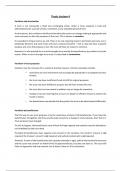
Trusts Lecture 4
Variation and termination
A trust is not necessarily a fixed and unchanging entity. Under a trust, property is held and
administered over a period of time, sometimes a very extended period of time.
As time passes, the conditions initially envisioned by the truster can change making it appropriate and
even necessary to alter the purposes of the trust. This is known as variation.
It is possible to bring a trust to an end. There is no rule requiring trusts to terminate and some run in
perpetuity (forever), but most trusts will have a natural end point – that is, they will have a specific
purpose and, once the purpose is met, the trust will have no reason to continue.
However it is also possible for a trust be brought to an end by the beneficiaries, by creditors or by the
truster. When a trust is brought to an end, it is described as termination.
Variation of trust purposes
Variation may be necessary for a variety of practical reasons. Common examples include:
• restrictions on trust investments may no longer be appropriate in a changed economic
climate;
• the trust may have insufficient funds to fulfil its original purposes;
• the trust may have fulfilled its purpose but still have money left over;
• the issue the trust was meant to address may no longer be important;
• changes in tax law meaning that a trust is no longer an efficient means to achieve the
truster’s wishes;
• the beneficiaries may decide that they prefer the trust to be administered differently.
Variation by beneficiaries
The first way to vary trust purposes is by the unanimous consent of all beneficiaries. If you have the
beneficiaries all together and they unanimously consent to a change in trust purposes, then that's it.
Trust purposes have changed.
For this to happen, the beneficiaries must all have full legal capacity and variation must be allowed (or
not forbidden) by the trust deed.
Provided all beneficiaries have capacity and consent to the variation, the truster’s consent is not
required; the trustees’ consent is not required; and judicial involvement is not required.
However, if some of the beneficiaries lack capacity (mentally or age), judicial intervention is necessary
and the court may consent on behalf of the incapax beneficiary, but does not have to. The court will
listen to arguments and may consent, but it doesn't have to. It has discretion.
, Judicial variation: private trusts 1
The Session has the authority, under s.1(1) of the Trusts (S) Act 1961, to approve any proposal to vary
or revoke trust purposes and/or to extend the power of the trustees.
The proposal must be brought before the court by the trustees, a beneficiary or a potential
beneficiary.
No approval will be given unless the court is convinced that there will be no prejudice to the
beneficiaries.
Prejudice is usually interpreted as describing a change that would be financially detrimental to the
beneficiaries: Phillips, Petitioner 1964 SC 141 So the court will never agree to something which would
harm the beneficiaries financially. The perspective of the court is that the trust exists to provide
financial support or financial advantage to the beneficiaries. So, disadvantaging the beneficiaries
would be completely contrary to the point of the trusts. The court will not do it. Even if there is no
prejudice, the court will not automatically agree. The court has the power to make its own decision
and they will look at the context. They will look at what the proposal is hoping to each to achieve
before they agree to any change.
However, the court has discretion to make its own decision. It may withhold consent even if the
proposed change is not prejudicial.
If a fully capax beneficiary has consented to a prejudicial change, the court cannot overrule that
consent. Even if that would be prejudicial. A beneficiary who is fully capax can agree to something
prejudicial and the court would not get involved. But of course, it's your power, it's your right as a free
citizen to enter into agreements, even if they are prejudicial to you and a beneficiary may have a good
reason for making a prejudicial change, it might be that the change that's prejudicial to the beneficiary
is actually beneficial to someone else. The beneficiary considers that a good thing. So the courts don't
get involved. They don't interfere.
Judicial variation: private trusts 2
There are three classes of people on whose behalf the Session is empowered to give approval to
proposed changes to trust purposes:
(1) beneficiaries who are unable to consent due to a lack of capacity (i.e. everyone under 18 and
anyone who lacks mental capacity);
(2) potential beneficiaries (i.e. those who may become a beneficiary at a future date or on the
happening of some remote future event);
For example, you might have a trust that says the beneficiary is Bob. In the event of Bob's
death or something, or in the event of something happened to Bob. Bill will become the
beneficiary. In that case, Bill is a potential beneficiary. He's a potential beneficiary. So the
court will act on Bill's behalf. They will take into account what would be good for Bill, bad for
Bill.
(3) any person as yet unborn, whether not conceived yet or in utero.
For example, you may have a trust that says this is for the benefit of Bob and his children. But
Bob doesn't have any children yet. But he might one day. He could. And because he could
Variation and termination
A trust is not necessarily a fixed and unchanging entity. Under a trust, property is held and
administered over a period of time, sometimes a very extended period of time.
As time passes, the conditions initially envisioned by the truster can change making it appropriate and
even necessary to alter the purposes of the trust. This is known as variation.
It is possible to bring a trust to an end. There is no rule requiring trusts to terminate and some run in
perpetuity (forever), but most trusts will have a natural end point – that is, they will have a specific
purpose and, once the purpose is met, the trust will have no reason to continue.
However it is also possible for a trust be brought to an end by the beneficiaries, by creditors or by the
truster. When a trust is brought to an end, it is described as termination.
Variation of trust purposes
Variation may be necessary for a variety of practical reasons. Common examples include:
• restrictions on trust investments may no longer be appropriate in a changed economic
climate;
• the trust may have insufficient funds to fulfil its original purposes;
• the trust may have fulfilled its purpose but still have money left over;
• the issue the trust was meant to address may no longer be important;
• changes in tax law meaning that a trust is no longer an efficient means to achieve the
truster’s wishes;
• the beneficiaries may decide that they prefer the trust to be administered differently.
Variation by beneficiaries
The first way to vary trust purposes is by the unanimous consent of all beneficiaries. If you have the
beneficiaries all together and they unanimously consent to a change in trust purposes, then that's it.
Trust purposes have changed.
For this to happen, the beneficiaries must all have full legal capacity and variation must be allowed (or
not forbidden) by the trust deed.
Provided all beneficiaries have capacity and consent to the variation, the truster’s consent is not
required; the trustees’ consent is not required; and judicial involvement is not required.
However, if some of the beneficiaries lack capacity (mentally or age), judicial intervention is necessary
and the court may consent on behalf of the incapax beneficiary, but does not have to. The court will
listen to arguments and may consent, but it doesn't have to. It has discretion.
, Judicial variation: private trusts 1
The Session has the authority, under s.1(1) of the Trusts (S) Act 1961, to approve any proposal to vary
or revoke trust purposes and/or to extend the power of the trustees.
The proposal must be brought before the court by the trustees, a beneficiary or a potential
beneficiary.
No approval will be given unless the court is convinced that there will be no prejudice to the
beneficiaries.
Prejudice is usually interpreted as describing a change that would be financially detrimental to the
beneficiaries: Phillips, Petitioner 1964 SC 141 So the court will never agree to something which would
harm the beneficiaries financially. The perspective of the court is that the trust exists to provide
financial support or financial advantage to the beneficiaries. So, disadvantaging the beneficiaries
would be completely contrary to the point of the trusts. The court will not do it. Even if there is no
prejudice, the court will not automatically agree. The court has the power to make its own decision
and they will look at the context. They will look at what the proposal is hoping to each to achieve
before they agree to any change.
However, the court has discretion to make its own decision. It may withhold consent even if the
proposed change is not prejudicial.
If a fully capax beneficiary has consented to a prejudicial change, the court cannot overrule that
consent. Even if that would be prejudicial. A beneficiary who is fully capax can agree to something
prejudicial and the court would not get involved. But of course, it's your power, it's your right as a free
citizen to enter into agreements, even if they are prejudicial to you and a beneficiary may have a good
reason for making a prejudicial change, it might be that the change that's prejudicial to the beneficiary
is actually beneficial to someone else. The beneficiary considers that a good thing. So the courts don't
get involved. They don't interfere.
Judicial variation: private trusts 2
There are three classes of people on whose behalf the Session is empowered to give approval to
proposed changes to trust purposes:
(1) beneficiaries who are unable to consent due to a lack of capacity (i.e. everyone under 18 and
anyone who lacks mental capacity);
(2) potential beneficiaries (i.e. those who may become a beneficiary at a future date or on the
happening of some remote future event);
For example, you might have a trust that says the beneficiary is Bob. In the event of Bob's
death or something, or in the event of something happened to Bob. Bill will become the
beneficiary. In that case, Bill is a potential beneficiary. He's a potential beneficiary. So the
court will act on Bill's behalf. They will take into account what would be good for Bill, bad for
Bill.
(3) any person as yet unborn, whether not conceived yet or in utero.
For example, you may have a trust that says this is for the benefit of Bob and his children. But
Bob doesn't have any children yet. But he might one day. He could. And because he could