https://wals.info/
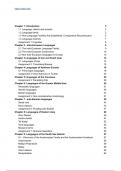
Chapter 1: Introduction 3
1.1 Language, dialect and accents 3
1.2 Language family 3
1.3 How Language Families Are Established: Comparative Reconstruction 5
1.4 Language diversity 7
Assignment 1 Cognates 8
Chapter 2 - Indo-European Languages 9
2.1 The Indo-European Language Family 9
2.2 The Indo-European Controversy 10
2.3 Non-Indo-European languages in Europe 10
Chapter 3 Languages of Iran and South Asia 13
3.1 Languages of Iran 13
Assignment 2: Translating Basque 15
Chapter 4 Languages of Northern Eurasia 16
4.1 Finno-Ugric languages 16
Assignment 3 Vowel harmony in Turkish 23
Chapter 5 Languages of the Caucasus 25
Assignment 4 Translating Pali 29
Chapter 6: Languages of the Greater Middle East 30
Afroasiatic languages 31
Semitic languages 36
Berber languages 37
Assignment 5: Non-concatenative morphology 37
Chapter 7 - sub-Saharan languages 39
Serial verb 43
Noun classes 43
Assignment 6: Puzzling with Swahili 47
Chapter 8: Languages of Eastern Asia 48
Sino-Tibetan 49
Austro-Asiatic 51
Tai-Kadai 52
Tone languages 53
Measure terms 54
Assignment 7: Numeral classifiers 55
Chapter 9: Languages of the South Sea Islands 57
9.1 - Discovery of the Austronesian Family and the Austronesian Homeland 57
Austronesian 58
Malayo-Polynesian 58
Malay 59
Word classes 60
Reduplication 60
,https://wals.info/
Assignment 8: Reduplication 61
Chapter 10: Aboriginal languages of New Guinea and Australia 63
Typological features Australian languages 65
Non-Pama-Nyungan 66
Dyirbal 66
Taboo language 69
Papuan languages 70
Assignment 9: Split Ergativity 72
Chapter 11: Languages of north and central America 74
Greenberg’s Amerind family 77
Alienable vs. inalienable possession 79
Assignment 10: Agglutinative, fusional, polysynthetic & alienable & inalienable
possession 80
Chapter 12: Languages of South America 82
South American Indigenous Languages 84
Assignment 11: Evidentiality in Lakondê (Nambikwára, Brazil) 86
Chapter 13: Language contact 88
Pidgins 91
Creoles 92
Mixed languages 94
Assignment 12: Contact Languages 96
,https://wals.info/
Chapter 1: Introduction
1.1 Language, dialect and accents
● Language debate
● Language in terms of “mutual intelligibility”: if two linguistic varieties are mutually
intelligible, they are considered dialects of the same language, and if they are not,
they constitute distinct languages
● Mutual intelligibility is a matter of degree and is relative to a text or situation: the
same two speakers may have an easier/harder time understanding each other
depending on the topic and even on how they phrase things
● Completely different languages may appear similar by sentence structure (Norwegian
and English) - degree of mutual intelligibility/similarity may be dependent on phrasing
● Dialect continuum - range of dialects spoken across geographical area, with
dialects of neighboring areas differing only slightly, and dialects from opposite ends of
the continuum being less similar and possibly not mutually intelligible
Languages similarity
○ Same proto language - genological
○ Borrowing - contact
○ Coincidence
○ Universal ideas - parents words (mama/tata)
○ Structural similarities
By the end of this course you will be able to:
- apply the basic concepts used in linguistics to a range of language structures;
- provide a basic description of the world’s language diversity, including the genealogical and
typological classifications;
- find reliable information about different languages in the world (e.g. their classification, their
vitality, their linguistic features, socio-historical information, bibliography);
- recognise and describe a number of specific features of languages of the regions covered.
1.2 Language family
● A language family is a group of languages that can be shown to be genealogically
related to one another.
● Languages with a common ancestor, the protolanguage. Eg. Indo-European
● How can we explain similarities between languages?
○ Coincidence
○ Genealogically related
■ Same origin, language families
○ Language contact
○ Structural similarities
■ Language types à linguistic typology
, https://wals.info/
● Isoglosses - Geographical boundaries of a certain linguistic feature, a pronunciation
of a consonant/vowel, a certain lexical choice or the use of some syntactic
construction
● Glosses - morpheme by morpheme translation
○ To clarify the structure of words we use grammatical glosses.
○ Words are divided into morphemes with hyphens, with the corresponding
meaning(s) in the next line.
○ In order to do this, grammatical abbreviations are used
○
● Dialects can differ from each other in many ways, including pronunciation, word
meaning and use, and grammatical features
● Accent is the sole variety of distinct pronunciation patterns. They are typically local
and may be limited to a single city/a small rural area
Chapter 1: Introduction 3
1.1 Language, dialect and accents 3
1.2 Language family 3
1.3 How Language Families Are Established: Comparative Reconstruction 5
1.4 Language diversity 7
Assignment 1 Cognates 8
Chapter 2 - Indo-European Languages 9
2.1 The Indo-European Language Family 9
2.2 The Indo-European Controversy 10
2.3 Non-Indo-European languages in Europe 10
Chapter 3 Languages of Iran and South Asia 13
3.1 Languages of Iran 13
Assignment 2: Translating Basque 15
Chapter 4 Languages of Northern Eurasia 16
4.1 Finno-Ugric languages 16
Assignment 3 Vowel harmony in Turkish 23
Chapter 5 Languages of the Caucasus 25
Assignment 4 Translating Pali 29
Chapter 6: Languages of the Greater Middle East 30
Afroasiatic languages 31
Semitic languages 36
Berber languages 37
Assignment 5: Non-concatenative morphology 37
Chapter 7 - sub-Saharan languages 39
Serial verb 43
Noun classes 43
Assignment 6: Puzzling with Swahili 47
Chapter 8: Languages of Eastern Asia 48
Sino-Tibetan 49
Austro-Asiatic 51
Tai-Kadai 52
Tone languages 53
Measure terms 54
Assignment 7: Numeral classifiers 55
Chapter 9: Languages of the South Sea Islands 57
9.1 - Discovery of the Austronesian Family and the Austronesian Homeland 57
Austronesian 58
Malayo-Polynesian 58
Malay 59
Word classes 60
Reduplication 60
,https://wals.info/
Assignment 8: Reduplication 61
Chapter 10: Aboriginal languages of New Guinea and Australia 63
Typological features Australian languages 65
Non-Pama-Nyungan 66
Dyirbal 66
Taboo language 69
Papuan languages 70
Assignment 9: Split Ergativity 72
Chapter 11: Languages of north and central America 74
Greenberg’s Amerind family 77
Alienable vs. inalienable possession 79
Assignment 10: Agglutinative, fusional, polysynthetic & alienable & inalienable
possession 80
Chapter 12: Languages of South America 82
South American Indigenous Languages 84
Assignment 11: Evidentiality in Lakondê (Nambikwára, Brazil) 86
Chapter 13: Language contact 88
Pidgins 91
Creoles 92
Mixed languages 94
Assignment 12: Contact Languages 96
,https://wals.info/
Chapter 1: Introduction
1.1 Language, dialect and accents
● Language debate
● Language in terms of “mutual intelligibility”: if two linguistic varieties are mutually
intelligible, they are considered dialects of the same language, and if they are not,
they constitute distinct languages
● Mutual intelligibility is a matter of degree and is relative to a text or situation: the
same two speakers may have an easier/harder time understanding each other
depending on the topic and even on how they phrase things
● Completely different languages may appear similar by sentence structure (Norwegian
and English) - degree of mutual intelligibility/similarity may be dependent on phrasing
● Dialect continuum - range of dialects spoken across geographical area, with
dialects of neighboring areas differing only slightly, and dialects from opposite ends of
the continuum being less similar and possibly not mutually intelligible
Languages similarity
○ Same proto language - genological
○ Borrowing - contact
○ Coincidence
○ Universal ideas - parents words (mama/tata)
○ Structural similarities
By the end of this course you will be able to:
- apply the basic concepts used in linguistics to a range of language structures;
- provide a basic description of the world’s language diversity, including the genealogical and
typological classifications;
- find reliable information about different languages in the world (e.g. their classification, their
vitality, their linguistic features, socio-historical information, bibliography);
- recognise and describe a number of specific features of languages of the regions covered.
1.2 Language family
● A language family is a group of languages that can be shown to be genealogically
related to one another.
● Languages with a common ancestor, the protolanguage. Eg. Indo-European
● How can we explain similarities between languages?
○ Coincidence
○ Genealogically related
■ Same origin, language families
○ Language contact
○ Structural similarities
■ Language types à linguistic typology
, https://wals.info/
● Isoglosses - Geographical boundaries of a certain linguistic feature, a pronunciation
of a consonant/vowel, a certain lexical choice or the use of some syntactic
construction
● Glosses - morpheme by morpheme translation
○ To clarify the structure of words we use grammatical glosses.
○ Words are divided into morphemes with hyphens, with the corresponding
meaning(s) in the next line.
○ In order to do this, grammatical abbreviations are used
○
● Dialects can differ from each other in many ways, including pronunciation, word
meaning and use, and grammatical features
● Accent is the sole variety of distinct pronunciation patterns. They are typically local
and may be limited to a single city/a small rural area