ACC ESSAY: Greed and selfishness
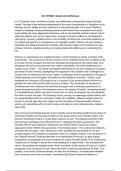
In A Christmas Carol, the theme of greed and selfishness is presented through Scrooge
himself. Scrooge is the extreme embodiment of the worst characteristics of capitalism as an
ideology as he is selfish and acts solely for his own personal gain. He is part of Dickens'
critique of utilitarian values prioritising profit and self-interest over compassion and social
responsibility. By using allegorical characters such as the Cratchits and the 3 ghosts (which
reflect the biblical story of the 3 wise men), Scrooge is forced to reflect on his adolescent
upbringing in poverty, isolation and his own mortality; Scrooge has a traumatic epiphany as
he realises that greed is a consequence of a capitalist society. Dickens not only creates a
fantastical and allegorical text that promotes unity through religion and Christmas but also
critiques Victorian capitalist society as it breeds greed and selfishness by contrasting the
two.
Greed is a consequence of a capitalist society in which Scrooge is merely a product of his
environment. The re-discovery of the innocence of his childhood forces him to reflect on life
in poverty and his escapism but also how traumatic that experience was which urges us to
empathise with him as he shows his raw, hidden vulnerability. He is first established as a
“solitary as an oyster” - the simile immediately demonises him as he is trapped in his greed,
ignorance & want of money, highlighting the magnitude of his isolation and unwillingness to
change. But, by referring to him as an “oyster” it symbolises how the goodness in Scrooge is
hidden because of the corruption of society and his childhood of poverty. “Oyster” could
represent the innocence of Scrooge as he is a product of his poverty-ridden childhood or
perhaps his inner child and the man he truly is at heart. The introduction of the ghost of
Christmas past only reinforces this idea that Scrooge’s soul is ultimately good/moral, he
shows Scrooge the purity of his childhood as he is sat reading “Ali-baba”, immersing himself
in a fantastical book which may seem innocent but is a form of escapism from his wretched
life which he does not want. The boarding school, poverty, his seemingly abusive father, and
his marginalisation lead him to become a victim of a capitalist, utilitarian society where he
knows no one will care about him unless he has that status of financial wealth. Dickens
wants us to sympathise with him and to urge us to adopt a more compassionate, inclusive
view of life.
The communal and familial aspects of the Cratchits and of Christmas itself from the Ghost of
Christmas Present force Scrooge to reflect on his greed and his own Christian views. The
Ghost of Christmas Present is “a jolly Giant, glorious to see”. The physical enormity of the
spirit perhaps symbolises how influential he is in changing Scrooge's perspective. The
semantic field of “jolly”/“glorious” emphasises the Ghost's festive nature and radiant
appearance which reflects the joyousness of the holiday season. This exuberance distinctly
contrasts with Scrooge’s “cold” demeanour which amplifies the abnormality of him and
perhaps largely of the existence of capitalism itself on a religious holiday. The introduction of
the Cratchit's annual Christmas festivities is an idealisation of the poor, as they display
compassion, and gratitude and are the epitome of a good Christian family. Their holiday food
“nobody said or thought it was at all a small pudding for a large family. “ had a paradoxical
nature, the pudding was tangibly small, which is symbolic of the scarcity of food but it is their
compassion and connection to each other that make it almost an abundance for them. The
pudding” is an iconic Christmas dessert. As they are all sharing it, it visually demonstrates
their connection and unity as a family - something that Dickens wants the readers to
In A Christmas Carol, the theme of greed and selfishness is presented through Scrooge
himself. Scrooge is the extreme embodiment of the worst characteristics of capitalism as an
ideology as he is selfish and acts solely for his own personal gain. He is part of Dickens'
critique of utilitarian values prioritising profit and self-interest over compassion and social
responsibility. By using allegorical characters such as the Cratchits and the 3 ghosts (which
reflect the biblical story of the 3 wise men), Scrooge is forced to reflect on his adolescent
upbringing in poverty, isolation and his own mortality; Scrooge has a traumatic epiphany as
he realises that greed is a consequence of a capitalist society. Dickens not only creates a
fantastical and allegorical text that promotes unity through religion and Christmas but also
critiques Victorian capitalist society as it breeds greed and selfishness by contrasting the
two.
Greed is a consequence of a capitalist society in which Scrooge is merely a product of his
environment. The re-discovery of the innocence of his childhood forces him to reflect on life
in poverty and his escapism but also how traumatic that experience was which urges us to
empathise with him as he shows his raw, hidden vulnerability. He is first established as a
“solitary as an oyster” - the simile immediately demonises him as he is trapped in his greed,
ignorance & want of money, highlighting the magnitude of his isolation and unwillingness to
change. But, by referring to him as an “oyster” it symbolises how the goodness in Scrooge is
hidden because of the corruption of society and his childhood of poverty. “Oyster” could
represent the innocence of Scrooge as he is a product of his poverty-ridden childhood or
perhaps his inner child and the man he truly is at heart. The introduction of the ghost of
Christmas past only reinforces this idea that Scrooge’s soul is ultimately good/moral, he
shows Scrooge the purity of his childhood as he is sat reading “Ali-baba”, immersing himself
in a fantastical book which may seem innocent but is a form of escapism from his wretched
life which he does not want. The boarding school, poverty, his seemingly abusive father, and
his marginalisation lead him to become a victim of a capitalist, utilitarian society where he
knows no one will care about him unless he has that status of financial wealth. Dickens
wants us to sympathise with him and to urge us to adopt a more compassionate, inclusive
view of life.
The communal and familial aspects of the Cratchits and of Christmas itself from the Ghost of
Christmas Present force Scrooge to reflect on his greed and his own Christian views. The
Ghost of Christmas Present is “a jolly Giant, glorious to see”. The physical enormity of the
spirit perhaps symbolises how influential he is in changing Scrooge's perspective. The
semantic field of “jolly”/“glorious” emphasises the Ghost's festive nature and radiant
appearance which reflects the joyousness of the holiday season. This exuberance distinctly
contrasts with Scrooge’s “cold” demeanour which amplifies the abnormality of him and
perhaps largely of the existence of capitalism itself on a religious holiday. The introduction of
the Cratchit's annual Christmas festivities is an idealisation of the poor, as they display
compassion, and gratitude and are the epitome of a good Christian family. Their holiday food
“nobody said or thought it was at all a small pudding for a large family. “ had a paradoxical
nature, the pudding was tangibly small, which is symbolic of the scarcity of food but it is their
compassion and connection to each other that make it almost an abundance for them. The
pudding” is an iconic Christmas dessert. As they are all sharing it, it visually demonstrates
their connection and unity as a family - something that Dickens wants the readers to