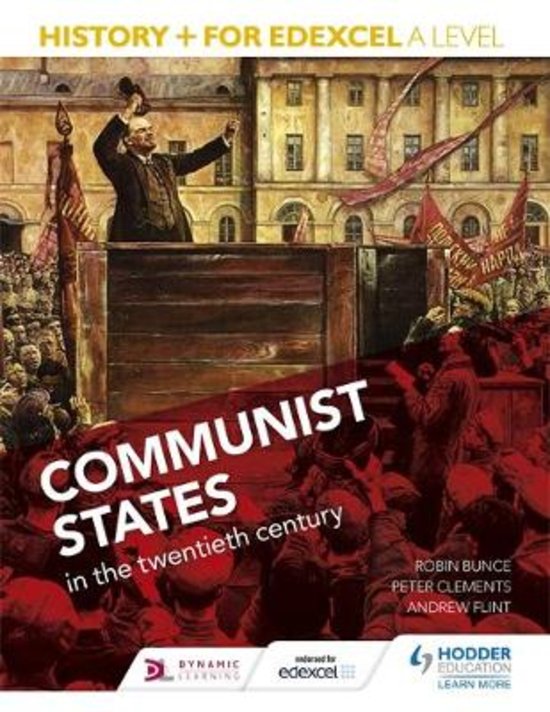
The Russian Revolution
Theme 1: Communist Government in the USSR 1917-85:
1a: Establishing Communist Party Control 1917-24:
Background to the Bolshevik Revolution:
● Before the revolutions of 1917 Russia was led by Tsar Nicholas II
● He was regarded as repressive and the majority of his subjects were
impoverished
● The Tsar’s empire extended beyond Russia to Ukraine,Georgia, Finland and
Estonia.
● The government was strong but the economy was weak compared to other major
powers
● Russia had very little modern industry: By 1913 only 2.4 million out of 140 million
people worked in large factories
● Even in periods of economic growth, the population remained poor
● Repression and economic inequality led to underground opposition to the Tsar.
● Two largest opposition parties were the Russian Social-Democratic Labour Party
(RSDLP) and the Socialist Revolutionaries (SRs) who were both committed to
overthrowing the Tsar and ending poverty
● Russia entered WW1 in 1914 but their economy was incapable of providing the
necessary food and equipment. Tsar was also a bad wartime leader.
The Provisional Government:
● Due to the economy, political chaos and WW1, there was the February
Revolution in 1917: a popular uprising in Petrograd (The Capital) that overthrew
the Tsar
● The Provisional Government’s 1st Reforms: Tsar’s despotism was replaced with
a liberal system which included freedom of expression, assembly and religion.
Also the promise of elections.
● After his exile in April 1917 Lenin demanded an end to WW1 and “Peace, Land
and Bread”. As WW1 continued this message gained popularity.
1
, ● October 1917: Lenin and the Bolsheviks had enough support to overthrow the
Provisional Government. Lenin and Trotsky organised a coup d’etat and took
power
Lenin’s Ideology:
● Believed in a global revolution to replace capitalism and imperialism with
socialism
● Based on a Marxist view of history
Lenin’s State 1917-18:
Creating a “Soviet-State”:
● October 1917: Lenin seized power on behalf of the soviets (small democratic
councils that emerged after Feb Rev)
● Soviets played a key role in governing Russia between Feb-Oct 1917
● Local soviets sent representatives to the All-Russian Congress of Soviets
(ARCS) in June 1917 to discuss Russia’s future
● Lenin argued ARCS should became the basis of new Russian government
● Oct Rev formally handed power to ARCS
● ARCS was too big to meet regularly so they elected the Council of People’s
Commissars known as Sovnarkom to govern Russia on a daily basis
Sovnarkom:
● Essentially the new Russian cabinet
● Made up of 13 People’s Commissars.
● Lenin was Chairman, Trotsky was head of People’s Commissariat of Foreign
Affairs and Stalin was head of Peoples’ Commissariat of Nationality Affairs.
● They passed a series of decrees that were very popular
● Decree on Land (October 1917): Gave peasants right to seize land from nobility
and the Church
● Decree of Peace (October 1917): Committed to withdrawing from WW1
● Workers’ Decrees (November 1917): 8 hour maximum working day and
minimum wage
● Decree of Workers’ Control (April 1918): Workers allowed to elect committees
to run factories
● These decrees helped Lenin establish control of Russia by gaining support from
workers,peasants and soldiers and also ending WW1 and giving the Revolution
breathing space
● In the first few months Sovnarkom had little power as Lenin didn’t have control of
other major cities and rural areas
2
,How Democratic in 1918?:
● First decrees were popular and reflected the wants of the people
● In 1918 Russia wasn’t a One-Party state
● The Congress of Soviets had many political parties
● There was a belief there would be a coalition government
The Constituent Assembly:
● Jan 1918 there was a clear sign Lenin was turning against democracy
● Lenin refused the results of a nationwide election in November 1917
● The election created a Constituent Assembly with a Bolshevik minority. They
met in Jan 1918 but Lenin closed it down after only one day
● March 1918 Lenin signed the Treaty of Brest-Litovsk which gave away a
significant amount of Russian territory to the Central Powers in order to end
Russia’s involvement in WW1. This was very unpopular.
● Bolsheviks lost the soviet elections on April and May 1918 but refused to accept
the results
● Mensheviks and Socialist Revolutionaries were expelled from the Soviets
● Lenin demanded new elections but postponed them due to the Civil War
● Lenin and the Bolsheviks managed to consolidate their power.
The Impact of the Civil War 1918-21:
The Russian Civil War:
● The Civil War allowed Lenin to establish communist control over Russia. The
Bolshevik party was renamed the Communist party in 1918.
● Lenin described the war as a battle between the Communist Reds and the
reactionary Whites.
● However the Bolsheviks faced opposition from all sides. Senior army members
wanted to re-establish Tsarist rule, others wanted a military dictatorship and
some wanted a democratic system.
● The SRs and the Mensheviks wanted a more democratic socialist government
and anarchists wanted no government.
● Britain, France, the USA and Japan also sent in troops to stop a global revolution
and to gain territory
● First sign of military conflict in Jan 1918 with the set up of an anti-Bolshevik army
● Full-scale civil war broke out in the Summer of 1918 with the Bolsheviks losing
ground in the first 6 months
● Anti-Bolshevik forces failed to capture Petrograd and Moscow and the Red Army
began to win the war.
3
, ● The Red Army also won victories in Ukraine and Siberia
Government during the Civil War:
● Lenin’s main objective was to ensure the survival of his government and was
prepared to do anything necessary in order to win.
● During the Civil War Lenin’s government became more centralised and the
Communist party became more powerful.
● He centralised control through War Communism, working with party loyalists
(nomenklatura) and terror.
● The leader of the Red Army, Trotsky, made them more authoritarian with harsh
punishments and conscription
The Emergence of a “Party State”:
● Originally the new regime described itself as a soviet state
● Civil War made it increasingly a party state
● War made the new government act quickly. Lenin tended to rely on the Politburo
more than Sovnarkom. Politburo contained 5-7 members such as Stalin, Trotsky,
Zinoviev & Kamenev.
● Politburo became the main centre of government and Sovnarkom played a much
smaller role.
● Communists were sceptical of local soviets so they were often bypassed by local
nomenklatura
● Civil War made the Communist Party the dominant political force
Red Terror:
● December 1917: Lenin creates the Cheka (Political Police Force)
● The Cheka were responsible for raiding anarchist organisations, shutting down
opposition newspapers and expelling Mensheviks and SRs.
● Were allowed to imprison, torture or kill anyone viewed as a threat
● In Ukraine Church leaders were impaled on spikes
● Lenin argued terror was necessary to protect the revolution
Building the Red Army:
● After Feb Rev the Russian army was democratised and soldiers elected senior
officials
● Lenin removed this and Trotsky put Tsarist generals back in charge
● Lenin and Trotsky were accused of betraying principles of the revolution
● But putting highly trained officials in charge allowed the Red Army to be
successful
4
Theme 1: Communist Government in the USSR 1917-85:
1a: Establishing Communist Party Control 1917-24:
Background to the Bolshevik Revolution:
● Before the revolutions of 1917 Russia was led by Tsar Nicholas II
● He was regarded as repressive and the majority of his subjects were
impoverished
● The Tsar’s empire extended beyond Russia to Ukraine,Georgia, Finland and
Estonia.
● The government was strong but the economy was weak compared to other major
powers
● Russia had very little modern industry: By 1913 only 2.4 million out of 140 million
people worked in large factories
● Even in periods of economic growth, the population remained poor
● Repression and economic inequality led to underground opposition to the Tsar.
● Two largest opposition parties were the Russian Social-Democratic Labour Party
(RSDLP) and the Socialist Revolutionaries (SRs) who were both committed to
overthrowing the Tsar and ending poverty
● Russia entered WW1 in 1914 but their economy was incapable of providing the
necessary food and equipment. Tsar was also a bad wartime leader.
The Provisional Government:
● Due to the economy, political chaos and WW1, there was the February
Revolution in 1917: a popular uprising in Petrograd (The Capital) that overthrew
the Tsar
● The Provisional Government’s 1st Reforms: Tsar’s despotism was replaced with
a liberal system which included freedom of expression, assembly and religion.
Also the promise of elections.
● After his exile in April 1917 Lenin demanded an end to WW1 and “Peace, Land
and Bread”. As WW1 continued this message gained popularity.
1
, ● October 1917: Lenin and the Bolsheviks had enough support to overthrow the
Provisional Government. Lenin and Trotsky organised a coup d’etat and took
power
Lenin’s Ideology:
● Believed in a global revolution to replace capitalism and imperialism with
socialism
● Based on a Marxist view of history
Lenin’s State 1917-18:
Creating a “Soviet-State”:
● October 1917: Lenin seized power on behalf of the soviets (small democratic
councils that emerged after Feb Rev)
● Soviets played a key role in governing Russia between Feb-Oct 1917
● Local soviets sent representatives to the All-Russian Congress of Soviets
(ARCS) in June 1917 to discuss Russia’s future
● Lenin argued ARCS should became the basis of new Russian government
● Oct Rev formally handed power to ARCS
● ARCS was too big to meet regularly so they elected the Council of People’s
Commissars known as Sovnarkom to govern Russia on a daily basis
Sovnarkom:
● Essentially the new Russian cabinet
● Made up of 13 People’s Commissars.
● Lenin was Chairman, Trotsky was head of People’s Commissariat of Foreign
Affairs and Stalin was head of Peoples’ Commissariat of Nationality Affairs.
● They passed a series of decrees that were very popular
● Decree on Land (October 1917): Gave peasants right to seize land from nobility
and the Church
● Decree of Peace (October 1917): Committed to withdrawing from WW1
● Workers’ Decrees (November 1917): 8 hour maximum working day and
minimum wage
● Decree of Workers’ Control (April 1918): Workers allowed to elect committees
to run factories
● These decrees helped Lenin establish control of Russia by gaining support from
workers,peasants and soldiers and also ending WW1 and giving the Revolution
breathing space
● In the first few months Sovnarkom had little power as Lenin didn’t have control of
other major cities and rural areas
2
,How Democratic in 1918?:
● First decrees were popular and reflected the wants of the people
● In 1918 Russia wasn’t a One-Party state
● The Congress of Soviets had many political parties
● There was a belief there would be a coalition government
The Constituent Assembly:
● Jan 1918 there was a clear sign Lenin was turning against democracy
● Lenin refused the results of a nationwide election in November 1917
● The election created a Constituent Assembly with a Bolshevik minority. They
met in Jan 1918 but Lenin closed it down after only one day
● March 1918 Lenin signed the Treaty of Brest-Litovsk which gave away a
significant amount of Russian territory to the Central Powers in order to end
Russia’s involvement in WW1. This was very unpopular.
● Bolsheviks lost the soviet elections on April and May 1918 but refused to accept
the results
● Mensheviks and Socialist Revolutionaries were expelled from the Soviets
● Lenin demanded new elections but postponed them due to the Civil War
● Lenin and the Bolsheviks managed to consolidate their power.
The Impact of the Civil War 1918-21:
The Russian Civil War:
● The Civil War allowed Lenin to establish communist control over Russia. The
Bolshevik party was renamed the Communist party in 1918.
● Lenin described the war as a battle between the Communist Reds and the
reactionary Whites.
● However the Bolsheviks faced opposition from all sides. Senior army members
wanted to re-establish Tsarist rule, others wanted a military dictatorship and
some wanted a democratic system.
● The SRs and the Mensheviks wanted a more democratic socialist government
and anarchists wanted no government.
● Britain, France, the USA and Japan also sent in troops to stop a global revolution
and to gain territory
● First sign of military conflict in Jan 1918 with the set up of an anti-Bolshevik army
● Full-scale civil war broke out in the Summer of 1918 with the Bolsheviks losing
ground in the first 6 months
● Anti-Bolshevik forces failed to capture Petrograd and Moscow and the Red Army
began to win the war.
3
, ● The Red Army also won victories in Ukraine and Siberia
Government during the Civil War:
● Lenin’s main objective was to ensure the survival of his government and was
prepared to do anything necessary in order to win.
● During the Civil War Lenin’s government became more centralised and the
Communist party became more powerful.
● He centralised control through War Communism, working with party loyalists
(nomenklatura) and terror.
● The leader of the Red Army, Trotsky, made them more authoritarian with harsh
punishments and conscription
The Emergence of a “Party State”:
● Originally the new regime described itself as a soviet state
● Civil War made it increasingly a party state
● War made the new government act quickly. Lenin tended to rely on the Politburo
more than Sovnarkom. Politburo contained 5-7 members such as Stalin, Trotsky,
Zinoviev & Kamenev.
● Politburo became the main centre of government and Sovnarkom played a much
smaller role.
● Communists were sceptical of local soviets so they were often bypassed by local
nomenklatura
● Civil War made the Communist Party the dominant political force
Red Terror:
● December 1917: Lenin creates the Cheka (Political Police Force)
● The Cheka were responsible for raiding anarchist organisations, shutting down
opposition newspapers and expelling Mensheviks and SRs.
● Were allowed to imprison, torture or kill anyone viewed as a threat
● In Ukraine Church leaders were impaled on spikes
● Lenin argued terror was necessary to protect the revolution
Building the Red Army:
● After Feb Rev the Russian army was democratised and soldiers elected senior
officials
● Lenin removed this and Trotsky put Tsarist generals back in charge
● Lenin and Trotsky were accused of betraying principles of the revolution
● But putting highly trained officials in charge allowed the Red Army to be
successful
4