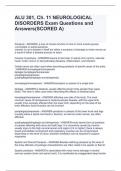
ALU 301, Ch. 11 NEUROLOGICAL DISORDERS Exam Questions and Answers(SCORED A)
Causes of paralysis - ANSWER-trauma to the brain or spinal cord, tumors, vascular insult, motor neuron or demyelinating diseases, inflammation, and infection Certain terms are often used when describing paralysis of specific areas of the body: - ANSWER-monoplegia/monoparesis diplegia hemiplegia/hemiparesis paraplegia/paraparesis quadraplegia/tetraplegia and tetraparesis monoplegia/monoparesis - ANSWER-paralysis or paresis of a single limb diplegia - ANSWER-is bilateral, usually affecting lower limbs greater than upper limbs. This term is often used when describing the effects of cerebral palsy hemiplegia/hemiparesis - ANSWER-affecting one side of the body. The most common cause of hemiparesis is cerebrovascular disease, with the upper limb usually more severely affected than the lower limb; depending on the area of the brain affected, facial muscles can be involved paraplegia/paraparesis - ANSWER-paralysis or paresis of the lower trunk and legs (usually below a spinal cord lesion). Sensory, as well as motor nerves, are often affected. quadraplegia/tetraplegia and tetraparesis - ANSWER-most severe form of paralysis or paresis affecting both arms and both legs. It is commonly caused by trauma - usually injury to the high cervical spinal cord region (C4 or higher); there is always bowel and bladder involvement and respiratory muscles can be compromised depending on the level of injury; assisted ventilation can be required to support respiration Spastic and Flaccid Paralysis - ANSWER-Besides defining paralysis by the area of the body affected, physiologic characteristics are often noted to be spastic or flaccid. Spastic paralysis - ANSWER-is associated with motor nerve damage in central nervous system (brain and spinal cord). It is manifested by exaggerated deep tendon

Geschreven voor
- Instelling
- ALU 301, Ch. 11 NEUROLOGICAL DISORDERS
- Vak
- ALU 301, Ch. 11 NEUROLOGICAL DISORDERS
Documentinformatie
- Geüpload op
- 19 april 2024
- Aantal pagina's
- 17
- Geschreven in
- 2023/2024
- Type
- Tentamen (uitwerkingen)
- Bevat
- Vragen en antwoorden
Onderwerpen
-
alu 301 ch 11 neurological disorders exam questi
-
alu 301 ch 11 neurological disorders exam stuvia
-
paralysis answer a loss of muscle function of o

Ook beschikbaar in voordeelbundel