MGSC 395 Exam 2 QUESTIONS WITH VERIFIED ANSWERS LATEST 2024
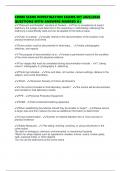
Capacity – Max rate of output of a process or system Long Term Capacity – relates primarily to strategic issues involving the firms major production facilities Short Term Capacity – concerns issues of scheduling, labor shifts, and balancing resource capacities the goal of short-term capacity planning is to handle unexpected shifts in demand in an efficient economic manner. Utilization – degree to which a resources such as equipment, workspace, or workforce is currently being used Utilization = (Average Output Rate/Maximum Capacity) x 100 Resource Economies of Scale – average unit cost can be reduced by increasing its output rate Spreading Fixed Costs – spread across more units Reducing Construction Costs – doubling size of facility doesn’t double construction costs Cutting Costs of purchased materials – higher volume cost Finding Process Advantages – high volume production provides opportunity for cost reduction Diseconomies of Scale – average cost per unit increases as the facilities size increases Complexities Loss of Focus Inefficiencies Capacity Cushion – amount of reserve capacity a process uses to handle sudden increases in demand or temporary losses of production capacity Capacity Cushions = 100% - Average Utilization Rate Varies with industry Large cushion is needed when demand varies Capital-intensive firms prefer small cushions (unused capacity costs money) Capacity Requirements: Simple Case Capacity R

Geschreven voor
- Instelling
- MGSC 395
- Vak
- MGSC 395
Documentinformatie
- Geüpload op
- 3 april 2024
- Aantal pagina's
- 9
- Geschreven in
- 2023/2024
- Type
- Tentamen (uitwerkingen)
- Bevat
- Vragen en antwoorden
Onderwerpen
-
mgsc 395 exam 2
-
295 mgsc
-
university of south carolina
-
capacity max rate of output of a process or syst