How river landscapes contrast between the upper, middle Upper course river landforms
and lower courses of rivers?
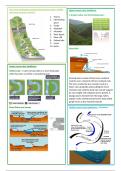
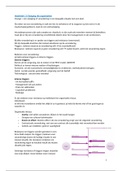
v-shaped valley and interlocking spurs
1. Source
2. Interlocking
spurs
3. Gorge
4. Waterfall
5. Meander
6. River beach
7. River cliff
8. Oxbow lake
9. Levee
10. Delta
Waterfalls
Lower course river landforms
Oxbow Lake - A semi-circular lake on a river flood plain
which has been cut off by a meandering river
Formed when a band of hard more resistant
rock lies over a band of soft less resistant rock.
The river erodes the less resistant rock at a
faster rate, gradually undercutting the more
resistant rock until the hard rock cannot support
its own weight and collapses due to gravity. A
plunge pool is formed from the large, fallen,
angular rocks swirling around and a steep sided
gorge forms as the waterfall retreats
Flood Plains and Levees Middle course river landforms - Meanders
Delta – when a
river meets
another body
of water it
loses velocity
and deposits
sediment.
If this isn’t eroded by coastal processes it builds up in
layers in a fan shape which causes the river to split into
many smaller channels called distributaries and creates a
large area of wetlands
and lower courses of rivers?
v-shaped valley and interlocking spurs
1. Source
2. Interlocking
spurs
3. Gorge
4. Waterfall
5. Meander
6. River beach
7. River cliff
8. Oxbow lake
9. Levee
10. Delta
Waterfalls
Lower course river landforms
Oxbow Lake - A semi-circular lake on a river flood plain
which has been cut off by a meandering river
Formed when a band of hard more resistant
rock lies over a band of soft less resistant rock.
The river erodes the less resistant rock at a
faster rate, gradually undercutting the more
resistant rock until the hard rock cannot support
its own weight and collapses due to gravity. A
plunge pool is formed from the large, fallen,
angular rocks swirling around and a steep sided
gorge forms as the waterfall retreats
Flood Plains and Levees Middle course river landforms - Meanders
Delta – when a
river meets
another body
of water it
loses velocity
and deposits
sediment.
If this isn’t eroded by coastal processes it builds up in
layers in a fan shape which causes the river to split into
many smaller channels called distributaries and creates a
large area of wetlands