Types of stress -
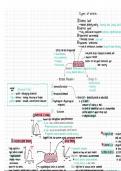
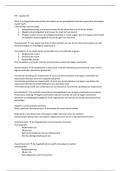
① Distress 'bad'
→ tension, anxiety, worry (penalty shot, losing, bad te
② Eustress 'good'
→ Joy, exhiliration, happiness (winning, improving in sport
③ Hyper stress 'over stressing'
→ Overload, Extreme (burnout)
4 Hypostress 'under stress'
→ lack of stimulation, boredom (doing the same training,
stress can be categorised:
- social/Personal Long term stress = harmful to mental and
- Environmental physical health
- biological stress can be good-motivates you
- occupational stress bad- anxiety
definition: The non specific res ponse of the body
to any demand made on it.
• stress Process. - Changes In-
• concentration
arousal
I demand/stressor • anxiety
level Attention Field: • arousal
low = wide → not paying attention ② Perception of demand
revenge, focusing on 1 target ~stressor- demand placed on individual
high == optimal
optimal narrow] focused, concentrated, In the zone ③ Psychological + Physiological e. g In sport-
responses pressure of taking a shot
- the level of competition such as championships
④ Outcome and the audience impact stress level.
② Inverted U theory - or physical fatigue.
high oppiergimance Arousal level too high/low -poor performance
Too low - due to tiredness, boredom, no motivation
↳ slow reaction time, lack of concentration
÷: ÷ Too high- lack of focus on whole game, tensed muscles
-
cognitive - involve
k3
↳ aggression towards opponent i red card/warning
lo w arousal
high suggests that after optimum arousal, performance decreases ↓ and psy
③ Catastrophe theory ① drive theory ie anx
optimum nigh
somatic - physiolo
high
• High cognitive + ↳ dominant response of anx
high somatic arousal .EE §? depends on how well skill is learnt behavioural- action
= beyond optimum • Beginner: high arousal, low performance shows
arousal → drop in Arousal low
arousal
high ↳ lack of practice causes performer i. e bit
performance. low arousal high
to mess skill up i. e miss a shot
• same for low levels. a pyschological state of alertness • Elite: high level of arousal can be controlled
① Distress 'bad'
→ tension, anxiety, worry (penalty shot, losing, bad te
② Eustress 'good'
→ Joy, exhiliration, happiness (winning, improving in sport
③ Hyper stress 'over stressing'
→ Overload, Extreme (burnout)
4 Hypostress 'under stress'
→ lack of stimulation, boredom (doing the same training,
stress can be categorised:
- social/Personal Long term stress = harmful to mental and
- Environmental physical health
- biological stress can be good-motivates you
- occupational stress bad- anxiety
definition: The non specific res ponse of the body
to any demand made on it.
• stress Process. - Changes In-
• concentration
arousal
I demand/stressor • anxiety
level Attention Field: • arousal
low = wide → not paying attention ② Perception of demand
revenge, focusing on 1 target ~stressor- demand placed on individual
high == optimal
optimal narrow] focused, concentrated, In the zone ③ Psychological + Physiological e. g In sport-
responses pressure of taking a shot
- the level of competition such as championships
④ Outcome and the audience impact stress level.
② Inverted U theory - or physical fatigue.
high oppiergimance Arousal level too high/low -poor performance
Too low - due to tiredness, boredom, no motivation
↳ slow reaction time, lack of concentration
÷: ÷ Too high- lack of focus on whole game, tensed muscles
-
cognitive - involve
k3
↳ aggression towards opponent i red card/warning
lo w arousal
high suggests that after optimum arousal, performance decreases ↓ and psy
③ Catastrophe theory ① drive theory ie anx
optimum nigh
somatic - physiolo
high
• High cognitive + ↳ dominant response of anx
high somatic arousal .EE §? depends on how well skill is learnt behavioural- action
= beyond optimum • Beginner: high arousal, low performance shows
arousal → drop in Arousal low
arousal
high ↳ lack of practice causes performer i. e bit
performance. low arousal high
to mess skill up i. e miss a shot
• same for low levels. a pyschological state of alertness • Elite: high level of arousal can be controlled