Introduction
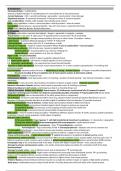
-Neuropsychology = multidiscipline
-Aspects of Patient Relation considerations for current behavior & Test performance
-Current behaviour = SES + current functioning + personality + social context + brain damage
-Hypothesis process: theoretical framework literature review research question
-test considerations: reliable, valid, feasible, theoretically sound, ethical
Ethics: rules/regulations + values + moral principles + ethical practices + rules of conduct
NeuroRights: mental privacy + personal identity + free will + fair access + protection from bias
IMRAD: Intro, Method, Results, Analysis, Discussion
Perception
(1) Vision: guide action + perceive face/objects + danger + appreciate + recognize + navigate
-Visual System = from eyes optic chasm opposite primary visual cortex L/R visual fields
Visual perceptual deficits = damage between pathway from eye to visual cortex location = defects
1.Akinetopsia = snapshots (Bilateral damage in V5/MT) Patient MP
2.Achromatopsia = processing color (V4) 1 hemisphere or both
3.Visual Form Agnosia = shapes carbon monoxide Effron LOC in occipital lobes = face perception
Visual system pathways: 40% of brain area –beyond occipital lobes
- Ventral pathway = visual perception (e.g. what am I looking at?)
- Dorsal pathway = visual guidance (e.g. how am I doing it)
Higher-order perceptual disorders:
1.Visual Agnosia: selective deficit in object recognition (objects/faces)
1.1 Apperceptive agnosia = all features of object together to form coherence
1.2 Associative visual agnosia = can copy/draw but cannot link with identify
-Theories of Object Recognition: from basic visual representations to more complex representations to linking with
existing knowledge
Face Perception: separate system for faces Model Bruce & Young – Parallel Systems = all happen in parallel (independent)
- Structural encoding Face recognition unit Facial speech analysis Expression analysis
Prosopagnosia: unable to recognize faces
(2)Visuomotor Control: visual input guide action: (1) reaching = location (2) hand opening = size (3) hand orientation = object
orientation
-Optic Ataxia = using visual info about position/orientation of objects to guide actions (Posterior parietal lobe)
Separate visuomotor channels: primary visual cortex to premotor areas reaching vs grasping
Obstacle Avoidance in optic ataxia: avoid dangerous objects or knocking things over
-(3)Body Perception: Rubber Hand Illusion: Requirements: (1) Multisensory synchronized info (2) temporal & spatial
integration (3) foreign part resemble own body (4) anatomically plausible orientation Proprioceptive Drift (locate hand)
-Enfacement illusion: take on characteristics of the other person (fear or compassion)
Use in Practice: (1) lesions cause body perception issues (e.g. phantom limbs) (2) body perception disturbances occur in
disorders (3) illusions simulate disorders & provide insight (4) additional info into disorders (5) provides treatment
Body Representations (Head & Holmes): multiple body representations linked to different functions
- (1) Body Schema (unconscious) standard against which changes in posture are measured
- (2) Superficial Schema (unconscious) central mapping of body surface from tactile info
- (3) Body Image (conscious) internal representation of experiencing self
Body matrix = network model of body perception = flexibility in different aspects of body tactile, postural, spatial localization,
localization of touch, metric properties, tactile object recognition
Body perception disorders:
- (1) Structural Deficits: Finger Agnosia Left-right orientation Gerstmann’s syndrome = 2 + dyscalculia + dysgraphia
- (2) Body Size (Metric) Deficits:Macrosomatognosia/Microsomatognosia = medial parietal cortex
- (3) Body Awareness Deficits: Anosognosia = deny Anosodiaphoria = minimize
o Asomatognosia = reject ownership of limb Somatoparaphrenia = attribute own arm to someone else
-Proprioception (Kinesthesia) = sense that lets us perceive location, movement, action of body parts
haptic exploration purposive action that encodes properties of objects) + targets on our own body
-Visual-cortical processing = 2 visual streams model ventral (perception & recognition) & dorsal (guiding action)
Somatosensory systems of brain: processes input from different sub modalities (touch, proprioception, hot/cold, pain, itch)
linked to receptors on skin, muscles, joints, tendons primary somatosensory cortex (anterior parietal lobe) PSC contains
somatotopic map of the contralateral half of the body parts with higher receptor density = more cortical surface
-Damage to primary somatosensory cortex = loss tactile and proprioceptive perception for contralateral half of the body
(hemianesthesia)
-Damage to insular cortex = loss of affective touch, pain & temperature contralaterally
-Secondary Somatosensory cortex =higher-order somatosensory processing (more distributed system) e.g extracting
features and recognizing stimuli, conscious bodily experience, spatial/structural aspects of body
numbsense = correctly respond to somatosensory stimuli at a higher chance, but cannot perceive
-Weber’s illusion: perceived distance between touches on a single skin surface is larger on regions of high tactile sensitivity
-Body Space: multimodal process to detect tactile stimuli localize body parts with each other and in external space
-Neuropsychology = multidiscipline
-Aspects of Patient Relation considerations for current behavior & Test performance
-Current behaviour = SES + current functioning + personality + social context + brain damage
-Hypothesis process: theoretical framework literature review research question
-test considerations: reliable, valid, feasible, theoretically sound, ethical
Ethics: rules/regulations + values + moral principles + ethical practices + rules of conduct
NeuroRights: mental privacy + personal identity + free will + fair access + protection from bias
IMRAD: Intro, Method, Results, Analysis, Discussion
Perception
(1) Vision: guide action + perceive face/objects + danger + appreciate + recognize + navigate
-Visual System = from eyes optic chasm opposite primary visual cortex L/R visual fields
Visual perceptual deficits = damage between pathway from eye to visual cortex location = defects
1.Akinetopsia = snapshots (Bilateral damage in V5/MT) Patient MP
2.Achromatopsia = processing color (V4) 1 hemisphere or both
3.Visual Form Agnosia = shapes carbon monoxide Effron LOC in occipital lobes = face perception
Visual system pathways: 40% of brain area –beyond occipital lobes
- Ventral pathway = visual perception (e.g. what am I looking at?)
- Dorsal pathway = visual guidance (e.g. how am I doing it)
Higher-order perceptual disorders:
1.Visual Agnosia: selective deficit in object recognition (objects/faces)
1.1 Apperceptive agnosia = all features of object together to form coherence
1.2 Associative visual agnosia = can copy/draw but cannot link with identify
-Theories of Object Recognition: from basic visual representations to more complex representations to linking with
existing knowledge
Face Perception: separate system for faces Model Bruce & Young – Parallel Systems = all happen in parallel (independent)
- Structural encoding Face recognition unit Facial speech analysis Expression analysis
Prosopagnosia: unable to recognize faces
(2)Visuomotor Control: visual input guide action: (1) reaching = location (2) hand opening = size (3) hand orientation = object
orientation
-Optic Ataxia = using visual info about position/orientation of objects to guide actions (Posterior parietal lobe)
Separate visuomotor channels: primary visual cortex to premotor areas reaching vs grasping
Obstacle Avoidance in optic ataxia: avoid dangerous objects or knocking things over
-(3)Body Perception: Rubber Hand Illusion: Requirements: (1) Multisensory synchronized info (2) temporal & spatial
integration (3) foreign part resemble own body (4) anatomically plausible orientation Proprioceptive Drift (locate hand)
-Enfacement illusion: take on characteristics of the other person (fear or compassion)
Use in Practice: (1) lesions cause body perception issues (e.g. phantom limbs) (2) body perception disturbances occur in
disorders (3) illusions simulate disorders & provide insight (4) additional info into disorders (5) provides treatment
Body Representations (Head & Holmes): multiple body representations linked to different functions
- (1) Body Schema (unconscious) standard against which changes in posture are measured
- (2) Superficial Schema (unconscious) central mapping of body surface from tactile info
- (3) Body Image (conscious) internal representation of experiencing self
Body matrix = network model of body perception = flexibility in different aspects of body tactile, postural, spatial localization,
localization of touch, metric properties, tactile object recognition
Body perception disorders:
- (1) Structural Deficits: Finger Agnosia Left-right orientation Gerstmann’s syndrome = 2 + dyscalculia + dysgraphia
- (2) Body Size (Metric) Deficits:Macrosomatognosia/Microsomatognosia = medial parietal cortex
- (3) Body Awareness Deficits: Anosognosia = deny Anosodiaphoria = minimize
o Asomatognosia = reject ownership of limb Somatoparaphrenia = attribute own arm to someone else
-Proprioception (Kinesthesia) = sense that lets us perceive location, movement, action of body parts
haptic exploration purposive action that encodes properties of objects) + targets on our own body
-Visual-cortical processing = 2 visual streams model ventral (perception & recognition) & dorsal (guiding action)
Somatosensory systems of brain: processes input from different sub modalities (touch, proprioception, hot/cold, pain, itch)
linked to receptors on skin, muscles, joints, tendons primary somatosensory cortex (anterior parietal lobe) PSC contains
somatotopic map of the contralateral half of the body parts with higher receptor density = more cortical surface
-Damage to primary somatosensory cortex = loss tactile and proprioceptive perception for contralateral half of the body
(hemianesthesia)
-Damage to insular cortex = loss of affective touch, pain & temperature contralaterally
-Secondary Somatosensory cortex =higher-order somatosensory processing (more distributed system) e.g extracting
features and recognizing stimuli, conscious bodily experience, spatial/structural aspects of body
numbsense = correctly respond to somatosensory stimuli at a higher chance, but cannot perceive
-Weber’s illusion: perceived distance between touches on a single skin surface is larger on regions of high tactile sensitivity
-Body Space: multimodal process to detect tactile stimuli localize body parts with each other and in external space