Straighterline Communication 101 Chapters 5-6 Rated A+
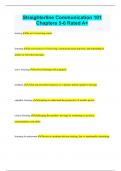
Straighterline Communication 101 Chapters 5-6 Rated A+ hearing the act of receiving sound listening the active process of receiving, constructing mean ing from, and responding to spoken or nonverbal messages active listening involved listening with a purpose feedback verbal and nonverbal responses to a speaker and the speaker's message empathic listening attempting to understand the perspective of another person critical listening challenging the speaker's message by evaluating its accuracy, meaningfulness and utility listening for enjoyment Occurs in situations that are relaxing, fun, or emotionally stimulating selective attention the sustained focus we give to things that are important automatic attention the instinctive focus we give to important things we experience in our surroundings working memory the part of our consciousness that interprets and assigns meaning to stimuli we pay attention to short term memory a temporary storage place for information long-term memory a permanent storage place for information schemas organizational filing systems for thoughts held in long-term memory critical thinking analyzing the speaker, the situation and the speaker's ideas to make critical judgments about the message being presented source credibility the extent to which the speaker is perceived as competent and trustworthy data what facts or evidence are agreed upon by both speaker and listener? claim what is the overall point or conclusion of the argument made by the speaker? warrant what is the reasoning used by the speaker to move from the data to the claim? Stephen Toulmin Model data, claim, warrant information literacy having the ability to recognize when information is needed and the ability to locate, evaluate, and use effectively the information needed metacognition ability to use mental strategies to assist in quickly determining the meaning of words noise anything that interferes with, distorts, or slows down the transmission of information; includes both physical and internal distractions physical distractions any audible noises in the communication environment internal distractions include mental, factual or semantic distractions interpersonal communication the process of using messages to generate meaning between at least two people in a situation that allows mutual opportunities for both speaking and listening interpersonal relationships associations between two people who are interdependent, who use some consistent patterns of interaction, and who have

Geschreven voor
- Instelling
- Straighterline Communication 101
- Vak
- Straighterline Communication 101
Documentinformatie
- Geüpload op
- 16 februari 2024
- Aantal pagina's
- 6
- Geschreven in
- 2023/2024
- Type
- Tentamen (uitwerkingen)
- Bevat
- Vragen en antwoorden
Onderwerpen
-
straighterline communication 101 chapters 5 6 rat

Ook beschikbaar in voordeelbundel