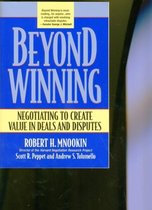
Negotiations 2017 Werkgroepen
Session 1: Value Distribution in Single-Issue, Two-Party Negotiations
Books:
Robert Gildeen Persuasion book
Eat that frog
PINS = propensity to initiate negotiations
The “why” is important, what underlying interest does that desire satisfy?
Reciprocity: giving something to get something back
BATNA: best alternative to a negotiated agreement (wat is je beste optie als er geen
contract uit komt)
Target price= ideale uitkomst
Reservation price = bottom line, walkaway price
Bargain zone = price range
ZOPA = zone of potential agreement (beide bargain zones gecombineerd tot 1, dus
minimum prijs van A en maximum prijs van B)
Pitfalls:
Settling for too little (winner’s curse), too quick to close the deal
Settling for terms that are worse than your current situation (agreement bias, the idea that
you have to come to an agreement because you invested a lot of effort and time)
Walking away from the table (hubris) because of emotions: treat people carefully, make
them feel respected and not like they are exploited
Leaving money on the table (lose-lose negotiation)
Tips & tricks
Make first offer?
If the bargaining zone is relatively narrow and you know that, is it smart to make an
offer quickly, before the other party does and make it slightly over what you want to get
(anchoring point)
If you don’t know the bargaining zone or it’s relatively broad, then you should try to get
the first offer from the other party.
Find bargain zone of the other party and try to keep your own secret for as far as you can
Small talk first helps with getting a better price
Never change your RP during the negotiations
Identify your partner’s basic objectives, the why
Your greatest source of power is the ability to walk away (if you have a strong
alternative)
Beware the FATNA: Fantasy Alternative to a Negotiated Agreement, information can
short-circuit conflict (find out what people’s perspective is and show it to the other party
if their information is false, make sure the right facts are on the table)
Time constraint can be a source of power, ask yourself on which party time weighs the
most?
Focus on your target instead of your reservation price (positive mindset)
, Never open inside the bargain zone, always open outside of the zone, otherwise you’ll
lose value
Session 2: Value Distribution in Multi-Issue, Two-Party Negotiations
Wrap up from last week:
Preparation is key:
Plan your inquiries
Plan your reactions
Anchoring is general where you start, often determines where the other person starts
which determines where you both end up.
Open outside of the bargaining zone but not too far outside
Give & take: concession-making is important, think about it in advance
The pattern of concession-making: it’s better to make 4 concessions of 4, 3, 2
and 1 dollar (equals 10) in stead of 3 concessions of 4 dollar (equals 12)
because with the first pattern you show that you are running out, slowly getting
closer to rock bottom, so you would be believed easier.
Focus on the reservation point of your partner and not your own (because where you
focus on is where you go)
Never state a range (“somewhere between this and that”) because they will go for the
bottom end
Gather information
Ask questions of your counterpart (BATNA/RP is worth a try)
Watch their reaction when you float offers
Sandbagging: making your partner think that you want B while you want A, so you
pretend that you make a concession and then you want something back
Ask: what is important for you
Compromising on all points costs more than trading what is valuable to every
party (distributive: hard onderhandelen! and integrative issues: trading!)
Belangrijkste les uit onderhandelingen
1. Pas op dat je niet gesandbagd wordt, vraag naar de reden en naar andere combinaties
(“wat als?)
2. Laat de belangrijke issues tot het eind
3. Focus on maximizing the pie instead of only focussing on maximizing your own slice,
denk aan het plaatje van de ezels
4. Vraag wat belangrijk is en ruil dan, dan kom je allebei hoger uit (don’t leave money
on the table). You make your money on the integrative part: ruilen ruilen ruilen!!!)
5. Compromising is a curse for creating value
6. Not just understand what they want (position) but also why they want it (interest)
7. Ask questions, build trust by sharing some information
8. Make package (multi-issue) offer, otherwise every issue becomes a distributive
negotiation!
, 9. Make different multiply offers simultaneously, so 1) they choose your deal, or 2) they
reveal sensitivity to price/time/quality
10. Look beyond what they say their position is
Closing the deal
Provide alternatives (people love choice, let them choose)
Assume the close (can be annoying)
Split the difference (usually it’s a terrible idea but it can work if it’s little value in the
end)
Exploding Offers (deadline)
Sweeteners (things of little value to add in the end to push the other party over the
line)
Codify the agreement (contract, write down what you’ve agreed to)
Different issues:
Distributive: zero sum game (one party’s gain is the other party’s loss, the pie is not
getting bigger) discuss this at the end, want dan heb je in het begin een positieve
vibe als je veel afsluit en kan je dan steggelen over moeilijke punten, anders geef je
snel teveel weg. Als je begint met een concessie op iets kleins kan je later wat
terugvragen op het grote punt
Session 3: Psychological Factors in Dispute Resolution
Fabian Lunsmann – partner Brookside Lawyer, ik ben Brookside Client
VS. Kaylee & Sophie
Emotions
Anger can be effective if someone is vulnerable
Advantage of an agent: you can float an offer to a party without the reactive devaluation
(when someone gets an offer and they devalue it, they think it must be worth less than it is,
because of emotions)
Principle drives are non-rational and can drive people to non-rational actions (justice seeking)
Attribution = wat je toevoegt aan een gedraging (iemand lacht naar me, waarom doen ze dat?
Vinden ze me leuk, lachen ze me uit?)
Fundamental Attriution Error: being in the car, we think that what they do is part of who they
are as a person. You don’t understand the reasons and the context. try and correct for it
3 ways to approach DR: power, rights, interest
Best is interest, try to stay in that area
, Answers Short Essay exam prep:
1.
Too many issues at play, hard to compare quality
Balanced concessions
Multiple simulatanious equivalent offers
2.
Diagnose the honesty of the other side’s claims
Risk reduction
3.
Adv:
Agents might be more impartial, objective
Using agents can allow for facesaving
Less reactive devaluation
Session 1: Value Distribution in Single-Issue, Two-Party Negotiations
Books:
Robert Gildeen Persuasion book
Eat that frog
PINS = propensity to initiate negotiations
The “why” is important, what underlying interest does that desire satisfy?
Reciprocity: giving something to get something back
BATNA: best alternative to a negotiated agreement (wat is je beste optie als er geen
contract uit komt)
Target price= ideale uitkomst
Reservation price = bottom line, walkaway price
Bargain zone = price range
ZOPA = zone of potential agreement (beide bargain zones gecombineerd tot 1, dus
minimum prijs van A en maximum prijs van B)
Pitfalls:
Settling for too little (winner’s curse), too quick to close the deal
Settling for terms that are worse than your current situation (agreement bias, the idea that
you have to come to an agreement because you invested a lot of effort and time)
Walking away from the table (hubris) because of emotions: treat people carefully, make
them feel respected and not like they are exploited
Leaving money on the table (lose-lose negotiation)
Tips & tricks
Make first offer?
If the bargaining zone is relatively narrow and you know that, is it smart to make an
offer quickly, before the other party does and make it slightly over what you want to get
(anchoring point)
If you don’t know the bargaining zone or it’s relatively broad, then you should try to get
the first offer from the other party.
Find bargain zone of the other party and try to keep your own secret for as far as you can
Small talk first helps with getting a better price
Never change your RP during the negotiations
Identify your partner’s basic objectives, the why
Your greatest source of power is the ability to walk away (if you have a strong
alternative)
Beware the FATNA: Fantasy Alternative to a Negotiated Agreement, information can
short-circuit conflict (find out what people’s perspective is and show it to the other party
if their information is false, make sure the right facts are on the table)
Time constraint can be a source of power, ask yourself on which party time weighs the
most?
Focus on your target instead of your reservation price (positive mindset)
, Never open inside the bargain zone, always open outside of the zone, otherwise you’ll
lose value
Session 2: Value Distribution in Multi-Issue, Two-Party Negotiations
Wrap up from last week:
Preparation is key:
Plan your inquiries
Plan your reactions
Anchoring is general where you start, often determines where the other person starts
which determines where you both end up.
Open outside of the bargaining zone but not too far outside
Give & take: concession-making is important, think about it in advance
The pattern of concession-making: it’s better to make 4 concessions of 4, 3, 2
and 1 dollar (equals 10) in stead of 3 concessions of 4 dollar (equals 12)
because with the first pattern you show that you are running out, slowly getting
closer to rock bottom, so you would be believed easier.
Focus on the reservation point of your partner and not your own (because where you
focus on is where you go)
Never state a range (“somewhere between this and that”) because they will go for the
bottom end
Gather information
Ask questions of your counterpart (BATNA/RP is worth a try)
Watch their reaction when you float offers
Sandbagging: making your partner think that you want B while you want A, so you
pretend that you make a concession and then you want something back
Ask: what is important for you
Compromising on all points costs more than trading what is valuable to every
party (distributive: hard onderhandelen! and integrative issues: trading!)
Belangrijkste les uit onderhandelingen
1. Pas op dat je niet gesandbagd wordt, vraag naar de reden en naar andere combinaties
(“wat als?)
2. Laat de belangrijke issues tot het eind
3. Focus on maximizing the pie instead of only focussing on maximizing your own slice,
denk aan het plaatje van de ezels
4. Vraag wat belangrijk is en ruil dan, dan kom je allebei hoger uit (don’t leave money
on the table). You make your money on the integrative part: ruilen ruilen ruilen!!!)
5. Compromising is a curse for creating value
6. Not just understand what they want (position) but also why they want it (interest)
7. Ask questions, build trust by sharing some information
8. Make package (multi-issue) offer, otherwise every issue becomes a distributive
negotiation!
, 9. Make different multiply offers simultaneously, so 1) they choose your deal, or 2) they
reveal sensitivity to price/time/quality
10. Look beyond what they say their position is
Closing the deal
Provide alternatives (people love choice, let them choose)
Assume the close (can be annoying)
Split the difference (usually it’s a terrible idea but it can work if it’s little value in the
end)
Exploding Offers (deadline)
Sweeteners (things of little value to add in the end to push the other party over the
line)
Codify the agreement (contract, write down what you’ve agreed to)
Different issues:
Distributive: zero sum game (one party’s gain is the other party’s loss, the pie is not
getting bigger) discuss this at the end, want dan heb je in het begin een positieve
vibe als je veel afsluit en kan je dan steggelen over moeilijke punten, anders geef je
snel teveel weg. Als je begint met een concessie op iets kleins kan je later wat
terugvragen op het grote punt
Session 3: Psychological Factors in Dispute Resolution
Fabian Lunsmann – partner Brookside Lawyer, ik ben Brookside Client
VS. Kaylee & Sophie
Emotions
Anger can be effective if someone is vulnerable
Advantage of an agent: you can float an offer to a party without the reactive devaluation
(when someone gets an offer and they devalue it, they think it must be worth less than it is,
because of emotions)
Principle drives are non-rational and can drive people to non-rational actions (justice seeking)
Attribution = wat je toevoegt aan een gedraging (iemand lacht naar me, waarom doen ze dat?
Vinden ze me leuk, lachen ze me uit?)
Fundamental Attriution Error: being in the car, we think that what they do is part of who they
are as a person. You don’t understand the reasons and the context. try and correct for it
3 ways to approach DR: power, rights, interest
Best is interest, try to stay in that area
, Answers Short Essay exam prep:
1.
Too many issues at play, hard to compare quality
Balanced concessions
Multiple simulatanious equivalent offers
2.
Diagnose the honesty of the other side’s claims
Risk reduction
3.
Adv:
Agents might be more impartial, objective
Using agents can allow for facesaving
Less reactive devaluation