Chapter 18 Communication, conflict and negotiation
Takeaway 1: The Communication Process
Effective Communication
An interpersonal process of sending and receiving symbols with messages attached to them
Key elements of the communication process:
Sender
Message
Communication channel
Receiver
Interpreted meaning
Feedback
Effective communication – Occurs when the intended meaning of the sender is fully
understood by the receiver
Efficient communication – Occurs at a minimum resource cost
Potential trade-offs between effectiveness and efficiency must be recognized
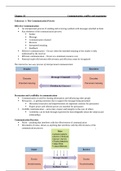
The interactive two-way process of interpersonal communication:
Persuasion and credibility in communication
Communication is used for sharing information and influencing other people
Persuasion – is getting someone else to support the message being presented
Horizontal structures and empowerment are important contexts for persuasion
Expert power and referent power are essential for persuasion
Credible communication – earns trust, respect and integrity in the eyes of others
Credibility can be built through expertise (be knowledgeable about the subject) and
relationships
Communication Barriers
Noise – anything that interferes with the effectiveness of communication
Downsides of noise, shown as anything that interferes with the effectiveness of the
communication process
, Information filtering
Informational filtering – Intentional distortion of information to make it more favorable to the
recipient
Subordinates may hide unfavorable news from the manager or make it sound better than it
really is
Poor choice of channels
Communication channel – is the pathway through which a message moves from sender to
receiver
Choose the channel that works best
Written channels work for messages that: Spoken channels work best for messages that:
Can be paper or electronic Face to face or virtual meetings
Are simple and easy to convey Are complex or difficult to convey
Require extensive dissemination where immediate feedback is needed
quickly Attempt to create a supportive, even
Convey formal policy or authoritative inspirational, climate
directives
Poor written or oral expression
Communication only effective when the sender expresses the message in a way understood by
receiver
Chose words wisely
Failure to recognize nonverbal signals
Nonverbal communication – takes place through gestures, facial expressions, body posture,
eye contact, and use of interpersonal space
Mixed messages – occur when a person’s words and nonverbal signals communicate different
things
The growing use of communication technologies causes important nonverbal communication
to be lost
Physical distractions
Include interruptions from telephone calls, drop-in visitors, a lack of privacy, etc.
Can interfere with the effectiveness of a communication attempt
Can be avoided or at least minimized through proper planning
Cross-cultural communication
Global economy frequently creates the need to communicate with colleagues in other
countries with different cultures
Ethnocentrism – Tendency to consider one’s culture superior to any and all others
Takeaway 2: Improving Collaboration Through Communication
Transparency and openness
Communication transparency – involves sharing honest and complete information about the
organization and workplace
Open book management – Managers provide employees with important financial information
about their companies
Use of electronic media
Information technologies facilitate communication
Takeaway 1: The Communication Process
Effective Communication
An interpersonal process of sending and receiving symbols with messages attached to them
Key elements of the communication process:
Sender
Message
Communication channel
Receiver
Interpreted meaning
Feedback
Effective communication – Occurs when the intended meaning of the sender is fully
understood by the receiver
Efficient communication – Occurs at a minimum resource cost
Potential trade-offs between effectiveness and efficiency must be recognized
The interactive two-way process of interpersonal communication:
Persuasion and credibility in communication
Communication is used for sharing information and influencing other people
Persuasion – is getting someone else to support the message being presented
Horizontal structures and empowerment are important contexts for persuasion
Expert power and referent power are essential for persuasion
Credible communication – earns trust, respect and integrity in the eyes of others
Credibility can be built through expertise (be knowledgeable about the subject) and
relationships
Communication Barriers
Noise – anything that interferes with the effectiveness of communication
Downsides of noise, shown as anything that interferes with the effectiveness of the
communication process
, Information filtering
Informational filtering – Intentional distortion of information to make it more favorable to the
recipient
Subordinates may hide unfavorable news from the manager or make it sound better than it
really is
Poor choice of channels
Communication channel – is the pathway through which a message moves from sender to
receiver
Choose the channel that works best
Written channels work for messages that: Spoken channels work best for messages that:
Can be paper or electronic Face to face or virtual meetings
Are simple and easy to convey Are complex or difficult to convey
Require extensive dissemination where immediate feedback is needed
quickly Attempt to create a supportive, even
Convey formal policy or authoritative inspirational, climate
directives
Poor written or oral expression
Communication only effective when the sender expresses the message in a way understood by
receiver
Chose words wisely
Failure to recognize nonverbal signals
Nonverbal communication – takes place through gestures, facial expressions, body posture,
eye contact, and use of interpersonal space
Mixed messages – occur when a person’s words and nonverbal signals communicate different
things
The growing use of communication technologies causes important nonverbal communication
to be lost
Physical distractions
Include interruptions from telephone calls, drop-in visitors, a lack of privacy, etc.
Can interfere with the effectiveness of a communication attempt
Can be avoided or at least minimized through proper planning
Cross-cultural communication
Global economy frequently creates the need to communicate with colleagues in other
countries with different cultures
Ethnocentrism – Tendency to consider one’s culture superior to any and all others
Takeaway 2: Improving Collaboration Through Communication
Transparency and openness
Communication transparency – involves sharing honest and complete information about the
organization and workplace
Open book management – Managers provide employees with important financial information
about their companies
Use of electronic media
Information technologies facilitate communication