Lecture 1 - Introduction
Virus
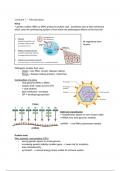
= genetic entities (RNA or DNA) protect by protein coat , sometimes also a lipid membrane
which uses the synthesizing system of host witch has pathological effects on the host cell
all organisms have
viruses
Pathogens smaller than virus:
- Viroid = only RNA, circular, disease making
- Prions = disease making proteins, misformed
Composition of a virus
- viral genome (RNA or DNA)
- protein shell, made up from CPs
= coat proteins
- lipid membrane / envelope
- GP = envelope glycoprotein
Baltimore classification
= Classification based on how viruses make
+mRNA from their genomic material.
-ssRNA → viral RNA polymerase needed
Protein coat
Why subunits: coat proteins (CPs)
- saving genetic space on small genome
- increasing genetic stability (smaller gene → lower risk for mutation)
- easy (dis)assembly
- symmetric → minimal energy & less visible for immune system
,Function protein coat
- protection of genetic material
- recognition and penetration of the host cell
Structure
The higher the fold, the more spherical the protein coat will be
T=3 icosahedral capsid protein T=16 icosahedral capsid protein
pentameres = 12 asymmetric units = 5*12 = 60 capsid proteins = 60*T
T=triangulation, the higher the T → bigger particle
because capsid proteins are the same size
Entry of virus into the cell
1. Attachment
2. (internalization in endosomes)
3. Fusion
4. Transport
Classification
➢ molecular architecture
➢ replication strategy
➢ genetic relatedness
➢ host organisms
bacteriophages = viruses that infect bacteria
,Lecture 2 - Plant viruses (+mRNA)
The eukaryotic protein translation system Plant viral ss(+) RNA genome organization
The plant translational machinery only multiple ORFs
translate monocistronic messengers
(mRNAs) = one open reading frame (ORF)
ORF1 replication
(polymerase, helicase, methyl transferase)
ORF2 movement
UTR = untranslated region ORF3 encapsidation (coat proteins)
viral mRNA needs to mimic the eukaryotic mRNA
Strategies to overcome differences in mRNA:
1. Segmentation one ORF per mRNA
2. Subgenomic one ORF mRNA split of from
RNAs the main mRNA
3. Read-through only part of mRNA is
translation transcribed due to weak
start/stop codon
4. Frame shifting ribosome shifts to another
ORF so not all ORF translated
5. Polyprotein transcribed as one protein,
then processed into multiple
Cucumber mosaic virus (CMV) Tobacco mosaic virus (TMV)
2. Subgenomic RNA
1. Segmentation 3. Read-through translation
2. Subgenomic RNA
, Potato virus Y (PVY) Potato leafroll virus (PLRV)
5. Polyprotein
part of polyprotein can be protease → cuts
others (trans) or itself (cis)
2. Subgenomic RNAs
3. Read-through translation
4. Frame shifting
5. Polyprotein
Infection cycle
Virus entrance
Mechanical rupture in the cuticle caused by:
- Piercing → aphid, whitefly, thrips, nematode
- Biting → beetle
- Handling of plants
no receptor-mediated endocytosis like with animal-infecting viruses
Replication & translation
First translate protein needed for
replication
→ co-translational disassembly
Then +ssRNA → -ssRNA → +ssRNA
→ co-replicational disassembly
Translation of
movement/encapsidation proteins
Then assembly of new viruses
Virus
= genetic entities (RNA or DNA) protect by protein coat , sometimes also a lipid membrane
which uses the synthesizing system of host witch has pathological effects on the host cell
all organisms have
viruses
Pathogens smaller than virus:
- Viroid = only RNA, circular, disease making
- Prions = disease making proteins, misformed
Composition of a virus
- viral genome (RNA or DNA)
- protein shell, made up from CPs
= coat proteins
- lipid membrane / envelope
- GP = envelope glycoprotein
Baltimore classification
= Classification based on how viruses make
+mRNA from their genomic material.
-ssRNA → viral RNA polymerase needed
Protein coat
Why subunits: coat proteins (CPs)
- saving genetic space on small genome
- increasing genetic stability (smaller gene → lower risk for mutation)
- easy (dis)assembly
- symmetric → minimal energy & less visible for immune system
,Function protein coat
- protection of genetic material
- recognition and penetration of the host cell
Structure
The higher the fold, the more spherical the protein coat will be
T=3 icosahedral capsid protein T=16 icosahedral capsid protein
pentameres = 12 asymmetric units = 5*12 = 60 capsid proteins = 60*T
T=triangulation, the higher the T → bigger particle
because capsid proteins are the same size
Entry of virus into the cell
1. Attachment
2. (internalization in endosomes)
3. Fusion
4. Transport
Classification
➢ molecular architecture
➢ replication strategy
➢ genetic relatedness
➢ host organisms
bacteriophages = viruses that infect bacteria
,Lecture 2 - Plant viruses (+mRNA)
The eukaryotic protein translation system Plant viral ss(+) RNA genome organization
The plant translational machinery only multiple ORFs
translate monocistronic messengers
(mRNAs) = one open reading frame (ORF)
ORF1 replication
(polymerase, helicase, methyl transferase)
ORF2 movement
UTR = untranslated region ORF3 encapsidation (coat proteins)
viral mRNA needs to mimic the eukaryotic mRNA
Strategies to overcome differences in mRNA:
1. Segmentation one ORF per mRNA
2. Subgenomic one ORF mRNA split of from
RNAs the main mRNA
3. Read-through only part of mRNA is
translation transcribed due to weak
start/stop codon
4. Frame shifting ribosome shifts to another
ORF so not all ORF translated
5. Polyprotein transcribed as one protein,
then processed into multiple
Cucumber mosaic virus (CMV) Tobacco mosaic virus (TMV)
2. Subgenomic RNA
1. Segmentation 3. Read-through translation
2. Subgenomic RNA
, Potato virus Y (PVY) Potato leafroll virus (PLRV)
5. Polyprotein
part of polyprotein can be protease → cuts
others (trans) or itself (cis)
2. Subgenomic RNAs
3. Read-through translation
4. Frame shifting
5. Polyprotein
Infection cycle
Virus entrance
Mechanical rupture in the cuticle caused by:
- Piercing → aphid, whitefly, thrips, nematode
- Biting → beetle
- Handling of plants
no receptor-mediated endocytosis like with animal-infecting viruses
Replication & translation
First translate protein needed for
replication
→ co-translational disassembly
Then +ssRNA → -ssRNA → +ssRNA
→ co-replicational disassembly
Translation of
movement/encapsidation proteins
Then assembly of new viruses