P2 – Outline how legislation, policies and procedures relating to health, safety and
security influence health and social care settings
Legislations
Food Safety Act;
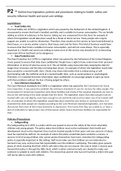
The Food Safety Act (1990) is a legislation which was passed by the Parliament of the United Kingdom. It
was passed to ensure that food is handled carefully, and is suitable for human consumption. The act forbids
adding an article of substance to the food or, taking out any component from the food. An example of
where this legislation would take place would be a Meals at Home service. Many people who require
support are unable to cook for themselves. Therefore, they would use this service to have food delivered to
their house, or a service worker come to their house and cook for them. This kind of business would have
to ensure that their food is suitable for human consumption, and will not cause illness. This is especially
important in a health and social care setting as many users of this service may already be ill, so becoming
even more ill from bad food can be dangerous.
Data Protection Act;
The Data Protection Act (1998) is a legislation which was passed by the Parliament of the United Kingdom.
It was passed to ensure that data stays confidential. People have a right to have control over their personal
information, in terms of who has access to it. The act forbids using inaccurate data, keeping the data for
longer than necessary and the data not being kept secure. An example of where this legislation would take
place would be a mental health clinic. Clients may share information that is embarrassing or self-
incriminating with the staff that work at a mental health clinic, such as social workers or psychologists.
Therefore, it is essential that their information stays confidential, to encourage people to open up more
with their problems without the fear of being judged by others.
Care Minimum Standards;
The Care Minimum Standards Act (2000) is a legislation which was passed by the Commission for Social
Care Inspection. It was passed to establish the minimum standards of care for services for older people. The
Commission for Social Care Inspection visits these facilities and checks if the required standards are met, to
ensure the well-being of the older people that live there. The legislation states that older people must be
treated with care and dignity, must have enough to eat and drink and must be taken care of by trained staff
etc. An example of where this legislation would take place would be care homes or nursing homes. It is
essential that older people are treated according to the Care Minimum Standards legislation, as it has been
discovered that many of them have dementia or depression. This means that they are unable to, or have a
lack of motivation to take proper care of themselves which means that these facilities are responsible for
that.
Policies/Procedures
Safeguarding;
The Safeguarding Act (1997) is a policy which was passed to ensure the safety of the most vulnerable;
children and young people. The policy states that children must not be maltreated, their health and
development must not be impaired, they must be treated equally to their peers and any concerns of abuse
must be reported by staff etc. An example of where this policy would take place would be a nursery. A
nursery is full of young children who cannot protect themselves from harm, therefore the Safeguarding
policy is especially important in this setting. Staff must make sure that children are not mistreated or
harmed in any way, as they have full responsibility over the children's well-being. This policy gives parents
peace of mind, knowing that their child is safe when they are not around. One way in which a nursery puts
forward this policy is through the DBS check, which is when criminal records are checked to make sure
someone is suitable to work with children. This means that anyone who has ever harmed a child in the past
will not be able to work with children.
security influence health and social care settings
Legislations
Food Safety Act;
The Food Safety Act (1990) is a legislation which was passed by the Parliament of the United Kingdom. It
was passed to ensure that food is handled carefully, and is suitable for human consumption. The act forbids
adding an article of substance to the food or, taking out any component from the food. An example of
where this legislation would take place would be a Meals at Home service. Many people who require
support are unable to cook for themselves. Therefore, they would use this service to have food delivered to
their house, or a service worker come to their house and cook for them. This kind of business would have
to ensure that their food is suitable for human consumption, and will not cause illness. This is especially
important in a health and social care setting as many users of this service may already be ill, so becoming
even more ill from bad food can be dangerous.
Data Protection Act;
The Data Protection Act (1998) is a legislation which was passed by the Parliament of the United Kingdom.
It was passed to ensure that data stays confidential. People have a right to have control over their personal
information, in terms of who has access to it. The act forbids using inaccurate data, keeping the data for
longer than necessary and the data not being kept secure. An example of where this legislation would take
place would be a mental health clinic. Clients may share information that is embarrassing or self-
incriminating with the staff that work at a mental health clinic, such as social workers or psychologists.
Therefore, it is essential that their information stays confidential, to encourage people to open up more
with their problems without the fear of being judged by others.
Care Minimum Standards;
The Care Minimum Standards Act (2000) is a legislation which was passed by the Commission for Social
Care Inspection. It was passed to establish the minimum standards of care for services for older people. The
Commission for Social Care Inspection visits these facilities and checks if the required standards are met, to
ensure the well-being of the older people that live there. The legislation states that older people must be
treated with care and dignity, must have enough to eat and drink and must be taken care of by trained staff
etc. An example of where this legislation would take place would be care homes or nursing homes. It is
essential that older people are treated according to the Care Minimum Standards legislation, as it has been
discovered that many of them have dementia or depression. This means that they are unable to, or have a
lack of motivation to take proper care of themselves which means that these facilities are responsible for
that.
Policies/Procedures
Safeguarding;
The Safeguarding Act (1997) is a policy which was passed to ensure the safety of the most vulnerable;
children and young people. The policy states that children must not be maltreated, their health and
development must not be impaired, they must be treated equally to their peers and any concerns of abuse
must be reported by staff etc. An example of where this policy would take place would be a nursery. A
nursery is full of young children who cannot protect themselves from harm, therefore the Safeguarding
policy is especially important in this setting. Staff must make sure that children are not mistreated or
harmed in any way, as they have full responsibility over the children's well-being. This policy gives parents
peace of mind, knowing that their child is safe when they are not around. One way in which a nursery puts
forward this policy is through the DBS check, which is when criminal records are checked to make sure
someone is suitable to work with children. This means that anyone who has ever harmed a child in the past
will not be able to work with children.