Antimicrobials
Most drugs such as beta blockers, paracetamol target ‘man’ and aim for a cure (the patient) but
antimicrobials/antibiotics target an infectious disease and aim to kill the pathogen- because they are
structurally different to human cells e.g. cell wall. The ideal target in bacteria for antibiotics is the cell wall.
Chemotherapeutic drugs are synthetic – made in the lab and they are anti-cancer drugs. However, antibiotics
are synthesised in vivo, usually by fungus or bacteria- can be antimicrobial or anti-cancer. So, both can be
interexchange able depending on whether they are made in lab or by bacteria/fungi.
Bacteria are classified as gram positive or negative. Gram+ (purple stain) have one plasma membrane
surrounded by thick peptidoglycan cell wall whereas gram – (red stain) have two cell membranes with the thin
peptidoglycan cell wall between membranes. The cell wall functions as type of exoskeleton (gives support) so
weakening it will kill the bacteria. This makes the cell wall a perfect target as human cells lack it. However,
mycoplasma and ureaplasma don’t have a cell wall.
Target for antimicrobials:
o Cell wall synthesis inhibition
o Protein synthesis inhibition
o Inhibition of nucleic acid function and synthesis
o Inhibitor of cell membrane function
o Inhibition of folate metabolism
Except the cell wall, all other targets are present in human cells; their amino acid sequence/structure
is different e.g. 70S ribosomes so antibiotics target these. Need correct dose to prevent side effects.
Selective Toxicity: effect bacteria without major effects on host cells – hence at a specific
concentration the drug affects bacteria and not host cells – this is the aim.
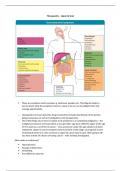
Therapeutic index: difference between effectiveness and toxicity- the wider the better as more likely
to be effective and not toxic.
Therapeutic spectrum: this refers to the bacteria the antibiotic is effective against, so the range varies
e.g. gram+ only or both etc.
Some antibiotics with different mechanism of action can be taken together to get a better effect,
antibiotics vary in their mechanism of action/side effects/resistance/distribution etc.
Cell Wall synthesis inhibitors – Beta lactam antibiotics:
o Benzylpenicillin
o Penicillin V
o Amoxicillin
o Flucloxacillin
o Co-amoxiclav – combination of amoxicillin and clavulanic acid (a beta lactamase inhibitor)
o Cefotaxime (a Cephalosporin)- used for gonorrhoea as resistant to penicillin.
o Vancomycin*- only effective against gram+
Protein Synthesis Inhibitors:
o Clarithromycin (Macrolide group)- effective against chlamydia – azithromycin is better than
clarithromycin (replicates inside host so penicillin and cephalosporins aren’t effective).
o Gentamicin (aminoglycoside group)- affects kidney function/causes renal toxicity
o Oxytetracycline
DNA/RNA Synthesis Inhibitors:
o Ciprofloxacin
o Nitrofurantoin
o Metronidazole
o Rifampicin- interferes with contraceptive pill
Metabolism:
o Trimethoprim
, Bacterial cell wall:
- Main group of antibiotics used to target this are penicillin and other beta lactam antibiotics.
- These drugs have a similar structure – beta lactam ring (penicillin and cephalosporins belong
to this group). They act by inhibiting a protein celled penicillin binding protein (PBP), which
normally causes the formation of cross links between peptidoglycan in the cell wall.
- The beta lactam ring binds to the PBP and thereby inhibits it so cross links not formed, and
cell wall is weakened resulting in killing of bacteria.
- Work for both gram+ and gram-
- Other antibiotics used include Vancomycin – it has different mode of action so may be
suitable to treat MRSA.
- Some resistant bacteria may be beta lactamase which breaks down the beta lactam ring so
destroying the antibiotic – Amoxiclav inhibits this enzyme.
- Other resistant bacteria may have a different version of PBP.
Protein Synthesis inhibitors:
- Ribosomes that are the target for protein synthesis inhibitors are structurally different from
human ribosomes.
- However, human mitochondrial ribosomes have a structure similar to bacterial ribosomes, so
you get some side effects.
- At high concentration these antibiotics may interfere with human cells -selective toxicity,
look at therapeutic index.
- Antibiotics such as penicillin, that target a structure not present in humans have a much
wider therapeutic index and less chance of toxicity.
- Tetracyclines (oxytetracycline): interferes with attachment of tRNA to mRNA.
- Clarithromycin + azithromycin: interferes with direction of travel of ribosome – important in
treatment of chlamydia.
- Gentamicin (an Aminoglycoside): change shape of 30S portion so mRNA read incorrectly +
also associated with renal toxicity.
- Macrolides: bind to 50S portion, preventing ribosome movement.
- Aim: drugs bind selectively to the bacterial ribosome and interrupt protein synthesis.
Interference with DNA/RNA synthesis:
- Selective toxicity + therapeutic index more important as this process also occurs in human
cells
- The drugs used have narrower therapeutic indices and high concentrations may be toxic.
- Ciprofloxacin: inhibition of topoisomerase II: strand breaks + treat UTI (Type II
topoisomerases cut both strands of the DNA helix simultaneously in order to manage DNA
tangles and supercoils).
- Rifampicin: mRNA synthesis inhibition +also interferes with contraceptive pill.
- Nitrofurantoin: direct damage to DNA – used in UTI.
- Metronidazole: DNA and protein interaction – for toothache (don’t drink alcohol with it) +
used to treat trichomoniasis (protozoa).
Inhibitors of metabolism- folate synthesis:
- Trimethoprim (used in uncomplicated UTI): inhibits conversion of folic acid to tetrahydro
folic acid which is needed for amino acid synthesis, purine synthesis and thymidine synthesis.
- It inhibits dihydrofolate reductase.
- Humans take folate through food, but microbes can’t, they must synthesise it .
- Sulphonamides: prevent formation of folic acid, usually used in combination with
trimethoprim called co-trimoxazole synergism
- These drugs are not effective in the presence of pus, as that contains dead bacteria and
neutrophils and the bacteria can take their building blocks from that.
Why have so many different antibiotics?
o Antibiotic may not be able to reach targets – humans aren’t test tubes may have different
effect inside us compared to tube.
Most drugs such as beta blockers, paracetamol target ‘man’ and aim for a cure (the patient) but
antimicrobials/antibiotics target an infectious disease and aim to kill the pathogen- because they are
structurally different to human cells e.g. cell wall. The ideal target in bacteria for antibiotics is the cell wall.
Chemotherapeutic drugs are synthetic – made in the lab and they are anti-cancer drugs. However, antibiotics
are synthesised in vivo, usually by fungus or bacteria- can be antimicrobial or anti-cancer. So, both can be
interexchange able depending on whether they are made in lab or by bacteria/fungi.
Bacteria are classified as gram positive or negative. Gram+ (purple stain) have one plasma membrane
surrounded by thick peptidoglycan cell wall whereas gram – (red stain) have two cell membranes with the thin
peptidoglycan cell wall between membranes. The cell wall functions as type of exoskeleton (gives support) so
weakening it will kill the bacteria. This makes the cell wall a perfect target as human cells lack it. However,
mycoplasma and ureaplasma don’t have a cell wall.
Target for antimicrobials:
o Cell wall synthesis inhibition
o Protein synthesis inhibition
o Inhibition of nucleic acid function and synthesis
o Inhibitor of cell membrane function
o Inhibition of folate metabolism
Except the cell wall, all other targets are present in human cells; their amino acid sequence/structure
is different e.g. 70S ribosomes so antibiotics target these. Need correct dose to prevent side effects.
Selective Toxicity: effect bacteria without major effects on host cells – hence at a specific
concentration the drug affects bacteria and not host cells – this is the aim.
Therapeutic index: difference between effectiveness and toxicity- the wider the better as more likely
to be effective and not toxic.
Therapeutic spectrum: this refers to the bacteria the antibiotic is effective against, so the range varies
e.g. gram+ only or both etc.
Some antibiotics with different mechanism of action can be taken together to get a better effect,
antibiotics vary in their mechanism of action/side effects/resistance/distribution etc.
Cell Wall synthesis inhibitors – Beta lactam antibiotics:
o Benzylpenicillin
o Penicillin V
o Amoxicillin
o Flucloxacillin
o Co-amoxiclav – combination of amoxicillin and clavulanic acid (a beta lactamase inhibitor)
o Cefotaxime (a Cephalosporin)- used for gonorrhoea as resistant to penicillin.
o Vancomycin*- only effective against gram+
Protein Synthesis Inhibitors:
o Clarithromycin (Macrolide group)- effective against chlamydia – azithromycin is better than
clarithromycin (replicates inside host so penicillin and cephalosporins aren’t effective).
o Gentamicin (aminoglycoside group)- affects kidney function/causes renal toxicity
o Oxytetracycline
DNA/RNA Synthesis Inhibitors:
o Ciprofloxacin
o Nitrofurantoin
o Metronidazole
o Rifampicin- interferes with contraceptive pill
Metabolism:
o Trimethoprim
, Bacterial cell wall:
- Main group of antibiotics used to target this are penicillin and other beta lactam antibiotics.
- These drugs have a similar structure – beta lactam ring (penicillin and cephalosporins belong
to this group). They act by inhibiting a protein celled penicillin binding protein (PBP), which
normally causes the formation of cross links between peptidoglycan in the cell wall.
- The beta lactam ring binds to the PBP and thereby inhibits it so cross links not formed, and
cell wall is weakened resulting in killing of bacteria.
- Work for both gram+ and gram-
- Other antibiotics used include Vancomycin – it has different mode of action so may be
suitable to treat MRSA.
- Some resistant bacteria may be beta lactamase which breaks down the beta lactam ring so
destroying the antibiotic – Amoxiclav inhibits this enzyme.
- Other resistant bacteria may have a different version of PBP.
Protein Synthesis inhibitors:
- Ribosomes that are the target for protein synthesis inhibitors are structurally different from
human ribosomes.
- However, human mitochondrial ribosomes have a structure similar to bacterial ribosomes, so
you get some side effects.
- At high concentration these antibiotics may interfere with human cells -selective toxicity,
look at therapeutic index.
- Antibiotics such as penicillin, that target a structure not present in humans have a much
wider therapeutic index and less chance of toxicity.
- Tetracyclines (oxytetracycline): interferes with attachment of tRNA to mRNA.
- Clarithromycin + azithromycin: interferes with direction of travel of ribosome – important in
treatment of chlamydia.
- Gentamicin (an Aminoglycoside): change shape of 30S portion so mRNA read incorrectly +
also associated with renal toxicity.
- Macrolides: bind to 50S portion, preventing ribosome movement.
- Aim: drugs bind selectively to the bacterial ribosome and interrupt protein synthesis.
Interference with DNA/RNA synthesis:
- Selective toxicity + therapeutic index more important as this process also occurs in human
cells
- The drugs used have narrower therapeutic indices and high concentrations may be toxic.
- Ciprofloxacin: inhibition of topoisomerase II: strand breaks + treat UTI (Type II
topoisomerases cut both strands of the DNA helix simultaneously in order to manage DNA
tangles and supercoils).
- Rifampicin: mRNA synthesis inhibition +also interferes with contraceptive pill.
- Nitrofurantoin: direct damage to DNA – used in UTI.
- Metronidazole: DNA and protein interaction – for toothache (don’t drink alcohol with it) +
used to treat trichomoniasis (protozoa).
Inhibitors of metabolism- folate synthesis:
- Trimethoprim (used in uncomplicated UTI): inhibits conversion of folic acid to tetrahydro
folic acid which is needed for amino acid synthesis, purine synthesis and thymidine synthesis.
- It inhibits dihydrofolate reductase.
- Humans take folate through food, but microbes can’t, they must synthesise it .
- Sulphonamides: prevent formation of folic acid, usually used in combination with
trimethoprim called co-trimoxazole synergism
- These drugs are not effective in the presence of pus, as that contains dead bacteria and
neutrophils and the bacteria can take their building blocks from that.
Why have so many different antibiotics?
o Antibiotic may not be able to reach targets – humans aren’t test tubes may have different
effect inside us compared to tube.