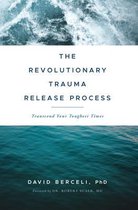
Verslag The Revolutionary Trauma Release Process -
David Berceli
Life is traumatic
- We want to avoid pain and suffering at all cost.
- Resistance to any aspect of our lives, is counterproductive.
- We are designed to experience, endure and survive stressful episodes.
- We don’t make a conscious decision to feel traumatized - it’s an automatic
response.
- A traumatic response is not a display of weakness, but rather the body’s attempt
to protect itself.
- Trauma is common to the human species. Consider the fact that life begin
traumatically.
Insight from Hurricane Katrina
- A common response to trauma is depression.
- Is it really the case that the effects of trauma can never be cured, but can only be
managed with the help of professional counseling and drugs? Or is there an
obvious natural solution, available to anyone, anywhere in the world?
Help me heal myself
- Mainstream health care providers are finding they are unprepared for much of
the trauma occurring on the planet.
- Talk therapy alone often isn’t enough - especially one’s trauma is etched deeply
into the body.
- Whatever trauma we may have experienced, even professional help is most
effective when it empowers us to take our recovery into our own hands.
- Trauma doesn’t have to mark us for life. In fact, we can recover completely.
- The human body is capable of healing itself.
, When life doesn’t work out the way it’s supposed to
- Traumatic experiences are processed differently from pleasant sensations.
- When life presents us with cues that closely match unprocessed stimuli from a
traumatic event, it tends to trigger unintegrated memories, bringing them back
to mind as if the event were occurring in the moment.
- In addition to causing us emotional distress, unresolved trauma lies at the root
of much chronic pain. It’s also responsible for most of physical illnesses.
- The autonomic nervous system, the endocrine system and the immune system,
which function in harmony, are all disrupted by trauma.
How our instant-on button gets stuck
- In times of trauma, the hypothalamus-pituitary-adrenal axis* (HPA) is activated
and produces neurotransmitters (dopamine, norepinephrine, epinephrine
(adrenaline)).
- In normal course of events, the HPA is deactivated after a stressful occurrence
has passed. The parasympathetic nervous system then becomes dominant
again, and the individual returns to a relaxed state.
- It doesn’t matter how long ago a trauma occurred, the body always seeks to free
us of its effects. It has a natural tendency toward healing that we can learn to
work with once we are aware of it.
* hypothalamus-hypofyse-bijnier-as (HPA-as) (extra info online gezocht)
Deze drie organen werken samen om een gezonde stressrespons mogelijk te maken.
Stress > hypthalamus geeft hormonen af > hypofyse gaat daardoor andere hormonen
aanmaken > de bijnieren produceren cortisol.
hypothalamus = klier in de hersenen (onderdeel van limbisch systeem: emotie, genot,
motivatie). Het controleert het autonome zenuwstelsel en endocriene systeem. Speelt een
cruciale rol bij vechten/vluchten. Reguleert de bloeddruk, hartslag, honger, dorst, slaap-
waakritme, seksuele opwinding, lichaamstemperatuur.
David Berceli
Life is traumatic
- We want to avoid pain and suffering at all cost.
- Resistance to any aspect of our lives, is counterproductive.
- We are designed to experience, endure and survive stressful episodes.
- We don’t make a conscious decision to feel traumatized - it’s an automatic
response.
- A traumatic response is not a display of weakness, but rather the body’s attempt
to protect itself.
- Trauma is common to the human species. Consider the fact that life begin
traumatically.
Insight from Hurricane Katrina
- A common response to trauma is depression.
- Is it really the case that the effects of trauma can never be cured, but can only be
managed with the help of professional counseling and drugs? Or is there an
obvious natural solution, available to anyone, anywhere in the world?
Help me heal myself
- Mainstream health care providers are finding they are unprepared for much of
the trauma occurring on the planet.
- Talk therapy alone often isn’t enough - especially one’s trauma is etched deeply
into the body.
- Whatever trauma we may have experienced, even professional help is most
effective when it empowers us to take our recovery into our own hands.
- Trauma doesn’t have to mark us for life. In fact, we can recover completely.
- The human body is capable of healing itself.
, When life doesn’t work out the way it’s supposed to
- Traumatic experiences are processed differently from pleasant sensations.
- When life presents us with cues that closely match unprocessed stimuli from a
traumatic event, it tends to trigger unintegrated memories, bringing them back
to mind as if the event were occurring in the moment.
- In addition to causing us emotional distress, unresolved trauma lies at the root
of much chronic pain. It’s also responsible for most of physical illnesses.
- The autonomic nervous system, the endocrine system and the immune system,
which function in harmony, are all disrupted by trauma.
How our instant-on button gets stuck
- In times of trauma, the hypothalamus-pituitary-adrenal axis* (HPA) is activated
and produces neurotransmitters (dopamine, norepinephrine, epinephrine
(adrenaline)).
- In normal course of events, the HPA is deactivated after a stressful occurrence
has passed. The parasympathetic nervous system then becomes dominant
again, and the individual returns to a relaxed state.
- It doesn’t matter how long ago a trauma occurred, the body always seeks to free
us of its effects. It has a natural tendency toward healing that we can learn to
work with once we are aware of it.
* hypothalamus-hypofyse-bijnier-as (HPA-as) (extra info online gezocht)
Deze drie organen werken samen om een gezonde stressrespons mogelijk te maken.
Stress > hypthalamus geeft hormonen af > hypofyse gaat daardoor andere hormonen
aanmaken > de bijnieren produceren cortisol.
hypothalamus = klier in de hersenen (onderdeel van limbisch systeem: emotie, genot,
motivatie). Het controleert het autonome zenuwstelsel en endocriene systeem. Speelt een
cruciale rol bij vechten/vluchten. Reguleert de bloeddruk, hartslag, honger, dorst, slaap-
waakritme, seksuele opwinding, lichaamstemperatuur.