INFECTION AND RESPONSE
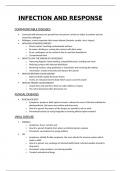
COMMUNICABLE DISEASES
Communicable diseases are spread from one person, animal or object to another and are
caused by pathogens
Pathogen: a micro-organism that causes disease (bacteria, protist, virus, fungus)
HOW ARE PATHOGENS SPREAD?
o Direct contact: touching contaminated surfaces
o By water: drinking or coming into contact with dirty water
o By air: pathogens can be carried in the air and then breathed in
o Contaminated food
HOW TO LIMIT THE SPREAD OF PATHOGENS?
o Improving hygiene: hand washing, using disinfectants, isolating raw meat
o Reducing contact with infected individuals
o Removing vectors: using pesticides or insecticides and removing the habitat
o Vaccination: creates immunity and reduces the spread
HOW DO BACTERIA CAUSE DISEASE?
o Bacteria divide rapidly by binary fission
o Toxins are released into the body which cause us to feel unwell
HOW DO VIRUSES CAUSE DISEASE?
o Invade host cells and force them to make millions of copies
o The cell is destroyed when they burst out
FUNGAL DISEASES
ROSE BLACK SPOT
o Symptoms: purple or black spots on leaves, reduces the area of the leaf available for
photosynthesis, the leaves turn yellow and drop early
o How it is spread: the spores of the fungus are spread by rain or wind
o Prevented/treated: by using fungicides or burning affected plant material
VIRAL DISEASE
MEASELS
o Symptoms: fever, red skin rash
o How it is spread: droplets from when an infected person sneezes
o Prevented: vaccinations for young children
HIV
o Symptoms: initially flu-like symptoms, the virus attacks the immune system which
leads to AIDS
o How it is spread: sex, exchange of infected bodily fluids, infected needles shared by
drug users
o Prevented: using condoms, not sharing needles
o Treated: antiretroviral drugs
COMMUNICABLE DISEASES
Communicable diseases are spread from one person, animal or object to another and are
caused by pathogens
Pathogen: a micro-organism that causes disease (bacteria, protist, virus, fungus)
HOW ARE PATHOGENS SPREAD?
o Direct contact: touching contaminated surfaces
o By water: drinking or coming into contact with dirty water
o By air: pathogens can be carried in the air and then breathed in
o Contaminated food
HOW TO LIMIT THE SPREAD OF PATHOGENS?
o Improving hygiene: hand washing, using disinfectants, isolating raw meat
o Reducing contact with infected individuals
o Removing vectors: using pesticides or insecticides and removing the habitat
o Vaccination: creates immunity and reduces the spread
HOW DO BACTERIA CAUSE DISEASE?
o Bacteria divide rapidly by binary fission
o Toxins are released into the body which cause us to feel unwell
HOW DO VIRUSES CAUSE DISEASE?
o Invade host cells and force them to make millions of copies
o The cell is destroyed when they burst out
FUNGAL DISEASES
ROSE BLACK SPOT
o Symptoms: purple or black spots on leaves, reduces the area of the leaf available for
photosynthesis, the leaves turn yellow and drop early
o How it is spread: the spores of the fungus are spread by rain or wind
o Prevented/treated: by using fungicides or burning affected plant material
VIRAL DISEASE
MEASELS
o Symptoms: fever, red skin rash
o How it is spread: droplets from when an infected person sneezes
o Prevented: vaccinations for young children
HIV
o Symptoms: initially flu-like symptoms, the virus attacks the immune system which
leads to AIDS
o How it is spread: sex, exchange of infected bodily fluids, infected needles shared by
drug users
o Prevented: using condoms, not sharing needles
o Treated: antiretroviral drugs