FLT3701
NOTES FOR EXAMS
JAN/FEB 2023 PLUS
JAN/FEB 2022 PLUS
Tutorial Letter 201/0/2023 PLUS
Tutorial Letter 201/0/2021 PLUS
Tutorial Letter 201/0/2020 PLUS
OLDER PAPERS AND NEWER
EXAMINATION PAPERS
QUESTIONS WITH ANSWERS!
DISTINCTION IN THE BAG!
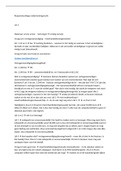
,JAN/FEB 2023
QUESTION 1
1.1 Describe the communicative approach in detail and explain how this approach differs from the audio-
lingual method
The Communicative Language Teaching approach (CLT) is a language teaching methodology that prioritizes
effective communication over the strict focus on language forms and structures, such as grammar. This
approach aims to teach learners how to use language in authentic social interactions and focuses on the
function of language rather than just its grammatical rules.
Key characteristics:
• Communication as the Core: The central emphasis of CLT is on fostering communication. It places a
higher value on using language for real-life purposes and understanding the meaning conveyed by
words and sentences, rather than just memorizing grammatical rules.
• Starting with BICS: The approach begins with teaching and using Basic Interpersonal
Communication Skills (BICS), which are the language skills needed for everyday social interactions.
This includes activities like introducing oneself, greeting others, asking questions, expressing
emotions, and seeking permission.
• Learner-Centered Approach: CLT involves learners actively in the language learning process.
Learners play a crucial role in expressing their ideas, transferring meaning, and learning from their
mistakes. Teachers act as facilitators, guiding learners to understand the meaning of their
communication.
, • Limited Emphasis on Grammar: Grammar takes a secondary role in CLT because the primary focus
is on effective communication. The belief is that as learners engage in real communication, they
naturally acquire grammar skills and self-correct their errors.
• Personalized Learning: Learners are encouraged to communicate about topics that are personally
relevant to them. This approach values learners' individual experiences and preferences, making
learning meaningful and motivating.
• Teacher's Role: Teachers act as intermediaries, ensuring that learners comprehend the meaning of
what they are saying and hearing. They design activities, select texts, and provide support as
needed to facilitate effective communication.
• Classroom Environment: A CLT classroom should foster a comfortable and informal atmosphere
where learners are encouraged to make mistakes without fear. This approach aligns with the
Affective Filter hypothesis, which suggests that learners are more successful when they feel relaxed
and confident.
• Integration of Skills: CLT can also be applied to writing, as learners who are confident in oral
communication can transfer these skills to produce written texts. Activities like sentence completion
and the use of flashcards can assist in this process.
Limitation
One potential limitation of the CLT approach is that it may be most effective in small groups where
individualized attention is possible. Additionally, some learners may find it challenging to learn listening and
speaking skills separately before transitioning to reading and writing.
In summary, CLT prioritizes meaningful communication, encourages active participation, and focuses on
learners' personal experiences to facilitate language learning. It seeks to make language learning relevant
and enjoyable, with grammar emerging naturally as learners engage in communication.
, The Audio-Lingual Method
This is one of the oldest language teaching approaches, and it centers on the development of listening
(audio) and speaking (lingual) skills. It originated as an evolution from the Direct Method and is grounded in
principles of behavioral psychology, particularly focusing on learners' habits.
Key characteristic:
Drilling and Repetition: This method extensively employs drilling and repetition as instructional techniques.
Learners practice various aspects of the target language, including vocabulary and language structures.
Typically, students spend a significant amount of time listening and speaking before engaging in reading
and writing activities.
Use of Substitution Tables: Substitution tables are employed to teach new words by introducing synonyms,
facilitating vocabulary expansion.
Dialogues and Nursery Rhymes: Learners frequently engage in repeating dialogues or nursery rhymes,
either individually or in groups. Prior to repetition, teachers provide explanations to ensure
comprehension.
Correction of Grammar and Pronunciation Errors: While learners repeat dialogues, teachers actively correct
grammar and pronunciation errors to reinforce accuracy.
Expansion of Vocabulary: After several repetitions, teachers introduce synonyms to enhance vocabulary.
Exercises are used to encourage sentence completion, idea expansion, and sentence rephrasing.
The Audio-Lingual Method is often considered effective for introducing English as a First Additional
Language (EFAL) in the foundation phase, especially when learners have limited or no prior knowledge of
NOTES FOR EXAMS
JAN/FEB 2023 PLUS
JAN/FEB 2022 PLUS
Tutorial Letter 201/0/2023 PLUS
Tutorial Letter 201/0/2021 PLUS
Tutorial Letter 201/0/2020 PLUS
OLDER PAPERS AND NEWER
EXAMINATION PAPERS
QUESTIONS WITH ANSWERS!
DISTINCTION IN THE BAG!
,JAN/FEB 2023
QUESTION 1
1.1 Describe the communicative approach in detail and explain how this approach differs from the audio-
lingual method
The Communicative Language Teaching approach (CLT) is a language teaching methodology that prioritizes
effective communication over the strict focus on language forms and structures, such as grammar. This
approach aims to teach learners how to use language in authentic social interactions and focuses on the
function of language rather than just its grammatical rules.
Key characteristics:
• Communication as the Core: The central emphasis of CLT is on fostering communication. It places a
higher value on using language for real-life purposes and understanding the meaning conveyed by
words and sentences, rather than just memorizing grammatical rules.
• Starting with BICS: The approach begins with teaching and using Basic Interpersonal
Communication Skills (BICS), which are the language skills needed for everyday social interactions.
This includes activities like introducing oneself, greeting others, asking questions, expressing
emotions, and seeking permission.
• Learner-Centered Approach: CLT involves learners actively in the language learning process.
Learners play a crucial role in expressing their ideas, transferring meaning, and learning from their
mistakes. Teachers act as facilitators, guiding learners to understand the meaning of their
communication.
, • Limited Emphasis on Grammar: Grammar takes a secondary role in CLT because the primary focus
is on effective communication. The belief is that as learners engage in real communication, they
naturally acquire grammar skills and self-correct their errors.
• Personalized Learning: Learners are encouraged to communicate about topics that are personally
relevant to them. This approach values learners' individual experiences and preferences, making
learning meaningful and motivating.
• Teacher's Role: Teachers act as intermediaries, ensuring that learners comprehend the meaning of
what they are saying and hearing. They design activities, select texts, and provide support as
needed to facilitate effective communication.
• Classroom Environment: A CLT classroom should foster a comfortable and informal atmosphere
where learners are encouraged to make mistakes without fear. This approach aligns with the
Affective Filter hypothesis, which suggests that learners are more successful when they feel relaxed
and confident.
• Integration of Skills: CLT can also be applied to writing, as learners who are confident in oral
communication can transfer these skills to produce written texts. Activities like sentence completion
and the use of flashcards can assist in this process.
Limitation
One potential limitation of the CLT approach is that it may be most effective in small groups where
individualized attention is possible. Additionally, some learners may find it challenging to learn listening and
speaking skills separately before transitioning to reading and writing.
In summary, CLT prioritizes meaningful communication, encourages active participation, and focuses on
learners' personal experiences to facilitate language learning. It seeks to make language learning relevant
and enjoyable, with grammar emerging naturally as learners engage in communication.
, The Audio-Lingual Method
This is one of the oldest language teaching approaches, and it centers on the development of listening
(audio) and speaking (lingual) skills. It originated as an evolution from the Direct Method and is grounded in
principles of behavioral psychology, particularly focusing on learners' habits.
Key characteristic:
Drilling and Repetition: This method extensively employs drilling and repetition as instructional techniques.
Learners practice various aspects of the target language, including vocabulary and language structures.
Typically, students spend a significant amount of time listening and speaking before engaging in reading
and writing activities.
Use of Substitution Tables: Substitution tables are employed to teach new words by introducing synonyms,
facilitating vocabulary expansion.
Dialogues and Nursery Rhymes: Learners frequently engage in repeating dialogues or nursery rhymes,
either individually or in groups. Prior to repetition, teachers provide explanations to ensure
comprehension.
Correction of Grammar and Pronunciation Errors: While learners repeat dialogues, teachers actively correct
grammar and pronunciation errors to reinforce accuracy.
Expansion of Vocabulary: After several repetitions, teachers introduce synonyms to enhance vocabulary.
Exercises are used to encourage sentence completion, idea expansion, and sentence rephrasing.
The Audio-Lingual Method is often considered effective for introducing English as a First Additional
Language (EFAL) in the foundation phase, especially when learners have limited or no prior knowledge of