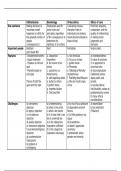
Utilitarianism Deontology Virtue ethics Ethics of care
One sentence Making decisions to Emphasizes specific Cultivating virtuous Prioritizes empathy,
maximize overall moral rules and character traits in compassion, and the
happiness or utility for principles, regardless individuals and making quality of relationships
the greatest number of of the consequences to moral decisions based on in making moral
people determine the these virtues judgments and
(consequences!) rightness of an actions decisions
Important people Bentham Kant Aristoteles Virginia Held
John Stuart Mill
Features 3 fundamental beliefs: a. categorical a. non-formulaic a) interdependence
- Equal treatment imperative b. Focus on virtues b) value of emotions
- Pleasure as intrinsic b. the maxim of an c. golden mean c) in opposition to
goal action d. Phronesis universal rules
- Morality based on c. autonomy (vs. e. Teleological Morality d) reconceptualizes
principles Heteronomy) (Eudaemonia) traditional notions
d. self-regarding duties f. That/Why/How/Pleasure about public and
Theory of both the e. duties to others g. We can (must) enjoy private
good and the right f. perfect duties virtue e) Locates liberal
g. imperfect duties individualistic values as
h. The Good Will problematically central
to many ethical
considerations.
Challenges a) narrowness a) overdemanding a) to much focus pleasure a) essentialism
objection b) what is the action b) dependent external b) too relativistic
b) agency objection c) what is de maxim factors (Tribalism)
c) evil pleasure d) is it clear that it can c) to little guidance, too
objection be an universal law vague
d) quality objection e) is the categorical d) situatedness
e) irrelevance objection imperative sufficient e) doesn’t appreciate
f) over-demandingness f) is the categorical ceremony
objection imperative necessary f) problematic about
g) counterintuitive gender and minority
implications
h) problem of
contingency
One sentence Making decisions to Emphasizes specific Cultivating virtuous Prioritizes empathy,
maximize overall moral rules and character traits in compassion, and the
happiness or utility for principles, regardless individuals and making quality of relationships
the greatest number of of the consequences to moral decisions based on in making moral
people determine the these virtues judgments and
(consequences!) rightness of an actions decisions
Important people Bentham Kant Aristoteles Virginia Held
John Stuart Mill
Features 3 fundamental beliefs: a. categorical a. non-formulaic a) interdependence
- Equal treatment imperative b. Focus on virtues b) value of emotions
- Pleasure as intrinsic b. the maxim of an c. golden mean c) in opposition to
goal action d. Phronesis universal rules
- Morality based on c. autonomy (vs. e. Teleological Morality d) reconceptualizes
principles Heteronomy) (Eudaemonia) traditional notions
d. self-regarding duties f. That/Why/How/Pleasure about public and
Theory of both the e. duties to others g. We can (must) enjoy private
good and the right f. perfect duties virtue e) Locates liberal
g. imperfect duties individualistic values as
h. The Good Will problematically central
to many ethical
considerations.
Challenges a) narrowness a) overdemanding a) to much focus pleasure a) essentialism
objection b) what is the action b) dependent external b) too relativistic
b) agency objection c) what is de maxim factors (Tribalism)
c) evil pleasure d) is it clear that it can c) to little guidance, too
objection be an universal law vague
d) quality objection e) is the categorical d) situatedness
e) irrelevance objection imperative sufficient e) doesn’t appreciate
f) over-demandingness f) is the categorical ceremony
objection imperative necessary f) problematic about
g) counterintuitive gender and minority
implications
h) problem of
contingency