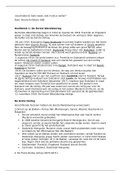
1. How successful was Adenauer’s foreign policy?
Adenauer was very much aware that maintaining the peace and freedom of the FRG was vital.
His policy was geared towards establishing sovereignty for the new state and exploiting the
economic, political and military strength of the free Western world bu fully integrating the FRG.
His aim was a united west Europe led and protected by the superpower USA and so his visions
went far beyond his own state. To reach this, Adenauer saw it was essential for the FRG to put
national interests to one side and create a close network of multinational institutions.
Stability, reliability and close co-operation were to be the principles with which he hoped to win
the trust of partners in the West.
Adenauer was strongly against communism/mistrusted the soviets/felt only a policy of strength
would deter communist aggression. Therefore, he was opposed to attempts at reunifying
Germany if it left the FRG neutralised, as it would be left largely defenceless and prey to
communist influence.
W.Carr wrote that “West Germany’s only hope of recovery lay in full co-operation with the Western
Powers”.
Major hurdle to achieve aims = win the trust of west European states, especially France. The new
state was also constrained by significant economic conditions and political ones e.g.:
- The Occupation Statute of April 1949 = gave the occupying powers the right to supervise the
country’s trade.
- The International Ruhr Authority = gave the right to France, Belgium, The Netherlands and
Luxembourg to control the distribution of the area’s resources.
- The status of the Saar (a mainly german-speaking area) and very rich in coal. = had been
virtually a puppet state controlled by France.
Adenauer believed that ECONOMIC CO-OPERATION was the best way to establish political trust.
The Petersberg agreement
The autumn of 1949 = the FRG government agreed to sign this with the Allied High Commission.
The primary purpose of it was to allow the FRG to join the International Ruhr Authority.
Schumacher attacked Adenauer as a ‘chancellor of the Allies’ but he actually gained a lot from
this co-operation:
- the dismantling of industry by the Allies was radically limited.
- The FRG gained the right to establish diplomatic relations with other states.
- The FRG was allowed to join the European Council in 1950.
The European Coal and Steel Community (ECSC)
1950 = French foreign minister Robert Schuman suggested a supranational organisation to
oversee German and French steel and coal production. There was an understanding that co-
operation could bring economic advantages and security.
Foundation of the ECSC = 1951 - it had six members… the FRG, France, Italy and the Benelux
states. They agreed on a common policy for prices, subsidies and investment and most
importantly, they lifted restrictions on imports and export of coal and steel between member
states.
The establishment of the ECSC replaced the International Ruhr Authority, which allowed the FRG
to be treated as an equal partner in that area. In the long term = the nature of the agreement laid
basis for Franco-German understanding after generations of hostility.
The ECSC was an immediate success and production of coal and steel within the community
increased by 44% from 1952-7.
The European Economic Community (EEC)
After the success of the ECSC, the six members began to take Western integration further and
extensive negotiations culminated in the Treaty of Rome (signed March 1957). This effectively
created the EEC as a customs union between the six.
EEC set out to harmonise measures of trade and prices in areas like agriculture and fisheries.
By 1964, 85% of West German agricultural produce came under EEC trade.
This was a starting point of an ever closer union of the members and its aims to:
- co-ordinate transportation systems
- Develop general economic policies
- Remove measures restricting free competition
- Assure the mobility of labour and capital
Adenauer was very much aware that maintaining the peace and freedom of the FRG was vital.
His policy was geared towards establishing sovereignty for the new state and exploiting the
economic, political and military strength of the free Western world bu fully integrating the FRG.
His aim was a united west Europe led and protected by the superpower USA and so his visions
went far beyond his own state. To reach this, Adenauer saw it was essential for the FRG to put
national interests to one side and create a close network of multinational institutions.
Stability, reliability and close co-operation were to be the principles with which he hoped to win
the trust of partners in the West.
Adenauer was strongly against communism/mistrusted the soviets/felt only a policy of strength
would deter communist aggression. Therefore, he was opposed to attempts at reunifying
Germany if it left the FRG neutralised, as it would be left largely defenceless and prey to
communist influence.
W.Carr wrote that “West Germany’s only hope of recovery lay in full co-operation with the Western
Powers”.
Major hurdle to achieve aims = win the trust of west European states, especially France. The new
state was also constrained by significant economic conditions and political ones e.g.:
- The Occupation Statute of April 1949 = gave the occupying powers the right to supervise the
country’s trade.
- The International Ruhr Authority = gave the right to France, Belgium, The Netherlands and
Luxembourg to control the distribution of the area’s resources.
- The status of the Saar (a mainly german-speaking area) and very rich in coal. = had been
virtually a puppet state controlled by France.
Adenauer believed that ECONOMIC CO-OPERATION was the best way to establish political trust.
The Petersberg agreement
The autumn of 1949 = the FRG government agreed to sign this with the Allied High Commission.
The primary purpose of it was to allow the FRG to join the International Ruhr Authority.
Schumacher attacked Adenauer as a ‘chancellor of the Allies’ but he actually gained a lot from
this co-operation:
- the dismantling of industry by the Allies was radically limited.
- The FRG gained the right to establish diplomatic relations with other states.
- The FRG was allowed to join the European Council in 1950.
The European Coal and Steel Community (ECSC)
1950 = French foreign minister Robert Schuman suggested a supranational organisation to
oversee German and French steel and coal production. There was an understanding that co-
operation could bring economic advantages and security.
Foundation of the ECSC = 1951 - it had six members… the FRG, France, Italy and the Benelux
states. They agreed on a common policy for prices, subsidies and investment and most
importantly, they lifted restrictions on imports and export of coal and steel between member
states.
The establishment of the ECSC replaced the International Ruhr Authority, which allowed the FRG
to be treated as an equal partner in that area. In the long term = the nature of the agreement laid
basis for Franco-German understanding after generations of hostility.
The ECSC was an immediate success and production of coal and steel within the community
increased by 44% from 1952-7.
The European Economic Community (EEC)
After the success of the ECSC, the six members began to take Western integration further and
extensive negotiations culminated in the Treaty of Rome (signed March 1957). This effectively
created the EEC as a customs union between the six.
EEC set out to harmonise measures of trade and prices in areas like agriculture and fisheries.
By 1964, 85% of West German agricultural produce came under EEC trade.
This was a starting point of an ever closer union of the members and its aims to:
- co-ordinate transportation systems
- Develop general economic policies
- Remove measures restricting free competition
- Assure the mobility of labour and capital