English Speaking World USA
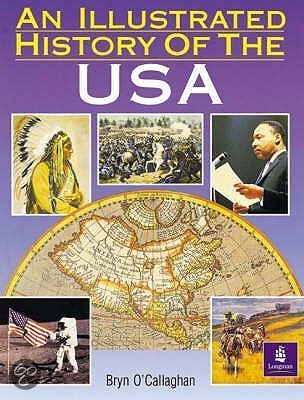
O’Callaghan, B. (1990). An illustrated history of the U.S.A.
A New World
Chapter 1: The First Americans
August 3, 1492 Columbus set sail from Spain.
Set sail to the Canary Islands, turned west on the Atlantic Ocean.
October 12, 1492 arrived on an island he called San Salvador, and called the people “los
Indios”.
He wasn’t in India, Asia. But in America.
Different groups of Amerindians with different kinds of life and spoke over 300 separate
languages across USA & Canada.
Europeans called the continent “The New World”.
Ancestors of the Amerindians had been living there for 50,000 years. Probably came from
Asia crossed from Alaska south and east following caribar and buffalo.
12,000 years ago, descendants crossed the isthmus of Panama.
5,000 years ago, camp on Southern tip Tierra del Fuego (= Land of Fire)
More settled life
1. Highland Areas (Mexico) first farmers corn/maize
a. Cultivated plants were developed
b. By 5,000 BC: beans, squash, peppers
2. The Pueblo people (Arizona & New Mexico) best organized.
a. Lived in groups of villages, or towns built for safety on sides and tops of cliffs.
b. Shared terrace buildings made of adobe bricks.
c. Made clothing from cotton.
d. Wore boot shaped leather moccasins.
e. Grew crops of maize and beans with irrigation!
3. The Apache (never became settled farmers)
a. Wandered deserts and mountains.
b. Stole food from Pueblo neighbors.
c. Fierce and warlike.
4. The Iroquois (a “nation”) woods of northeastern North America skilled farmers.
a. Cleared fields from forest and grew beans, squash, and 12 different kinds of
maize.
b. Hunters and fisherman.
c. Used birch bark canoes.
d. Lived in permanent villages, wooden huts.
e. Fierce warriors built wooden stockades to protect their villages.
f. To win glory often fought one another.
5. The Sioux (= Dakota) (Dakota = allies, Sioux = enemies) from the Mississippi River
to the Rocky Mountains.
a. Depended upon the buffalo, grew no crops and built no houses.
b. Never remained on one pasture.
6. People of North America’s northwest coast: gathered nuts and berries.
,Tribes like the Haida large houses totem poles
Potlatch means “gift-giving”.
,Chapter 2: Explorers from Europe
There were other discoverers before Christopher Columbus.
AD 459: Buddhist Monk named Hoei-Shin sailed from China to Mexico.
AD 551: Irish Monk named Brendan the Bold.
Viking named Leif Ericson “Lucky Leif” from Iceland.
Prince Madoc, a Welsh explorer who landed in the Mobile Bay in 1170, apparently
left behind the Welsh language with the Indians.
Evidence of the Vikings were found in Newfoundland Foundations of huts built in Viking
Style, also found iron nails and the weight, or “whorl” from a spindle.
Vikings were a sea-going people from Scandinavia in northern Europe:
Told stories called ‘sagas’
Leif Ericson: from Greenland to the eastern coast of North America (AD 1000) named
it “Vinland the Good”.
More settlers came but it did not last. They left Vinland and it was forgotten.
Gold-hungry Spanish people colonized in America.
Hernan Cortes (1520s) conquered the Aztecs: a wealthy, city-building Amerindian
people who lived in Mexico.
Francisco Pizarro (1530s) attacked the Incas of Peru.
Conquistadores in Central and South America was the new empire made by conquerors.
Between 1539 and 1543 Hernando de Soto and Francisco Coronado explored southern part
of the now USA.
1565: St. Augustine was claimed. Followed by Santa Fe and New Mexico in 1609.
1497: King Henry VII hired Italian seaman John Cabot and he reached the rocky coast of the
Newfoundland.
1524: The French King, Francis I, sent Italian explorer Giovanni Verrazano to explore and he
anchored his ship in New York.
Ten years later, another French sailor, Jacques Cartier, found Montreal in Canada.
The reasons for going to the New Land was for many settlers to become rich, or for political
or religious reasons.
, Chapter 3: Virginian Beginnings (NIET NODIG)
April 26, 1607: Virginia was first discovered. On May 20, they named the river James; after
King James I. They named the town; Jamestown. The settlers were sent by the Virginia
Company. Their purpose was to set up colonies along the Atlantic coast of North America.
One of their leaders was John Smith. Many colonists died. By April 1608, 53 of 197 were still
alive.
Between 1609 – 1610, 60 of the 500 colonists survived the winter.
Homeless children were sent from London to the colony. Then 100 prisoners.
In Europe, only the rich owned land. In the colony, even a poor man could own land. One of
the only reasons why people would emigrate.
Pocahontas shielded John Smith from being killed. She brought the starving colonists food.
In 1609, John Smith was badly injured in a gunpowder explosion and sent back to London.
Pocahontas married John Rolfe in 1614. In 1616, she travelled to London with him. She died
in 1617 of smallpox. She had a son who returned to Virginia when he was older.
Many women were bought with tobacco as wives for settlers.
Military governors ran Virginia like prison camps in 1611.
Tobacco saved Virginia. John Rolfe discovered how to dry the tobacco leaves. He sent them
for high prices to London in 1613.
Tobacco was highly popular to grow in Virginia and was even used as money.
Many workers of the plantations were “indentured servants” in exchange for clothes and
food.
Diseases and wars with Amerindians continued to kill settlers. Between 1619 and 1621,
3,560 settlers came from England to Virginia and 3,000 ended up dead.
Virginia’s affairs were controlled by the Virginia Company. They allowed a body called the
House of Burgesses to be set up, made up of elected representatives of settlements
alongside the Virginia rivers. Start of an American tradition: people should have a say in
decisions about matters that concern them.
House of Burgesses first met in August 1619. A Dutch ship arrived in James town with 20
black Africans. They were sold to the settlers to work as indentured servants. They worked
with the white, English indentured servants. Only difference: the white indentured servants
would one day be free. The African servants would not. They were in fact slaves.
The Virginia Company never made profit and ran out of money in 1624.
1607: 10,000 settlers.
1624: 1,275 surviving settlers.
Sir Walter Raleigh visited 20 years earlier than the Jamestown settlers. He named the place
Virginia, after the Virgin Queen, Elizabeth.
In July 1585, English man arrived on Roanoke Island. They eventually went back. In 1587,
Raleigh tried again with 14 family groups. They were led by John White. White’s daughter
and her husband became parents to the first English child to be born in America on August
18. White went back to England but returned in 1590. The whole of Roanoke was deserted
and only the word Croaton / Croatoan was carved in a tree.
O’Callaghan, B. (1990). An illustrated history of the U.S.A.
A New World
Chapter 1: The First Americans
August 3, 1492 Columbus set sail from Spain.
Set sail to the Canary Islands, turned west on the Atlantic Ocean.
October 12, 1492 arrived on an island he called San Salvador, and called the people “los
Indios”.
He wasn’t in India, Asia. But in America.
Different groups of Amerindians with different kinds of life and spoke over 300 separate
languages across USA & Canada.
Europeans called the continent “The New World”.
Ancestors of the Amerindians had been living there for 50,000 years. Probably came from
Asia crossed from Alaska south and east following caribar and buffalo.
12,000 years ago, descendants crossed the isthmus of Panama.
5,000 years ago, camp on Southern tip Tierra del Fuego (= Land of Fire)
More settled life
1. Highland Areas (Mexico) first farmers corn/maize
a. Cultivated plants were developed
b. By 5,000 BC: beans, squash, peppers
2. The Pueblo people (Arizona & New Mexico) best organized.
a. Lived in groups of villages, or towns built for safety on sides and tops of cliffs.
b. Shared terrace buildings made of adobe bricks.
c. Made clothing from cotton.
d. Wore boot shaped leather moccasins.
e. Grew crops of maize and beans with irrigation!
3. The Apache (never became settled farmers)
a. Wandered deserts and mountains.
b. Stole food from Pueblo neighbors.
c. Fierce and warlike.
4. The Iroquois (a “nation”) woods of northeastern North America skilled farmers.
a. Cleared fields from forest and grew beans, squash, and 12 different kinds of
maize.
b. Hunters and fisherman.
c. Used birch bark canoes.
d. Lived in permanent villages, wooden huts.
e. Fierce warriors built wooden stockades to protect their villages.
f. To win glory often fought one another.
5. The Sioux (= Dakota) (Dakota = allies, Sioux = enemies) from the Mississippi River
to the Rocky Mountains.
a. Depended upon the buffalo, grew no crops and built no houses.
b. Never remained on one pasture.
6. People of North America’s northwest coast: gathered nuts and berries.
,Tribes like the Haida large houses totem poles
Potlatch means “gift-giving”.
,Chapter 2: Explorers from Europe
There were other discoverers before Christopher Columbus.
AD 459: Buddhist Monk named Hoei-Shin sailed from China to Mexico.
AD 551: Irish Monk named Brendan the Bold.
Viking named Leif Ericson “Lucky Leif” from Iceland.
Prince Madoc, a Welsh explorer who landed in the Mobile Bay in 1170, apparently
left behind the Welsh language with the Indians.
Evidence of the Vikings were found in Newfoundland Foundations of huts built in Viking
Style, also found iron nails and the weight, or “whorl” from a spindle.
Vikings were a sea-going people from Scandinavia in northern Europe:
Told stories called ‘sagas’
Leif Ericson: from Greenland to the eastern coast of North America (AD 1000) named
it “Vinland the Good”.
More settlers came but it did not last. They left Vinland and it was forgotten.
Gold-hungry Spanish people colonized in America.
Hernan Cortes (1520s) conquered the Aztecs: a wealthy, city-building Amerindian
people who lived in Mexico.
Francisco Pizarro (1530s) attacked the Incas of Peru.
Conquistadores in Central and South America was the new empire made by conquerors.
Between 1539 and 1543 Hernando de Soto and Francisco Coronado explored southern part
of the now USA.
1565: St. Augustine was claimed. Followed by Santa Fe and New Mexico in 1609.
1497: King Henry VII hired Italian seaman John Cabot and he reached the rocky coast of the
Newfoundland.
1524: The French King, Francis I, sent Italian explorer Giovanni Verrazano to explore and he
anchored his ship in New York.
Ten years later, another French sailor, Jacques Cartier, found Montreal in Canada.
The reasons for going to the New Land was for many settlers to become rich, or for political
or religious reasons.
, Chapter 3: Virginian Beginnings (NIET NODIG)
April 26, 1607: Virginia was first discovered. On May 20, they named the river James; after
King James I. They named the town; Jamestown. The settlers were sent by the Virginia
Company. Their purpose was to set up colonies along the Atlantic coast of North America.
One of their leaders was John Smith. Many colonists died. By April 1608, 53 of 197 were still
alive.
Between 1609 – 1610, 60 of the 500 colonists survived the winter.
Homeless children were sent from London to the colony. Then 100 prisoners.
In Europe, only the rich owned land. In the colony, even a poor man could own land. One of
the only reasons why people would emigrate.
Pocahontas shielded John Smith from being killed. She brought the starving colonists food.
In 1609, John Smith was badly injured in a gunpowder explosion and sent back to London.
Pocahontas married John Rolfe in 1614. In 1616, she travelled to London with him. She died
in 1617 of smallpox. She had a son who returned to Virginia when he was older.
Many women were bought with tobacco as wives for settlers.
Military governors ran Virginia like prison camps in 1611.
Tobacco saved Virginia. John Rolfe discovered how to dry the tobacco leaves. He sent them
for high prices to London in 1613.
Tobacco was highly popular to grow in Virginia and was even used as money.
Many workers of the plantations were “indentured servants” in exchange for clothes and
food.
Diseases and wars with Amerindians continued to kill settlers. Between 1619 and 1621,
3,560 settlers came from England to Virginia and 3,000 ended up dead.
Virginia’s affairs were controlled by the Virginia Company. They allowed a body called the
House of Burgesses to be set up, made up of elected representatives of settlements
alongside the Virginia rivers. Start of an American tradition: people should have a say in
decisions about matters that concern them.
House of Burgesses first met in August 1619. A Dutch ship arrived in James town with 20
black Africans. They were sold to the settlers to work as indentured servants. They worked
with the white, English indentured servants. Only difference: the white indentured servants
would one day be free. The African servants would not. They were in fact slaves.
The Virginia Company never made profit and ran out of money in 1624.
1607: 10,000 settlers.
1624: 1,275 surviving settlers.
Sir Walter Raleigh visited 20 years earlier than the Jamestown settlers. He named the place
Virginia, after the Virgin Queen, Elizabeth.
In July 1585, English man arrived on Roanoke Island. They eventually went back. In 1587,
Raleigh tried again with 14 family groups. They were led by John White. White’s daughter
and her husband became parents to the first English child to be born in America on August
18. White went back to England but returned in 1590. The whole of Roanoke was deserted
and only the word Croaton / Croatoan was carved in a tree.