Week Fifteen – Marx and Alienation
Lecture Notes:
- Born in 1818 in Trier, Germany. Marx was the son of a Jewish lawyer who was forced
to convert to Christianity due to anti-Semitic laws at the time which forbade Jewish
citizens from entering into certain professions.
- Initially went to university to study law, but switched to philosophy and joined a
group called the ‘Young Hegelians’
- Post-Doc, Marx aimed to pursue an academic career, but the new Prussian King
made it impossible for anyone to take that path with Marx’s views. Therefore, he
moved over to Paris which was a socialist hub at the time. This is where he met
Friedrich Engels.
- In 1844, Marx penned the Paris Manuscripts. These were critiques of Hegel, and
were not intended for publication (and not published until after Marx’s death in
1932). Worth noting that Marx wrote in a super annoying way which is super hard to
read, but I’ll forgive this given he’s Karl Marx.
- Maybe give Jonathan Wolff ‘Why Read Karl Marx Today?’ a read.
- Within the Paris Manuscripts, Marx wrote about labour within the capitalist system:
‘[T]he worker, who for twelve hours weaves, spins, drills, turns, builds,
shovels, breaks stones, carries loads, etc. – does he consider this twelve
hours’ weaving, spinning, drilling, turning, building, shovelling, stone-
breaking as a manifestation of his life, as life? On the contrary, life begins for
him where this activity ceases, at a table, in the public house, in bed. The
twelve hours’ labour, on the other hand, has no meaning for him as weaving,
spinning, drilling, etc., but as earnings, which bring him to the table, to the
public house, into bed’. [Selected Writings, ed. McLellan, 276].
‘In the factory we have a lifeless mechanism independent of the workman
who becomes its mere living appendage. The miserable routine of endless
drudgery and toil in which the same mechanical process is gone through
over and over again, is like the labour of Sisyphus. The burden of labour,
like the rock, keeps falling back on the worn-out labourer. At the same time
that factory work exhausts the nervous system of the uttermost, it does away
with the many-sided play of the muscles, and confiscates every atom of
freedom, both in bodily and intellectual activity’. [Capital ed. McLellan, 261].
- These quotes describe the kind of work Marx thinks of as alienated. Alienation can
be understood as a feeling of being estranged from something. Marx saw alienation
as someone becoming estranged from what matters in life. Marx argues that
alienation is driven by capitalism (but Marx doesn’t believe this should mean
capitalism needs to be abolished! Capitalism has to happen for communism to
happen).
- According to Marx, there are four kinds of alienation:
1) Alienation from the product
2) Alienation in productive activity
3) Alienation from species-being
, Week Fifteen – Marx and Alienation
4) Alienation ‘of man from man’
- Marx was also very immersed in the contemporary philosophical debates occurring
among the ‘Young Hegelian’ philosophers. Hegel himself, defended a sort of
unorthodox Christianity, but his more radical follows (such as Ludwig Feuerbach)
rejected these ideas, and argued that religion involves some kind of illusion. In
worshipping and loving a God, Feuerbach argued that all of our love is directed
towards an imaginary being which devalues our real lives on earth. Therefore,
religion involves some kind of alienation; instead of loving ourselves, we love an
imaginary being. Feuerbach argued that to fix this intellectual error, people just
need to realise the nature of the illusion (consciousness).
- Marx agreed that religion is a form of alienation (‘religion is the opium of the
people’, but criticised Feuerbach’s assumption that it is merely an intellectual
mistake. So why do people allow themselves to be alienated by religion? Marx
argues that it is because there is something wrong with our lives in real life, so we
need to change our real lives (not just our minds): ‘The philosophers have only
interpreted the world, in various ways; the point is to change it'. [Theses on
Feuerbach, Marx]. Religion is destructive as it distracts and hides the real problems
in the world.
- Marx argues that liberal theory does a similar thing to religion. Liberal theorists talk
about the ‘rights of man’ and the ‘rights of citizens’ and present people as equal
and free. However, according to Marx, liberals are only interested in political
emancipation, and this is a very narrow sphere. In the economic sphere, people
really are not free in their labour.
- According to Marx, there are four kinds of alienation:
5) Alienation from the product: what workers produce does not belong to them: as
soon as it has been produced, it belongs to the capitalist who then makes a profit
from it.
‘The object that labour produces, labour’s own product, confront is as an alien
thing, a power independent of the producer’
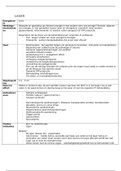
Type of Explanation
Alienation
Alienation from what workers produce does not belong to them: as soon as it
the product: has been produced, it belongs to the capitalist who then
makes a profit from it.
‘The object that labour produces, labour’s own product,
confront is as an alien thing, a power independent of the
producer’ [71].
‘[T]he more the worker expends of himself, the more
powerful becomes the alien world of objects he creates over
against himself, the poorer he himself – his own inner world
– becomes, the less he has to call his own. IT is exactly the
same as in religion. The more man puts into God, the less he
keeps in himself’. [72].
Lecture Notes:
- Born in 1818 in Trier, Germany. Marx was the son of a Jewish lawyer who was forced
to convert to Christianity due to anti-Semitic laws at the time which forbade Jewish
citizens from entering into certain professions.
- Initially went to university to study law, but switched to philosophy and joined a
group called the ‘Young Hegelians’
- Post-Doc, Marx aimed to pursue an academic career, but the new Prussian King
made it impossible for anyone to take that path with Marx’s views. Therefore, he
moved over to Paris which was a socialist hub at the time. This is where he met
Friedrich Engels.
- In 1844, Marx penned the Paris Manuscripts. These were critiques of Hegel, and
were not intended for publication (and not published until after Marx’s death in
1932). Worth noting that Marx wrote in a super annoying way which is super hard to
read, but I’ll forgive this given he’s Karl Marx.
- Maybe give Jonathan Wolff ‘Why Read Karl Marx Today?’ a read.
- Within the Paris Manuscripts, Marx wrote about labour within the capitalist system:
‘[T]he worker, who for twelve hours weaves, spins, drills, turns, builds,
shovels, breaks stones, carries loads, etc. – does he consider this twelve
hours’ weaving, spinning, drilling, turning, building, shovelling, stone-
breaking as a manifestation of his life, as life? On the contrary, life begins for
him where this activity ceases, at a table, in the public house, in bed. The
twelve hours’ labour, on the other hand, has no meaning for him as weaving,
spinning, drilling, etc., but as earnings, which bring him to the table, to the
public house, into bed’. [Selected Writings, ed. McLellan, 276].
‘In the factory we have a lifeless mechanism independent of the workman
who becomes its mere living appendage. The miserable routine of endless
drudgery and toil in which the same mechanical process is gone through
over and over again, is like the labour of Sisyphus. The burden of labour,
like the rock, keeps falling back on the worn-out labourer. At the same time
that factory work exhausts the nervous system of the uttermost, it does away
with the many-sided play of the muscles, and confiscates every atom of
freedom, both in bodily and intellectual activity’. [Capital ed. McLellan, 261].
- These quotes describe the kind of work Marx thinks of as alienated. Alienation can
be understood as a feeling of being estranged from something. Marx saw alienation
as someone becoming estranged from what matters in life. Marx argues that
alienation is driven by capitalism (but Marx doesn’t believe this should mean
capitalism needs to be abolished! Capitalism has to happen for communism to
happen).
- According to Marx, there are four kinds of alienation:
1) Alienation from the product
2) Alienation in productive activity
3) Alienation from species-being
, Week Fifteen – Marx and Alienation
4) Alienation ‘of man from man’
- Marx was also very immersed in the contemporary philosophical debates occurring
among the ‘Young Hegelian’ philosophers. Hegel himself, defended a sort of
unorthodox Christianity, but his more radical follows (such as Ludwig Feuerbach)
rejected these ideas, and argued that religion involves some kind of illusion. In
worshipping and loving a God, Feuerbach argued that all of our love is directed
towards an imaginary being which devalues our real lives on earth. Therefore,
religion involves some kind of alienation; instead of loving ourselves, we love an
imaginary being. Feuerbach argued that to fix this intellectual error, people just
need to realise the nature of the illusion (consciousness).
- Marx agreed that religion is a form of alienation (‘religion is the opium of the
people’, but criticised Feuerbach’s assumption that it is merely an intellectual
mistake. So why do people allow themselves to be alienated by religion? Marx
argues that it is because there is something wrong with our lives in real life, so we
need to change our real lives (not just our minds): ‘The philosophers have only
interpreted the world, in various ways; the point is to change it'. [Theses on
Feuerbach, Marx]. Religion is destructive as it distracts and hides the real problems
in the world.
- Marx argues that liberal theory does a similar thing to religion. Liberal theorists talk
about the ‘rights of man’ and the ‘rights of citizens’ and present people as equal
and free. However, according to Marx, liberals are only interested in political
emancipation, and this is a very narrow sphere. In the economic sphere, people
really are not free in their labour.
- According to Marx, there are four kinds of alienation:
5) Alienation from the product: what workers produce does not belong to them: as
soon as it has been produced, it belongs to the capitalist who then makes a profit
from it.
‘The object that labour produces, labour’s own product, confront is as an alien
thing, a power independent of the producer’
Type of Explanation
Alienation
Alienation from what workers produce does not belong to them: as soon as it
the product: has been produced, it belongs to the capitalist who then
makes a profit from it.
‘The object that labour produces, labour’s own product,
confront is as an alien thing, a power independent of the
producer’ [71].
‘[T]he more the worker expends of himself, the more
powerful becomes the alien world of objects he creates over
against himself, the poorer he himself – his own inner world
– becomes, the less he has to call his own. IT is exactly the
same as in religion. The more man puts into God, the less he
keeps in himself’. [72].