Unit 10: Biological Molecules and Metabolic Pathways
Learning Aim A: Understand the structure and function of biological molecules and their
importance in maintaining biochemical processes
Assignment Title: Biological Molecules and Biochemical Processes
Water:
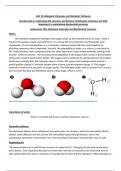
The chemical components hydrogen and oxygen make up the material known as water, which is
found in the gaseous, liquid, and solid forms. It is among the most important and frequently used
compounds. At room temperature, it is a colourless, odourless liquid with the crucial property of
dissolving numerous other compounds. Actually, the adaptability of water as a solvent is necessary for
life. Water dissolves more compounds than any other liquid and is more widely available, earning it the
moniker "universal solvent". The increased electronegativity of the oxygen atom results in the formation
of the polar covalent bonds (polar bonds). The oxygen atom is pulled to the shared electrons of covalent
bonds more strongly than the hydrogen atom is. In turn, this causes each hydrogen atom to have a
partial positive charge (+) and each oxygen atom to have a partial negative charge (-). The oxygen
molecule is bent by two lone pairs of oxygen atoms. The HOH bond angle, which is around 105°, is just a
hair less than the ideal sp3 hybridised atomic orbital angle, which is 109.5°.
https://chem.libretexts.org/@api/deki/files/78713/CK12_Screenshot_15-1-1.png?revision=1&size=bestfit&width=509&height=132
Importance of water:
Water is essential and serves a variety of purposes, such as:
Electrolyte Balance:
For electrolyte balance to be maintained, you need water. For instance, when the extracellular fluid is
diluted, water diffuses from the cell into the extracellular space through osmosis, and as the
extracellular electrolyte concentration rises, the intracellular electrolyte concentration rises as well.
Regulating pH:
The concentrations of H+ and OH ions in water are equal at pH 7. Changing the pH scale can be done
fairly quickly. Since organisms function best when their internal circumstances are somewhat near to
their optimal pH level, water is necessary to manage the pH level of these organisms. When hydrogen or
, hydroxide ions are present, buffers like those in blood prevent pH shifts. Water's ability to quickly absorb
and release H+ ions makes it crucial for preserving a consistent pH level. Without water, the solution
cannot maintain the correct pH.
Temperature Regulator:
Water can withstand temperature changes because temperature changes require a lot of energy. Water
molecules form hydrogen bonds with one another to create this. Thermoregulation, which tries to keep
a balance between heat intake and heat loss, depends on body water. This is another homeostatic
activity of the body. Only within a certain temperature range can human life exist; the normal body
temperature is 98.6 °F (37 °C). The metabolism is stopped if the temperature is too high or too low
because the enzymes become inactive. At 82.4°F (28°C), muscle failure and hypothermia set in. The
central nervous system malfunctions and results in death at 111.2°F (44°C), which is the other end of the
temperature range. Water has a high heat capacity and is efficient at storing heat, which aids in keeping
the body at its optimal temperature regardless of changes in the external environment. In order to
disperse heat throughout the body and maintain a consistent body temperature, a variety of systems
exist that transport bodily water from one location to another. The brain's hypothalamus controls how
warm or cold the body is. The hypothalamus uses specialised protein sensors to measure blood
temperature. Temperature sensors built into the skin can also respond swiftly to environmental
changes. The smooth muscle tissue around blood vessels contracts and reduces blood flow as a result of
a neurological signal that the hypothalamus receives from cold receptors in the skin. As a result, less
heat is lost to the environment. The thyroid, one of the endocrine systems with which the hypothalamus
interacts, releases chemicals that can speed up metabolism. Additionally, the hypothalamus interacts
with muscles to cause them to twitch and grow hairs. In reaction to deteriorating conditions, these
mechanisms encourage the body to create more heat and improve heat preservation.
Acting as a medium for chemical reactions and molecules:
Water can remain liquid over a wide range of temperatures, making it an essential transport medium
for living organisms. There are a number of coordinated chemical reactions involved in every metabolic
activity in living beings. Due to its high heat capacity, electrical neutrality, and pH of 7.0, water is an
excellent solvent. (This means that it is neither basic nor acidic, making it the perfect medium for
chemical reactions.) In a number of enzymatic reactions, water may be taken out of the molecule and
used to build or break bonds. Because it carries a partial negative charge on one end and a partial
positive charge on the other, a water molecule nonetheless has enough polarity to work as a solvent.
Because it contains two partially positive hydrogen atoms and one partially negative oxygen atom,
water is known as a polar solvent. Water's polarity allows for hydrogen bonding to develop as well.
Hydrogen bonds are created as a result of intermolecular forces between and among nearby water
molecules and other polar molecules: the positive hydrogen of one water molecule will link with the
negative oxygen of the next, and the hydrogen atoms of that oxygen will then be drawn to the next
oxygen, and so on. Hydrogen bonds are advantageous in this scenario because they can form both
between water molecules and other polar or ionic substances as well as between them.
Learning Aim A: Understand the structure and function of biological molecules and their
importance in maintaining biochemical processes
Assignment Title: Biological Molecules and Biochemical Processes
Water:
The chemical components hydrogen and oxygen make up the material known as water, which is
found in the gaseous, liquid, and solid forms. It is among the most important and frequently used
compounds. At room temperature, it is a colourless, odourless liquid with the crucial property of
dissolving numerous other compounds. Actually, the adaptability of water as a solvent is necessary for
life. Water dissolves more compounds than any other liquid and is more widely available, earning it the
moniker "universal solvent". The increased electronegativity of the oxygen atom results in the formation
of the polar covalent bonds (polar bonds). The oxygen atom is pulled to the shared electrons of covalent
bonds more strongly than the hydrogen atom is. In turn, this causes each hydrogen atom to have a
partial positive charge (+) and each oxygen atom to have a partial negative charge (-). The oxygen
molecule is bent by two lone pairs of oxygen atoms. The HOH bond angle, which is around 105°, is just a
hair less than the ideal sp3 hybridised atomic orbital angle, which is 109.5°.
https://chem.libretexts.org/@api/deki/files/78713/CK12_Screenshot_15-1-1.png?revision=1&size=bestfit&width=509&height=132
Importance of water:
Water is essential and serves a variety of purposes, such as:
Electrolyte Balance:
For electrolyte balance to be maintained, you need water. For instance, when the extracellular fluid is
diluted, water diffuses from the cell into the extracellular space through osmosis, and as the
extracellular electrolyte concentration rises, the intracellular electrolyte concentration rises as well.
Regulating pH:
The concentrations of H+ and OH ions in water are equal at pH 7. Changing the pH scale can be done
fairly quickly. Since organisms function best when their internal circumstances are somewhat near to
their optimal pH level, water is necessary to manage the pH level of these organisms. When hydrogen or
, hydroxide ions are present, buffers like those in blood prevent pH shifts. Water's ability to quickly absorb
and release H+ ions makes it crucial for preserving a consistent pH level. Without water, the solution
cannot maintain the correct pH.
Temperature Regulator:
Water can withstand temperature changes because temperature changes require a lot of energy. Water
molecules form hydrogen bonds with one another to create this. Thermoregulation, which tries to keep
a balance between heat intake and heat loss, depends on body water. This is another homeostatic
activity of the body. Only within a certain temperature range can human life exist; the normal body
temperature is 98.6 °F (37 °C). The metabolism is stopped if the temperature is too high or too low
because the enzymes become inactive. At 82.4°F (28°C), muscle failure and hypothermia set in. The
central nervous system malfunctions and results in death at 111.2°F (44°C), which is the other end of the
temperature range. Water has a high heat capacity and is efficient at storing heat, which aids in keeping
the body at its optimal temperature regardless of changes in the external environment. In order to
disperse heat throughout the body and maintain a consistent body temperature, a variety of systems
exist that transport bodily water from one location to another. The brain's hypothalamus controls how
warm or cold the body is. The hypothalamus uses specialised protein sensors to measure blood
temperature. Temperature sensors built into the skin can also respond swiftly to environmental
changes. The smooth muscle tissue around blood vessels contracts and reduces blood flow as a result of
a neurological signal that the hypothalamus receives from cold receptors in the skin. As a result, less
heat is lost to the environment. The thyroid, one of the endocrine systems with which the hypothalamus
interacts, releases chemicals that can speed up metabolism. Additionally, the hypothalamus interacts
with muscles to cause them to twitch and grow hairs. In reaction to deteriorating conditions, these
mechanisms encourage the body to create more heat and improve heat preservation.
Acting as a medium for chemical reactions and molecules:
Water can remain liquid over a wide range of temperatures, making it an essential transport medium
for living organisms. There are a number of coordinated chemical reactions involved in every metabolic
activity in living beings. Due to its high heat capacity, electrical neutrality, and pH of 7.0, water is an
excellent solvent. (This means that it is neither basic nor acidic, making it the perfect medium for
chemical reactions.) In a number of enzymatic reactions, water may be taken out of the molecule and
used to build or break bonds. Because it carries a partial negative charge on one end and a partial
positive charge on the other, a water molecule nonetheless has enough polarity to work as a solvent.
Because it contains two partially positive hydrogen atoms and one partially negative oxygen atom,
water is known as a polar solvent. Water's polarity allows for hydrogen bonding to develop as well.
Hydrogen bonds are created as a result of intermolecular forces between and among nearby water
molecules and other polar molecules: the positive hydrogen of one water molecule will link with the
negative oxygen of the next, and the hydrogen atoms of that oxygen will then be drawn to the next
oxygen, and so on. Hydrogen bonds are advantageous in this scenario because they can form both
between water molecules and other polar or ionic substances as well as between them.