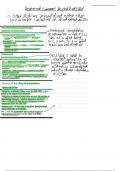
Decentralised Enforcement:Beyond DirectEffect
-> Other doctrines beyond direct that
effect
divert effort
look to
tackle limitations of
by EU.
- Harmaniuitge*u
- Law a.k.a indirect effect.
- - is a way to give effect
It
~ -
to EU law and directivel
-> El law is used to
to
interpret
national law as
give effectto
the objective
of directives. EU law applied
1
indirectly
of
through interpretation
El caw.
-
-
-
/
-
- -
-
, ->The fact that a particular
provisionis not related to
a directive is notan argument
in the
for notinterpreting it
lightofa directive.
key
-> issue is whether there
is a
piece of legislation anywhere in national law which
can be interpreted
harmoniously
the directive.
to give rise to
the implementation of
*
->
- This could also be in national law introduced before
↑
the ms joined the EU.
-> ItdoesI nothave tobe legislation, commun
only
low can be used as well for interpretation.
-> Duty as far
as in
terpreting law
the furthes↓ estent
to that it
can be, does not have to be
M
vorced.
-> Harmonious interpretation come
can not the
at
cost
-
of
creating
an
aggravating criminal
liability.
-
-
, ->
Remedies availablefor
breach EU law are similar
of
those of breach ofnational
-
to
law.
Same remedy mustbe made
=
-
↳
available for breach ofInlaw
as that of breach national law. of
I
An effective mustbe made available for
remedy
protection EU
of law rights.
directive.
from
->
- e
- -
-
-
-
Glink
-
-
-
-> Francovich concerned a directive which was
case who
designed
to ensure that workers were owed money by employers
recieved payments in
-
cases where employer was insolvent
ande de pay
had
to
~
been
not
employed in Italy, and
the workerS who'semploy er had owed them money
became insolvent and the workers tried to
rely upon
the directive to getcompensation.
-> Directive did not specify a way as to how torecompensate
hendsworkers andlet itatto Member States.
implementdirective e
-> Individuals should have some
remedy to have protection
comply directive.
with
againstmember state failure to
-> Other doctrines beyond direct that
effect
divert effort
look to
tackle limitations of
by EU.
- Harmaniuitge*u
- Law a.k.a indirect effect.
- - is a way to give effect
It
~ -
to EU law and directivel
-> El law is used to
to
interpret
national law as
give effectto
the objective
of directives. EU law applied
1
indirectly
of
through interpretation
El caw.
-
-
-
/
-
- -
-
, ->The fact that a particular
provisionis not related to
a directive is notan argument
in the
for notinterpreting it
lightofa directive.
key
-> issue is whether there
is a
piece of legislation anywhere in national law which
can be interpreted
harmoniously
the directive.
to give rise to
the implementation of
*
->
- This could also be in national law introduced before
↑
the ms joined the EU.
-> ItdoesI nothave tobe legislation, commun
only
low can be used as well for interpretation.
-> Duty as far
as in
terpreting law
the furthes↓ estent
to that it
can be, does not have to be
M
vorced.
-> Harmonious interpretation come
can not the
at
cost
-
of
creating
an
aggravating criminal
liability.
-
-
, ->
Remedies availablefor
breach EU law are similar
of
those of breach ofnational
-
to
law.
Same remedy mustbe made
=
-
↳
available for breach ofInlaw
as that of breach national law. of
I
An effective mustbe made available for
remedy
protection EU
of law rights.
directive.
from
->
- e
- -
-
-
-
Glink
-
-
-
-> Francovich concerned a directive which was
case who
designed
to ensure that workers were owed money by employers
recieved payments in
-
cases where employer was insolvent
ande de pay
had
to
~
been
not
employed in Italy, and
the workerS who'semploy er had owed them money
became insolvent and the workers tried to
rely upon
the directive to getcompensation.
-> Directive did not specify a way as to how torecompensate
hendsworkers andlet itatto Member States.
implementdirective e
-> Individuals should have some
remedy to have protection
comply directive.
with
againstmember state failure to