Computer Assisted Audit Techniques (CAATs)
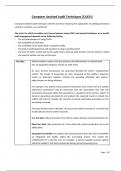
Computer-assisted audit techniques (CAATs) are those featuring the ‘application of auditing procedures
using the computer as an audit tool’
The extent to which an auditor may choose between using CAATs and manual techniques on a specific
audit engagement depends on the following factors:
- the cost effectiveness of using CAATs
- the availability of audit time
- the availability of the audit client’s computer facility
- the level of audit experience and expertise in using a specified CAAT
- the level of CAATs carried out by the audit client’s internal audit function and the extent to which
the external auditor can rely on this work
Test data Audit test data is used to test the existence and effectiveness of controls built
into an application program used by an audit client.
As such, dummy transactions are processed through the client’s computerised
system. The results of processing are then compared to the auditor’s expected
results to determine whether controls are operating efficiently and systems’
objectiveness are being achieved.
For example, two dummy bank payment transactions (one inside and one outside
authorised parameters) may be processed with the expectation that only the
transaction processed within the parameters is ‘accepted’ by the system. Clearly, if
dummy transactions processed do not produce the expected results in output, the
auditor will need to consider the need for increased substantive procedures in the
area being reviewed.
Test data should contain valid data ( to ensure the system processes it correctly) and
invalid data (to ensure system rejects it).
Live test data: data processed on the client’s system during a normal production run
Dead test data: data processed at a time when the normal production run is not
taking place
Integrated test facility: the auditor may seek permission from the client to establish
an integrated test facility within the accounting system. This entails the
establishment of a dummy unit, for example, a dummy supplier account against
which the auditor’s test data is processed during normal processing runs.
Page | 167
, Audit The term ‘audit software’ describes the computer software used by auditors to
Software assist them in their work, when examining the operations of, and testing the output
of a computer-based accounting system.
Computer programs designed to carry out tests of control and/or substantive
procedures
This performs checks that auditors would otherwise need to do by hand.
Such programs may be classified as:
Packaged programs (off the shelf)
These consist of pre-prepared generalised programs used by auditors and are not
‘client specific’. They may be used to carry out numerous audit tasks, for example,
to select a sample, either statistically or judgementally, during arithmetic
calculations and checking for gaps in the processing of sequences.
Purpose written programs (bespoke)
These programs are usually ‘client specific’ and may be used to carry out tests of
control or substantive procedures. Audit software may be bought or developed, but
in any event the audit firm’s audit plan should ensure that provision is made to
ensure that specified programs are appropriate for a client’s system and the needs
of the audit. Typically, they may be used to re-perform computerised control
procedures (for example, cost of sales calculations) or perhaps to carry out an aged
analysis of trade receivable (debtor) balances.
Enquiry programs
These programs are integral to the client’s accounting system; however they may be
adapted for audit purposes. For example, where a system provides for the routine
reporting on a ‘monthly’ basis of employee starters and leavers, this facility may be
utilised by the auditor when auditing salaries and wages in the client’s financial
statements. Similarly, a facility to report trade payable (creditor) long outstanding
balances could be used by an auditor when verifying the reported value of creditors
Uses of audit software
Highlighting of exceptions- For example, to identify exceptional wages payments
outside of stated parameters
Highlighting of trends- To highlight reported inventory movement both immediately
Page | 168
Computer-assisted audit techniques (CAATs) are those featuring the ‘application of auditing procedures
using the computer as an audit tool’
The extent to which an auditor may choose between using CAATs and manual techniques on a specific
audit engagement depends on the following factors:
- the cost effectiveness of using CAATs
- the availability of audit time
- the availability of the audit client’s computer facility
- the level of audit experience and expertise in using a specified CAAT
- the level of CAATs carried out by the audit client’s internal audit function and the extent to which
the external auditor can rely on this work
Test data Audit test data is used to test the existence and effectiveness of controls built
into an application program used by an audit client.
As such, dummy transactions are processed through the client’s computerised
system. The results of processing are then compared to the auditor’s expected
results to determine whether controls are operating efficiently and systems’
objectiveness are being achieved.
For example, two dummy bank payment transactions (one inside and one outside
authorised parameters) may be processed with the expectation that only the
transaction processed within the parameters is ‘accepted’ by the system. Clearly, if
dummy transactions processed do not produce the expected results in output, the
auditor will need to consider the need for increased substantive procedures in the
area being reviewed.
Test data should contain valid data ( to ensure the system processes it correctly) and
invalid data (to ensure system rejects it).
Live test data: data processed on the client’s system during a normal production run
Dead test data: data processed at a time when the normal production run is not
taking place
Integrated test facility: the auditor may seek permission from the client to establish
an integrated test facility within the accounting system. This entails the
establishment of a dummy unit, for example, a dummy supplier account against
which the auditor’s test data is processed during normal processing runs.
Page | 167
, Audit The term ‘audit software’ describes the computer software used by auditors to
Software assist them in their work, when examining the operations of, and testing the output
of a computer-based accounting system.
Computer programs designed to carry out tests of control and/or substantive
procedures
This performs checks that auditors would otherwise need to do by hand.
Such programs may be classified as:
Packaged programs (off the shelf)
These consist of pre-prepared generalised programs used by auditors and are not
‘client specific’. They may be used to carry out numerous audit tasks, for example,
to select a sample, either statistically or judgementally, during arithmetic
calculations and checking for gaps in the processing of sequences.
Purpose written programs (bespoke)
These programs are usually ‘client specific’ and may be used to carry out tests of
control or substantive procedures. Audit software may be bought or developed, but
in any event the audit firm’s audit plan should ensure that provision is made to
ensure that specified programs are appropriate for a client’s system and the needs
of the audit. Typically, they may be used to re-perform computerised control
procedures (for example, cost of sales calculations) or perhaps to carry out an aged
analysis of trade receivable (debtor) balances.
Enquiry programs
These programs are integral to the client’s accounting system; however they may be
adapted for audit purposes. For example, where a system provides for the routine
reporting on a ‘monthly’ basis of employee starters and leavers, this facility may be
utilised by the auditor when auditing salaries and wages in the client’s financial
statements. Similarly, a facility to report trade payable (creditor) long outstanding
balances could be used by an auditor when verifying the reported value of creditors
Uses of audit software
Highlighting of exceptions- For example, to identify exceptional wages payments
outside of stated parameters
Highlighting of trends- To highlight reported inventory movement both immediately
Page | 168