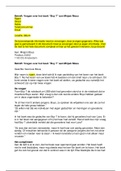
Evaluate the factors that can undermine the stability of a state. (35 marks).
Para Key Points Key Points
Intro Consensus – defining political stability – troublesome, Concepts – legitimacy, authority + coercion =
certain elements = commonplace. influential.
Stabilising state – securing regime from internal Stability – continuity of political leadership/smooth
overthrow by revolution or rebellion, through economic + transitions + absence widespread civil strife.
military support.
Factors contribute stability – political, economic,
psychological + environmental.
1 Believed democratic political systems more stable than Demonstrates – degree of independence judiciary
authoritarian regimes. + legislature – help engender trust for public + act
Democracies = regular free + fair elections, freedom of as deterrent for politicians who may act Ultra Vires.
assembly, F.O.S., F.O.P, independent judiciary, Contrast – Saddam Hussein’s dictatorship, Iraq
accountable police force + armed forces – act with 1979-2003, after being toppled, USAF discovered
restraint. solid gold taps in his Palace, despite hospitals
Democracies – codified constitution e.g. USA or statue struggling to provide basic medicines.
law e.g. UK – set legal framework in which power must Elections allow party to be removed e.g. Labour
operate or face legal challenged. Party 2010 + Republican Party 2008.
3 MP’s – UK jailed false expenses claims – Eric Illsley (12 Transitions took place – no civil unrest + accepted
moths), Jim Devine (16 months) + David Chaytor (18 legitimacy of electoral process + recognised legal
months). rational authority even if they didn’t vote for them.
2 Contrast – Tunisia + Egypt, Ben Ali + Mubarak in power President Nguema came to power -1979 Equatorial
23+30 years – period instability + violence to overthrow Guinea deposing + executing uncle.
dictators to establish democracies. Despite oil wealth, 60% live on less than $1 per
They both seen long period of stability, but reign day.
underpinned use of coercive measures + lead to Last election – 2002 + return 97% backing for
resentment which developed to a rebellion. Nguema.
Non-democracies withstood test of time – Colonel Supreme leaders North Korea – Kim Jong-Un took
Gaddafi to stay leader Libya after 42 years until he was over from father 2011 estimated 2 million died of
lynched. hunger + economically unstable.
‘King of Kings’, difficult to topple despite NATO+ Arab Won’t face political instability – new leader only 28
League Area strikes along with internal rebellion. years old + 200,000 political prisoners to testify.
He used anti-imperialist nationalistic propaganda; Saudi Arabia – traditional authority King Abdullah,
repressive coercion + oil revenues ensure withstood like Cuba, stable country. Sharia law + well
challenges. equipped army + police force – compliance.
Wished he did more people – very unstable state divided, Normal trend – democracies more stable than
+ personal assets seized by West + family is dead/exile. authoritarian regimes – exceptions to this rule.
King Mswati absolute monarch – 1986 Swaziland, Combination of coercive, propaganda +
political parties – not legal recognised. Mugabe power in manipulation, deference for traditional authority
Zimbabwe 1980 + President Dos Santos Angola in power or charismatic leadership + redistribution of
1979 – hardly stable endured civil war. wealth – engender stability.
3 Infrastructure + ability to deliver basic public services aid USA sanctioned asset freeze Gaddafi seizing $30
stability. billion private US bank account.
Stability of economy – civil unrest shutting down of ATM’s US long known gap – oil revenues + gov.
+ banks Argentina 2001/02 or hyperinflation Zimbabwean expenditure.
dollar 2000 – recently riots Greece governments decision Underlying tribal tensions – use of repressive
accept loan from EU after banks went bust + austerity coercion exacerbated by internal economic factors.
measures that followed. Contrast – Hugo Chavez sold off presidential
Lacking natural resources or import resources – suffer limousine + private plans – educational scholarship
economic instability – lead to military challenge for scheme + nationalised oil industry.
power. Receiver 60%+ vote in 3rd term 2006 + won several
Gap between nations richest 20% + poorest 20% + lack of referendums.
redistribution of wealth – undermines stability. Popular – working class, 54% voted away term
Libya – unemployment = 30%, 200,000 plus jobs oil limits in constitution – stand for re-election.
industry filled by foreign workers. Economic factors – stabilising force by also can
CIA World Factbook ‘Substantial revenues energy sector undermine stability.
($25bn per yr) coupled small pop. highest per capita GDP
in Africa, but little income flows down to lower orders of
society’.
Para Key Points Key Points
Intro Consensus – defining political stability – troublesome, Concepts – legitimacy, authority + coercion =
certain elements = commonplace. influential.
Stabilising state – securing regime from internal Stability – continuity of political leadership/smooth
overthrow by revolution or rebellion, through economic + transitions + absence widespread civil strife.
military support.
Factors contribute stability – political, economic,
psychological + environmental.
1 Believed democratic political systems more stable than Demonstrates – degree of independence judiciary
authoritarian regimes. + legislature – help engender trust for public + act
Democracies = regular free + fair elections, freedom of as deterrent for politicians who may act Ultra Vires.
assembly, F.O.S., F.O.P, independent judiciary, Contrast – Saddam Hussein’s dictatorship, Iraq
accountable police force + armed forces – act with 1979-2003, after being toppled, USAF discovered
restraint. solid gold taps in his Palace, despite hospitals
Democracies – codified constitution e.g. USA or statue struggling to provide basic medicines.
law e.g. UK – set legal framework in which power must Elections allow party to be removed e.g. Labour
operate or face legal challenged. Party 2010 + Republican Party 2008.
3 MP’s – UK jailed false expenses claims – Eric Illsley (12 Transitions took place – no civil unrest + accepted
moths), Jim Devine (16 months) + David Chaytor (18 legitimacy of electoral process + recognised legal
months). rational authority even if they didn’t vote for them.
2 Contrast – Tunisia + Egypt, Ben Ali + Mubarak in power President Nguema came to power -1979 Equatorial
23+30 years – period instability + violence to overthrow Guinea deposing + executing uncle.
dictators to establish democracies. Despite oil wealth, 60% live on less than $1 per
They both seen long period of stability, but reign day.
underpinned use of coercive measures + lead to Last election – 2002 + return 97% backing for
resentment which developed to a rebellion. Nguema.
Non-democracies withstood test of time – Colonel Supreme leaders North Korea – Kim Jong-Un took
Gaddafi to stay leader Libya after 42 years until he was over from father 2011 estimated 2 million died of
lynched. hunger + economically unstable.
‘King of Kings’, difficult to topple despite NATO+ Arab Won’t face political instability – new leader only 28
League Area strikes along with internal rebellion. years old + 200,000 political prisoners to testify.
He used anti-imperialist nationalistic propaganda; Saudi Arabia – traditional authority King Abdullah,
repressive coercion + oil revenues ensure withstood like Cuba, stable country. Sharia law + well
challenges. equipped army + police force – compliance.
Wished he did more people – very unstable state divided, Normal trend – democracies more stable than
+ personal assets seized by West + family is dead/exile. authoritarian regimes – exceptions to this rule.
King Mswati absolute monarch – 1986 Swaziland, Combination of coercive, propaganda +
political parties – not legal recognised. Mugabe power in manipulation, deference for traditional authority
Zimbabwe 1980 + President Dos Santos Angola in power or charismatic leadership + redistribution of
1979 – hardly stable endured civil war. wealth – engender stability.
3 Infrastructure + ability to deliver basic public services aid USA sanctioned asset freeze Gaddafi seizing $30
stability. billion private US bank account.
Stability of economy – civil unrest shutting down of ATM’s US long known gap – oil revenues + gov.
+ banks Argentina 2001/02 or hyperinflation Zimbabwean expenditure.
dollar 2000 – recently riots Greece governments decision Underlying tribal tensions – use of repressive
accept loan from EU after banks went bust + austerity coercion exacerbated by internal economic factors.
measures that followed. Contrast – Hugo Chavez sold off presidential
Lacking natural resources or import resources – suffer limousine + private plans – educational scholarship
economic instability – lead to military challenge for scheme + nationalised oil industry.
power. Receiver 60%+ vote in 3rd term 2006 + won several
Gap between nations richest 20% + poorest 20% + lack of referendums.
redistribution of wealth – undermines stability. Popular – working class, 54% voted away term
Libya – unemployment = 30%, 200,000 plus jobs oil limits in constitution – stand for re-election.
industry filled by foreign workers. Economic factors – stabilising force by also can
CIA World Factbook ‘Substantial revenues energy sector undermine stability.
($25bn per yr) coupled small pop. highest per capita GDP
in Africa, but little income flows down to lower orders of
society’.