Problem 3 – cohort studies
Retrospective = established a population in the past
Prospective = establish cohort at this moment
Learning goals:
1) What is a cohort study and the different types? (hybrid studies / characteristics / pros and cons)
COHORT STUDY
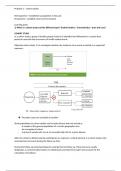
In a cohort study a group of healthy people (cohort) is identified and followed for a certain time
period to ascertain the occurrence of health-related event.
Objective cohort study to investigate whether the incidence of an event is related to a suspected
exposure.
Prevalent cases are excluded at baseline
Study populations in cohort studies can be quite diverse and may include a:
- A sample of the general population of a certain geographic area
- An occupational cohort
- A group of people who are at an unusually high risk for a given disease
After the cohort is defined and the participants are selected, a critical element in a cohort study is the
ascertainment of events during the follow-up time
During the follow-up period participants could get lost to follow-up. These loses are usually
designates as censored observations or withdrawals and need to be taken into account for the
calculation of incidence.
,Problem 3 – cohort studies
In a cohort study a defined population is identified. The participants of the cohort are classified
according to exposure status and the incidence of the disease is ascertained and compared across
exposure categories.
Two types of cohort study:
- Concurrent or prospective cohort study
Cohort studies are defined as concurrent when the cohort is assembled at the present time (calendar
time when the study starts) and is followed up toward the future.
Advantages:
o The baseline exam, methods of follow-up and ascertainment of events are planned and
implemented for the purposes of the study best fitting the study objectives
o Quality control measures can be implemented as needed
Disadvantages:
o Amount of time needed to conduct the study
o High costs
- Nonconcurrent / historical / retrospective cohort study
A cohort is identified and assembled in the past on the basis of existing records and is followed to the
present time (the time when the study is conducted).
Advantages:
o Useful in occupational epidemiology
o Less expensive
Disadvantages:
o Obligatory reliance on available information; the type or quality of exposure or outcome
data may not be well suited to fulfil the study objectives.
, Problem 3 – cohort studies
Mixed design select cohort in the past and follow it up until now and the future
CASE-CONTROL STUDY NESETED IN A COHORT
A cohort is identified and baseline measures are collected of exposure data. However, those
measures are not yet analysed. The cohort is followed-up in time and cases who had developed the
disease of interest are identified. From the remaining cohort who did not have developed the disease
a sample is taken who serve as the controls. When the cases and controls are selected the data of
the exposure status is processed and analysed.
What is available:
- Probability of exposure in diseases
- Probability of exposure in non-diseased
- OR
Advantages:
o No information and selection bias
o Substantially lower costs for processing exposure data while all relevant information form
the cohort is used
Not the total data of the cohort is used
o Better interpretation of relationship between case and effect compared to a case-control
study
Disadvantages:
o When studying multiple diseases, different random samples of controls has to be selected
per disease logistic problems
o Processing baseline information on controls can only start at the time of the first case
occurred
Control is selected when a case occurred
CASE-COHORT DESIGN
A cohort is identified and from that cohort a subcohort is identified. At baseline the exposure data is
collected in cohort. The cohort is followed in time and at the end of the follow-up the cases who got
Retrospective = established a population in the past
Prospective = establish cohort at this moment
Learning goals:
1) What is a cohort study and the different types? (hybrid studies / characteristics / pros and cons)
COHORT STUDY
In a cohort study a group of healthy people (cohort) is identified and followed for a certain time
period to ascertain the occurrence of health-related event.
Objective cohort study to investigate whether the incidence of an event is related to a suspected
exposure.
Prevalent cases are excluded at baseline
Study populations in cohort studies can be quite diverse and may include a:
- A sample of the general population of a certain geographic area
- An occupational cohort
- A group of people who are at an unusually high risk for a given disease
After the cohort is defined and the participants are selected, a critical element in a cohort study is the
ascertainment of events during the follow-up time
During the follow-up period participants could get lost to follow-up. These loses are usually
designates as censored observations or withdrawals and need to be taken into account for the
calculation of incidence.
,Problem 3 – cohort studies
In a cohort study a defined population is identified. The participants of the cohort are classified
according to exposure status and the incidence of the disease is ascertained and compared across
exposure categories.
Two types of cohort study:
- Concurrent or prospective cohort study
Cohort studies are defined as concurrent when the cohort is assembled at the present time (calendar
time when the study starts) and is followed up toward the future.
Advantages:
o The baseline exam, methods of follow-up and ascertainment of events are planned and
implemented for the purposes of the study best fitting the study objectives
o Quality control measures can be implemented as needed
Disadvantages:
o Amount of time needed to conduct the study
o High costs
- Nonconcurrent / historical / retrospective cohort study
A cohort is identified and assembled in the past on the basis of existing records and is followed to the
present time (the time when the study is conducted).
Advantages:
o Useful in occupational epidemiology
o Less expensive
Disadvantages:
o Obligatory reliance on available information; the type or quality of exposure or outcome
data may not be well suited to fulfil the study objectives.
, Problem 3 – cohort studies
Mixed design select cohort in the past and follow it up until now and the future
CASE-CONTROL STUDY NESETED IN A COHORT
A cohort is identified and baseline measures are collected of exposure data. However, those
measures are not yet analysed. The cohort is followed-up in time and cases who had developed the
disease of interest are identified. From the remaining cohort who did not have developed the disease
a sample is taken who serve as the controls. When the cases and controls are selected the data of
the exposure status is processed and analysed.
What is available:
- Probability of exposure in diseases
- Probability of exposure in non-diseased
- OR
Advantages:
o No information and selection bias
o Substantially lower costs for processing exposure data while all relevant information form
the cohort is used
Not the total data of the cohort is used
o Better interpretation of relationship between case and effect compared to a case-control
study
Disadvantages:
o When studying multiple diseases, different random samples of controls has to be selected
per disease logistic problems
o Processing baseline information on controls can only start at the time of the first case
occurred
Control is selected when a case occurred
CASE-COHORT DESIGN
A cohort is identified and from that cohort a subcohort is identified. At baseline the exposure data is
collected in cohort. The cohort is followed in time and at the end of the follow-up the cases who got