MCAT Psychology Practice Test
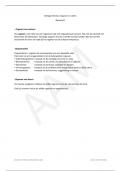
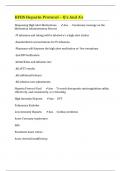
Absolute threshold - The minimum stimulus intensity required to activate a sensory receptor 50% of the time. Difference threshold (JND) - The minimum noticeable difference between two sensory stimuli 50% of the time. Weber's law - States that two stimuli must differ by a constant proportion for difference to be perceptible. Spotlight model - Visual attention can shift within the visual field but can only be focused on a single target. Phonological loop - A component of working memory that allows us to repeat semantic verbal or written information to help us remember it. Visuospatial sketchpad - A component of working memory that allows us to use mental imagery to help us remember semantic visual information. Episodic buffer - A component of working memory that interacts with information in long term memory. Assimilation - The conformation of experiences into existing schemas. Accommodation - The adjustment of a schema to take into account new experiences. Confirmation bias - The tendency to search for information that confirms preconceived thinking. Fixation - Inability to see a problem from a fresh perspective. Mental set - A tendency to fixate on solutions that have worked in the past but may not apply to the current situation. Functional fixedness - A tendency to perceive the functions of objects as fixed and unchanging. Representativeness heuristic - A tendency to judge the likelihoods of an event occurring as based on our typical mental representations of those events. Availability heuristic - A tendency to make judgments based on how readily available information is in our memories. Belief bias - The tendency to judge arguments based on what one believes about their conclusions rather than the use of sound logic. Belief perseverance - A tendency to cling to beliefs despite the presence of contrary evidence. Awake - Alpha/beta (relaxed) waves, low amplitude, 8-12 Hz. Stage 1 - Theta waves, low amplitude, 3-7 Hz. Stage 2 - K-complexes/sleep spindles, moderate amplitude, 12-14Hz bursts. Stage 3 - Delta waves (slow wave sleep), high amplitude, 0.5-3 Hz. REM sleep - Sawtooth waves, bursts of quick eye movements, low skeletal muscle movement = "paradoxical sleep" Activation synthesis theory - A theory that suggests that dreams are byproducts of brain activation during REM sleep. Dyssomnias - Abnormalities in the amount, quality, or timing of sleep. Parasomnias - Abnormal behaviors that occur during sleep, usually occurring during Stage 3. Social influence theory - A theory that suggests that people do and report what is expected of them. Yerkes-Dodson Law - A law that states that the correlation between performance and emotional arousal is U-shaped. James-Lange theory - Stimulus → physical condition → emotion Cannon-Bard Theory - Stimulus → emotion + physical condition (independent) Schacter-Singer Theory - Stimulus → physical response → cognitive appraisal to label the emotion Lazarus Theory - Stimulus → cognitive appraisal to label the emotion → physical response Nativism (universalism) - Humans have a language acquisition device (LAD) that allows the mind to gain mastery of language in early childhood - humans have an innate ability to learn language; thought determines language. Social interactionism - Human social processes play a major role in language acquisition in conjunction with operant conditioning - Vygotsky Linguistic relativism - (Strong) Cognition and perception are determined by the language one speaks.

Geschreven voor
- Instelling
- MCAT Psychology
- Vak
- MCAT Psychology
Documentinformatie
- Geüpload op
- 20 juni 2023
- Aantal pagina's
- 23
- Geschreven in
- 2022/2023
- Type
- Tentamen (uitwerkingen)
- Bevat
- Vragen en antwoorden
Onderwerpen
-
mcat psychology practice test