Topic: So We’ll Go No More a Roving by Lord Byron
Key Points/Arguments
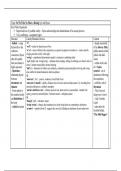
Regret and loss of youthful vitality – Byron acknowledges the diminishment of his sexual prowess
Very conflicting – acceptance/regret
Structure Literary/Dramatic Devices Context
- ballad – a song S1 - deeply remorseful
that dwells in the ‘we’ll’ – desire for shared sense of loss of his divorce 1816,
collective ‘so’ x2 – sense of defeat in the conjunction, yet general acceptance in medias res – used as adverb, public turned on him
conscience. Byron clinging onto the revelry of the night (affair with half-
‘roving’ – enjambment demonstrates speaker’s resistance to admitting defeat
takes this public sister)
‘night/ bright’ and ‘roving/loving’ – feminine rhyme endings, feeling of softening as it doesn’t end of a
form and makes it - written at the end
stress. Contrast monosyllabic rhymes that ping.
highly personal. ‘still’ x 2 – homonym of stillness yet continuity, contradicts present participles of loving and roving of a Venice
- Quatrains – also conflict the natural/unnatural, desire/acceptance carnival – air of
alternating rhyme S2 abstinence following
between ‘outwears’, ‘rest’ – passive, weakness, lexical field of rest the experience
tetrameter and ‘outwears it’s sheath’ – phallic, sibilance tries to be more universal than stanza 1 by switching from - celebrity: cult of
trimeter personal reflections to a soldierly metaphor Byronism
- Poem admits to ‘and love itself have rest.’ – abstract nouns of soul, heart and love is personified – imbued with - ‘Mad, bad and
the material reality agency, possessive personification. Terminal caesura – ambiguous pause. dangerous to know.’
and limitations of S3 – Lady Caroline
‘though’, ‘yet’ – reluctance/ regret
the body Lamb
‘loving/ roving’ - change, takes emphasis away from losing desire to committing to abstinence
- cyclical structure ‘no more’ – repetition from S1, suggests they once did, alluding an attachment to past endeavours. - taken after the
Scottish ballad,
‘The Jolly Beggar’
Key Points/Arguments
Regret and loss of youthful vitality – Byron acknowledges the diminishment of his sexual prowess
Very conflicting – acceptance/regret
Structure Literary/Dramatic Devices Context
- ballad – a song S1 - deeply remorseful
that dwells in the ‘we’ll’ – desire for shared sense of loss of his divorce 1816,
collective ‘so’ x2 – sense of defeat in the conjunction, yet general acceptance in medias res – used as adverb, public turned on him
conscience. Byron clinging onto the revelry of the night (affair with half-
‘roving’ – enjambment demonstrates speaker’s resistance to admitting defeat
takes this public sister)
‘night/ bright’ and ‘roving/loving’ – feminine rhyme endings, feeling of softening as it doesn’t end of a
form and makes it - written at the end
stress. Contrast monosyllabic rhymes that ping.
highly personal. ‘still’ x 2 – homonym of stillness yet continuity, contradicts present participles of loving and roving of a Venice
- Quatrains – also conflict the natural/unnatural, desire/acceptance carnival – air of
alternating rhyme S2 abstinence following
between ‘outwears’, ‘rest’ – passive, weakness, lexical field of rest the experience
tetrameter and ‘outwears it’s sheath’ – phallic, sibilance tries to be more universal than stanza 1 by switching from - celebrity: cult of
trimeter personal reflections to a soldierly metaphor Byronism
- Poem admits to ‘and love itself have rest.’ – abstract nouns of soul, heart and love is personified – imbued with - ‘Mad, bad and
the material reality agency, possessive personification. Terminal caesura – ambiguous pause. dangerous to know.’
and limitations of S3 – Lady Caroline
‘though’, ‘yet’ – reluctance/ regret
the body Lamb
‘loving/ roving’ - change, takes emphasis away from losing desire to committing to abstinence
- cyclical structure ‘no more’ – repetition from S1, suggests they once did, alluding an attachment to past endeavours. - taken after the
Scottish ballad,
‘The Jolly Beggar’