DNA is stored differently in eukaryotes vs. prokaryotes
- Eukaryotic DNA: Long, linear, associated with proteins called histones, tightly coiled into
chromosomes (DNA molecule + its associated proteins)
- Prokaryotic DNA: Short, circular, not associated with proteins/histones
Mitochondria and chloroplasts in eukaryotic cells have their own DNA
- Similar to prokaryotic DNA – short, circular, not associated with proteins/histones
Genes
- Sequence of DNA bases that codes for:
- The amino acid sequence of a polypeptide
- A functional RNA e.g. ribosomal RNA and tRNAs
- A gene occupies a fixed position, called a locus, on a particular DNA molecules
The nature of the genetic code
- Sequence of DNA triplets (or mRNA codons) codes for sequence of amino acids
- DNA triplet: sequence of 3 bases coding for specific amino acid
- e.g. UAU codes for tyrosine
- Universal
- The same specific DNA base triplets code for the same amino acids in all living organisms
- e.g. UAU codes for tyrosine in all organisms
- Non-overlapping
- Discrete, each base can only be used once and in only one triplet
- Degenerate
- The same amino acid can be coded for by more than one base triplet
- e.g. tyrosine can be coded for by UAU or UAC
In eukaryotes, much of the DNA doesn’t code for polypeptides
- Between genes…
- Non-coding multiple repeats (or Variable Number Tandem Repeats (VNTRs) in second
year)
- Within genes
- Only exons code for amino acid sequences, which are separated by one or more non-
coding sequences, called introns
,More important definitions
- Genome: the complete set of genes in a cell, including those in mitochondria and/or chloroplasts
- Proteome: The full range of proteins that a cell/genome is able to produce
- Alleles: different version (sequence of bases / triplets) of the same gene
- Homologous pair of chromosomes: same size chromosomes with same genes, but different
alleles
Protein synthesis overview
- 2 stages:
1. Transcription
- Production of mRNA from DNA
- Nucleus
2. Translation
- Production of polypeptides from the sequence of codons carried by mRNA
- Cytoplasm on ribosomes
Messenger RNA (mRNA)
- Made by transcription in the nucleus
- Acts as a template for translation in the cytoplasm
- Sequence of bases on RNA determines sequence of amino
acids in polypeptide chain
- Straight chain molecule
- Sequence of bases on RNA determined by sequence of
bases on DNA
- Triplet code = codon
- Chemically unstable
- So breaks down after a few days
Transfer RNA (tRNA)
- Carries an amino acid
- Amino acid binding site
- Anticodon = 3 bases
- Anticodon bases complementary to mRNA
codon
- Each tRNA specific to one amino acid, in relation to its
anticodon
- Single polynucleotide strand
- Folded – 3 hairpin loops = three-leafed clover
shape
- Held together by hydrogen bonds
, - Similarities
- Both single polynucleotide strand
- Differences
- mRNA single helix / straight, whereas tRNA folded into clover shape
- mRNA is a longer, variable length, whereas tRNA is shorter
- mRNA contains no paired bases or hydrogen bonds, whereas tRNA has some paired
bases and hydrogen bonds
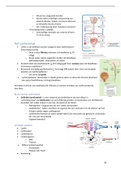
- In nucleus
- DNA double helix unzipped / unwound by
helicase
- Hydrogen bonds broken
- RNA nucleotides align next to their
complementary bases on the template
strand
- Forming (temporary) hydrogen
bonds
- Uracil replaces thymine in RNA
- RNA polymerase joins adjacent
nucleotides - condensation reaction
- Forming phosphodiester bonds
- When RNA polymerase reaches stop
codon, mRNA (prokaryotes) or pre-mRNA (eukaryotes) detaches from DNA
- mRNA leaves nucleus via nuclear pore
- Eukaryotic genes contain
- Exons – coding regions
- Introns – non-coding regions
- Whole gene transcribed to pre-mRNA
- Pre-mRNA contains introns &
exons
- Splicing
- Introns removed
- Exons spliced together
- Spliced together in different combos for different proteins
- Prokaryotic DNA doesn't contain introns
- mRNA produced directly from DNA
- No splicing
- Eukaryotic DNA: Long, linear, associated with proteins called histones, tightly coiled into
chromosomes (DNA molecule + its associated proteins)
- Prokaryotic DNA: Short, circular, not associated with proteins/histones
Mitochondria and chloroplasts in eukaryotic cells have their own DNA
- Similar to prokaryotic DNA – short, circular, not associated with proteins/histones
Genes
- Sequence of DNA bases that codes for:
- The amino acid sequence of a polypeptide
- A functional RNA e.g. ribosomal RNA and tRNAs
- A gene occupies a fixed position, called a locus, on a particular DNA molecules
The nature of the genetic code
- Sequence of DNA triplets (or mRNA codons) codes for sequence of amino acids
- DNA triplet: sequence of 3 bases coding for specific amino acid
- e.g. UAU codes for tyrosine
- Universal
- The same specific DNA base triplets code for the same amino acids in all living organisms
- e.g. UAU codes for tyrosine in all organisms
- Non-overlapping
- Discrete, each base can only be used once and in only one triplet
- Degenerate
- The same amino acid can be coded for by more than one base triplet
- e.g. tyrosine can be coded for by UAU or UAC
In eukaryotes, much of the DNA doesn’t code for polypeptides
- Between genes…
- Non-coding multiple repeats (or Variable Number Tandem Repeats (VNTRs) in second
year)
- Within genes
- Only exons code for amino acid sequences, which are separated by one or more non-
coding sequences, called introns
,More important definitions
- Genome: the complete set of genes in a cell, including those in mitochondria and/or chloroplasts
- Proteome: The full range of proteins that a cell/genome is able to produce
- Alleles: different version (sequence of bases / triplets) of the same gene
- Homologous pair of chromosomes: same size chromosomes with same genes, but different
alleles
Protein synthesis overview
- 2 stages:
1. Transcription
- Production of mRNA from DNA
- Nucleus
2. Translation
- Production of polypeptides from the sequence of codons carried by mRNA
- Cytoplasm on ribosomes
Messenger RNA (mRNA)
- Made by transcription in the nucleus
- Acts as a template for translation in the cytoplasm
- Sequence of bases on RNA determines sequence of amino
acids in polypeptide chain
- Straight chain molecule
- Sequence of bases on RNA determined by sequence of
bases on DNA
- Triplet code = codon
- Chemically unstable
- So breaks down after a few days
Transfer RNA (tRNA)
- Carries an amino acid
- Amino acid binding site
- Anticodon = 3 bases
- Anticodon bases complementary to mRNA
codon
- Each tRNA specific to one amino acid, in relation to its
anticodon
- Single polynucleotide strand
- Folded – 3 hairpin loops = three-leafed clover
shape
- Held together by hydrogen bonds
, - Similarities
- Both single polynucleotide strand
- Differences
- mRNA single helix / straight, whereas tRNA folded into clover shape
- mRNA is a longer, variable length, whereas tRNA is shorter
- mRNA contains no paired bases or hydrogen bonds, whereas tRNA has some paired
bases and hydrogen bonds
- In nucleus
- DNA double helix unzipped / unwound by
helicase
- Hydrogen bonds broken
- RNA nucleotides align next to their
complementary bases on the template
strand
- Forming (temporary) hydrogen
bonds
- Uracil replaces thymine in RNA
- RNA polymerase joins adjacent
nucleotides - condensation reaction
- Forming phosphodiester bonds
- When RNA polymerase reaches stop
codon, mRNA (prokaryotes) or pre-mRNA (eukaryotes) detaches from DNA
- mRNA leaves nucleus via nuclear pore
- Eukaryotic genes contain
- Exons – coding regions
- Introns – non-coding regions
- Whole gene transcribed to pre-mRNA
- Pre-mRNA contains introns &
exons
- Splicing
- Introns removed
- Exons spliced together
- Spliced together in different combos for different proteins
- Prokaryotic DNA doesn't contain introns
- mRNA produced directly from DNA
- No splicing