DNA
2.5 i) Know the basic structure of mononucleotides (deoxyribose or ribose linked to a phosphate and a base,
including thymine, uracil, cytosine, adenine or guanine) and the structures of DNA and RNA (polynucleotides
composed of mononucleotides linked through condensation reactions).
ii) Know how complementary base pairing and the hydrogen bonding between two complementary strands are
involved in the formation of the DNA double helix.
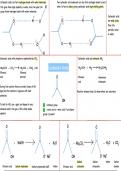
Mononucleotides
• Mononucleotides are the monomers that make up polynucleotides, such as
DNA or RNA.
• They are a type of biological molecule, consisting of:
o A pentose sugar (a sugar with 5 carbon atoms).
o A phosphate group.
o A nitrogen-containing base (including adenine, thymine, cytosine,
guanine and uracil).
Polynucleotides
• Mononucleotides link together by condensation reactions between the sugar of one nucleotide and the
phosphate of the next one.
• This produces a long chain of nucleotides; a polynucleotide.
• Both DNA and RNA form polynucleotides.
DNA
• DNA (deoxyribonucleic acid) is used to store genetic information.
• The pentose sugar in a DNA molecule is called deoxyribose.
• Each DNA molecule has the same sugar and a phosphate group, however, the base on
each mononucleotide can vary.
• The 4 possible bases are adenine (A), thymine (T), cytosine (C) and guanine (G).
• DNA is made up of 2 polynucleotide strands.
• Mostly found in the nucleus.
• Quantity is constant for all cells of a species (except for gametes).
RNA
• RNA (ribonucleic acid) is similar in structure to DNA. One of its main functions is to transfer genetic
information from the DNA to the ribosomes.
• The pentose sugar in a RNA molecule is called ribose.
• Similarly to DNA, each RNA mononucleotide has the same sugar, a phosphate group and 1 of 4 different
bases.
• In RNA, the 4 possible bases are cytosine (C), guanine (G), adenine (A) and uracil (U).
• RNA is made up of 1 polynucleotide strand – this makes it smaller in comparison to DNA, which allows it to
leave the nucleus through a nuclear pore.
• Manufactured in the nucleus but found throughout the cell.
• Quantity varies from cell to cell with level of metabolic activity.
10
,DNA
2.5 i) Know the basic structure of mononucleotides (deoxyribose or ribose linked to a phosphate and a base,
including thymine, uracil, cytosine, adenine or guanine) and the structures of DNA and RNA (polynucleotides
composed of mononucleotides linked through condensation reactions).
ii) Know how complementary base pairing and the hydrogen bonding between two complementary strands are
involved in the formation of the DNA double helix.
Complementary Base Pairing in DNA
• DNA is made up of 2 polynucleotide chains in a double helix structure.
• The strands join together by hydrogen bonding between the bases.
• However, the bases only pair in a certain way (complementary base pairing):
o Adenine only pairs with thymine (A-T).
o Cytosine only pairs with guanine (C-T).
• The arrangement of the 2 chains is described as being antiparallel.
Why Complementary Base Pairing Occurs
• Complementary base pairing occurs because of the structure of the bases and the bonding between them:
o Bases A and G have a 2-ring structure; they are known as purine bases.
o Bases C and T have a 1-ring structure; they are known as pyrimidine bases.
o The bases pair so that there are 3 rings between them – this makes the molecule a uniform width
along its whole length.
• The chemical structure of the bases dictates how many hydrogen bonds each one can form.
o A and T can form 2 hydrogen bonds.
o C and G can form 3 hydrogen bonds.
11
, Transcription
2.6 i) Understand the process of protein synthesis (transcription) including the role of RNA polymerase,
translation, messenger RNA, transfer RNA, ribosomes and the role of start and stop codons.
ii) Understand the roles of the DNA template (antisense) strand in transcription, codons on
messenger RNA and anticodons on transfer RNA.
1. RNA polymerase attaches to the DNA double helix at the beginning of a gene (start codon).
2. The DNA molecule unwinds by breaking the hydrogen bonds between the two strands, separating them.
3. The sequence of bases on the template strand is used to make an mRNA molecule with the same base
sequence as the coding strand.
4. RNA polymerase lines up free RNA mononucleotides alongside the template strand. Complementary base
pairing means that the mRNA strand is complementary to the DNA template strand.
5. In RNA nucleotides, the base uracil (U) replaces thymine (T).
6. RNA polymerase joins the RNA mononucleotides together and phosphodiester bonds form to produce an
mRNA molecule.
7. RNA polymerase moves along the DNA, separating the DNA strands and assembling the mRNA strands.
8. The hydrogen bonds between the unwound strands of DNA re-form once the RNA polymerase has passed by
and the strands wind back up into a double helix.
9. Once the RNA polymerase reaches a stop codon, it stops making mRNA and detaches from the DNA.
10. The mRNA moves out of the nucleus through a pore in the nuclear envelope and attaches to a ribosome in the
cytoplasm.
12
2.5 i) Know the basic structure of mononucleotides (deoxyribose or ribose linked to a phosphate and a base,
including thymine, uracil, cytosine, adenine or guanine) and the structures of DNA and RNA (polynucleotides
composed of mononucleotides linked through condensation reactions).
ii) Know how complementary base pairing and the hydrogen bonding between two complementary strands are
involved in the formation of the DNA double helix.
Mononucleotides
• Mononucleotides are the monomers that make up polynucleotides, such as
DNA or RNA.
• They are a type of biological molecule, consisting of:
o A pentose sugar (a sugar with 5 carbon atoms).
o A phosphate group.
o A nitrogen-containing base (including adenine, thymine, cytosine,
guanine and uracil).
Polynucleotides
• Mononucleotides link together by condensation reactions between the sugar of one nucleotide and the
phosphate of the next one.
• This produces a long chain of nucleotides; a polynucleotide.
• Both DNA and RNA form polynucleotides.
DNA
• DNA (deoxyribonucleic acid) is used to store genetic information.
• The pentose sugar in a DNA molecule is called deoxyribose.
• Each DNA molecule has the same sugar and a phosphate group, however, the base on
each mononucleotide can vary.
• The 4 possible bases are adenine (A), thymine (T), cytosine (C) and guanine (G).
• DNA is made up of 2 polynucleotide strands.
• Mostly found in the nucleus.
• Quantity is constant for all cells of a species (except for gametes).
RNA
• RNA (ribonucleic acid) is similar in structure to DNA. One of its main functions is to transfer genetic
information from the DNA to the ribosomes.
• The pentose sugar in a RNA molecule is called ribose.
• Similarly to DNA, each RNA mononucleotide has the same sugar, a phosphate group and 1 of 4 different
bases.
• In RNA, the 4 possible bases are cytosine (C), guanine (G), adenine (A) and uracil (U).
• RNA is made up of 1 polynucleotide strand – this makes it smaller in comparison to DNA, which allows it to
leave the nucleus through a nuclear pore.
• Manufactured in the nucleus but found throughout the cell.
• Quantity varies from cell to cell with level of metabolic activity.
10
,DNA
2.5 i) Know the basic structure of mononucleotides (deoxyribose or ribose linked to a phosphate and a base,
including thymine, uracil, cytosine, adenine or guanine) and the structures of DNA and RNA (polynucleotides
composed of mononucleotides linked through condensation reactions).
ii) Know how complementary base pairing and the hydrogen bonding between two complementary strands are
involved in the formation of the DNA double helix.
Complementary Base Pairing in DNA
• DNA is made up of 2 polynucleotide chains in a double helix structure.
• The strands join together by hydrogen bonding between the bases.
• However, the bases only pair in a certain way (complementary base pairing):
o Adenine only pairs with thymine (A-T).
o Cytosine only pairs with guanine (C-T).
• The arrangement of the 2 chains is described as being antiparallel.
Why Complementary Base Pairing Occurs
• Complementary base pairing occurs because of the structure of the bases and the bonding between them:
o Bases A and G have a 2-ring structure; they are known as purine bases.
o Bases C and T have a 1-ring structure; they are known as pyrimidine bases.
o The bases pair so that there are 3 rings between them – this makes the molecule a uniform width
along its whole length.
• The chemical structure of the bases dictates how many hydrogen bonds each one can form.
o A and T can form 2 hydrogen bonds.
o C and G can form 3 hydrogen bonds.
11
, Transcription
2.6 i) Understand the process of protein synthesis (transcription) including the role of RNA polymerase,
translation, messenger RNA, transfer RNA, ribosomes and the role of start and stop codons.
ii) Understand the roles of the DNA template (antisense) strand in transcription, codons on
messenger RNA and anticodons on transfer RNA.
1. RNA polymerase attaches to the DNA double helix at the beginning of a gene (start codon).
2. The DNA molecule unwinds by breaking the hydrogen bonds between the two strands, separating them.
3. The sequence of bases on the template strand is used to make an mRNA molecule with the same base
sequence as the coding strand.
4. RNA polymerase lines up free RNA mononucleotides alongside the template strand. Complementary base
pairing means that the mRNA strand is complementary to the DNA template strand.
5. In RNA nucleotides, the base uracil (U) replaces thymine (T).
6. RNA polymerase joins the RNA mononucleotides together and phosphodiester bonds form to produce an
mRNA molecule.
7. RNA polymerase moves along the DNA, separating the DNA strands and assembling the mRNA strands.
8. The hydrogen bonds between the unwound strands of DNA re-form once the RNA polymerase has passed by
and the strands wind back up into a double helix.
9. Once the RNA polymerase reaches a stop codon, it stops making mRNA and detaches from the DNA.
10. The mRNA moves out of the nucleus through a pore in the nuclear envelope and attaches to a ribosome in the
cytoplasm.
12