T. Clemens
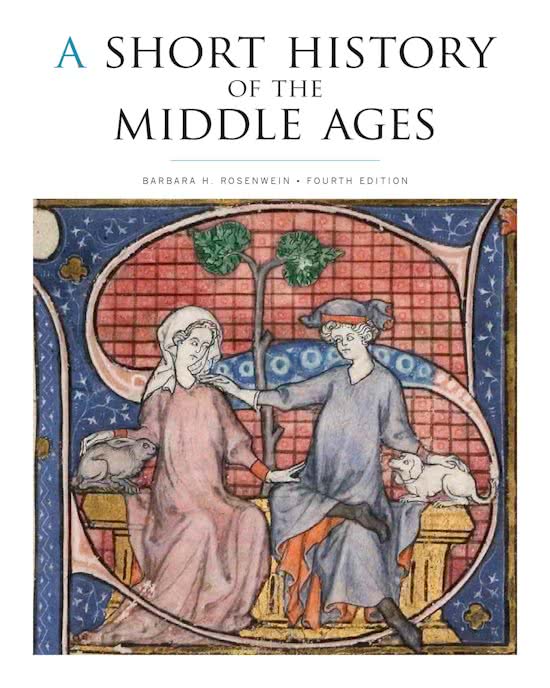
Summary of: A Short History of the Middle Ages, Barbara H. Rosenwein 4th
Edition
Ch. 1 Prelude: The Roman World Transformed (300-600 A.D.)
In the third century the Roman Empire wrapped around the Mediterranean sea, including
most of western Europe. All the regions not Italy were known as provinces.
The Empire was never livelier than just before its ‘fall’, though the Roman elite didn’t like the
changes, which led to them losing their leadership position in political, economical, religious,
military and cultural affairs, which was passing to the provinces.
- Emperor Diocletian (r284 – 305) installed the tetrarchy.
The Provincialisation of the Empire
During the 3rd century crisis the Roman Empire faced border problems on two sides,
political and economic problems:
- The Barbarians in the North
- The Persians in the East
To fend off these attackers the Roman Government responded with reforms that brought
more prominence to the provinces:
- Expanding of the army, including mobile forces
- Soldier built fortifications, ringing of cities and watchtowers and walls surrounding farms
- Soldiers were first drawn from within the Roman empire, but this source dwindled,
therefore Germanics were attracted, and eventually settled within the Roman empire: Land
in return for military service.
There were political problems as well during the 3rd century crisis, in the form of a
succession crisis, which saw over 20 emperors between 235-284 (soldier emperors) They
were choosen by their troops, and ruled mainly in the provinces. Constantinople and Milan
became centres of power, competing with Rome.
Economic problems, the need to supply and feed the army led to economic problems as the
demand for cash soared
- Currency was devaluated by using less silver to mint the coins, leading to inflation
- The state increased taxes, and in addition requisitioned goods and services in support of
the army.
Diocletian (284-305) brought the crisis under control (Tetrarchy) and Constantine (306-
337) ended it.
A New Religion
The empire of Constantine was meant to be the Roman empire restored, yet it couldn’t differ
more from the old Roman Empire.
The Jews of Palestine gave birth to new religious groups, one coalesced around Jesus. After
his death the Jew-turned-Christian Paul (d. 67 A.D.) became the main preacher for the new
brand of monotheism, and preached it not only in Palestine but well beyond.
The core belief was that men and women were saved –redeemed and accorded eternal life in
heaven- by their faith in Jesus Christ.
The Romans initially didn’t take notice, as long as the provincials added official roman gods
in their local religion they didn’t force their religion upon them.
Christianity had its attractions: Romans and other middle class city-dwellers could never
hope to become part of the educated upper crust. Christianity gave them dignity by
substituting “the elect” for the elite. They viewed religion as the key to an even “higher”
1
Summary of: A Short History of the Middle Ages, Barbara H. Rosenwein 4th
Edition
Ch. 1 Prelude: The Roman World Transformed (300-600 A.D.)
In the third century the Roman Empire wrapped around the Mediterranean sea, including
most of western Europe. All the regions not Italy were known as provinces.
The Empire was never livelier than just before its ‘fall’, though the Roman elite didn’t like the
changes, which led to them losing their leadership position in political, economical, religious,
military and cultural affairs, which was passing to the provinces.
- Emperor Diocletian (r284 – 305) installed the tetrarchy.
The Provincialisation of the Empire
During the 3rd century crisis the Roman Empire faced border problems on two sides,
political and economic problems:
- The Barbarians in the North
- The Persians in the East
To fend off these attackers the Roman Government responded with reforms that brought
more prominence to the provinces:
- Expanding of the army, including mobile forces
- Soldier built fortifications, ringing of cities and watchtowers and walls surrounding farms
- Soldiers were first drawn from within the Roman empire, but this source dwindled,
therefore Germanics were attracted, and eventually settled within the Roman empire: Land
in return for military service.
There were political problems as well during the 3rd century crisis, in the form of a
succession crisis, which saw over 20 emperors between 235-284 (soldier emperors) They
were choosen by their troops, and ruled mainly in the provinces. Constantinople and Milan
became centres of power, competing with Rome.
Economic problems, the need to supply and feed the army led to economic problems as the
demand for cash soared
- Currency was devaluated by using less silver to mint the coins, leading to inflation
- The state increased taxes, and in addition requisitioned goods and services in support of
the army.
Diocletian (284-305) brought the crisis under control (Tetrarchy) and Constantine (306-
337) ended it.
A New Religion
The empire of Constantine was meant to be the Roman empire restored, yet it couldn’t differ
more from the old Roman Empire.
The Jews of Palestine gave birth to new religious groups, one coalesced around Jesus. After
his death the Jew-turned-Christian Paul (d. 67 A.D.) became the main preacher for the new
brand of monotheism, and preached it not only in Palestine but well beyond.
The core belief was that men and women were saved –redeemed and accorded eternal life in
heaven- by their faith in Jesus Christ.
The Romans initially didn’t take notice, as long as the provincials added official roman gods
in their local religion they didn’t force their religion upon them.
Christianity had its attractions: Romans and other middle class city-dwellers could never
hope to become part of the educated upper crust. Christianity gave them dignity by
substituting “the elect” for the elite. They viewed religion as the key to an even “higher”
1