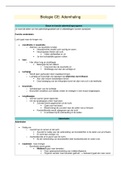
Samenvatting Intercultural Communication
Week 1
Ch. 1: What is meant by Intercultural Communication?
Culture = a historically shared system of symbolic resources through which we
make our world meaningful.
Culture is not equivalent to race, ethnicity or nationality even though we often use
these types of labels in discussing different cultures. -> 2 people may be culturally
distinct even though they may be said to belong to the same race or same country.
On the other hand, 2 people who are neither from the same country nor race may
be culturally similar (shared membership in religious or professional communities).
Culture is a system: systems enable us to do things and to constrain us from doing
things (what to eat, what not to eat/right or wrong).
Culture is historically shared: sharing allows members to communicate with each
other. A shared history gives people one answer to the question 'Who am I?' -> gives
us identity building blocks.
Culture consists symbolic resources: symbols help us to interact with each other
(symbols stand for something else) -> are open to differences of interpretation.
Symbols are arbitrary and conventional
Arbitrary: no connection between symbol and reality (rose/physical flower)
Conventional: agreed upon by a group of people
Culture makes our world meaningful: cultures are creation of human interaction, it is
something we learn, we are not born with. Human behaviour in a culture is often
shared and thus meaningful.
Culture = the system that encourages us to select out certain features of a
social scene and make sense of the scene by showing how its elements are
related and make judgements based on the perceived worth of the pattern
we discern.
Four-step process by Katriel and Philipsen in order to communicate:
1. One person must raise a topic that is important to himher
2. The other person must acknowledge the legitimacy of that topic
3. There must be a sharing of ideas on that topic
4. The people involved must end the conversation in a way that indicated they are
both good people
-> if any of these steps is not followed, there will be a perception of lack of
communication.
Article: Understanding Hybridity. Towards the Study of Spaces of Intercultural
Communication
People are more exposed to intercultural communication because of cheaper
airline tickets, many channels of television and tourism booms. As a result, people
Week 1
Ch. 1: What is meant by Intercultural Communication?
Culture = a historically shared system of symbolic resources through which we
make our world meaningful.
Culture is not equivalent to race, ethnicity or nationality even though we often use
these types of labels in discussing different cultures. -> 2 people may be culturally
distinct even though they may be said to belong to the same race or same country.
On the other hand, 2 people who are neither from the same country nor race may
be culturally similar (shared membership in religious or professional communities).
Culture is a system: systems enable us to do things and to constrain us from doing
things (what to eat, what not to eat/right or wrong).
Culture is historically shared: sharing allows members to communicate with each
other. A shared history gives people one answer to the question 'Who am I?' -> gives
us identity building blocks.
Culture consists symbolic resources: symbols help us to interact with each other
(symbols stand for something else) -> are open to differences of interpretation.
Symbols are arbitrary and conventional
Arbitrary: no connection between symbol and reality (rose/physical flower)
Conventional: agreed upon by a group of people
Culture makes our world meaningful: cultures are creation of human interaction, it is
something we learn, we are not born with. Human behaviour in a culture is often
shared and thus meaningful.
Culture = the system that encourages us to select out certain features of a
social scene and make sense of the scene by showing how its elements are
related and make judgements based on the perceived worth of the pattern
we discern.
Four-step process by Katriel and Philipsen in order to communicate:
1. One person must raise a topic that is important to himher
2. The other person must acknowledge the legitimacy of that topic
3. There must be a sharing of ideas on that topic
4. The people involved must end the conversation in a way that indicated they are
both good people
-> if any of these steps is not followed, there will be a perception of lack of
communication.
Article: Understanding Hybridity. Towards the Study of Spaces of Intercultural
Communication
People are more exposed to intercultural communication because of cheaper
airline tickets, many channels of television and tourism booms. As a result, people