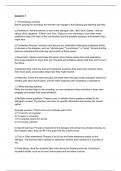
Question 1
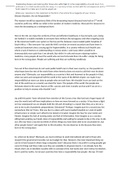
1.1 If I were part of the conversation, my opinion regarding the role of the home language in
the acquisition of a first additional language would be that the home language does indeed
play a vital role. Here is some evidence to support this viewpoint:
Cognitive Development: Research suggests that a strong foundation in the home language
positively impacts cognitive development, including memory, attention, and problem-solving
skills. These cognitive skills can transfer to the acquisition of an additional language.
Cultural Identity: The home language is closely tied to cultural identity and heritage. By
recognizing and valuing learners' home languages, we create a positive learning
environment that promotes self-esteem, cultural appreciation, and a sense of belonging.
This, in turn, can enhance motivation and engagement in learning an additional language.
Language Transfer: Language transfer occurs when learners apply existing knowledge from
their home language to the new language. Shared grammar structures, vocabulary, and
language patterns between the home language and the additional language can facilitate
language acquisition.
Metalinguistic Awareness: Proficiency in the home language develops metalinguistic
awareness, which is the ability to reflect on and analyze language structures and rules. This
awareness can be leveraged when learning an additional language, as learners can make
connections and compare linguistic features between the two languages.
Literacy Development: Developing strong literacy skills in the home language provides a
foundation for literacy development in the additional language. Phonological awareness,
reading comprehension strategies, and vocabulary knowledge acquired in the home
language can transfer to the acquisition of reading and writing skills in the additional
language.
Considering these points, it is evident that the home language has a significant influence on
the acquisition of a first additional language.
1.2 When teaching an additional language, incorporating comprehensible input, interaction,
and comprehensible output is crucial. The communicative approach to language teaching
emphasizes meaningful communication and real-life language use. Here's how input,
interaction, and output are linked to the communicative approach:
Comprehensible Input: Comprehensible input refers to language input that learners can
understand despite the presence of some unfamiliar elements. In the communicative
approach, teachers provide meaningful and context-rich input that is tailored to learners'
language proficiency levels. This can include spoken and written texts, audiovisual materials,
and authentic language use examples. Comprehensible input allows learners to develop
their language skills by understanding and internalizing linguistic structures, vocabulary, and
communication strategies.
, Interaction: Interaction plays a vital role in the communicative approach. Learners engage in
authentic and purposeful communication with their peers and the teacher. Through pair
work, group activities, role-plays, and discussions, learners practice using the language in
meaningful contexts. Interaction provides opportunities for negotiation of meaning,
clarification of ideas, and the development of fluency and communicative competence.
Comprehensible Output: Comprehensible output refers to learners' production of language
that is understood by others, even if it contains errors or is not grammatically perfect. The
communicative approach encourages learners to actively use the language to express their
ideas, opinions, and experiences. By producing language, learners consolidate their
knowledge, identify gaps, and receive feedback that supports further language development.
By incorporating comprehensible input, interaction, and encouraging comprehensible output,
the communicative approach fosters meaningful communication and enables learners to
develop their language skills in a communicative and authentic manner.
1.3 The Total Physical Response (TPR) is a teaching approach that emphasizes the
connection between language and physical movement. In TPR, learners respond physically
to language commands given by the teacher. Here's how I would use the TPR approach
when teaching English as a first additional language in the Intermediate Phase:
Clear and Simple Commands: I would give clear and simple commands in English,
accompanied by appropriate gestures.
For example, I might say, "Stand up," while demonstrating the action of standing up. This
helps learners associate the language with the corresponding physical movement.
Repetition and Reinforcement: I would repeat the commands multiple times, gradually
increasing the complexity and incorporating new vocabulary and structures. Repetition helps
reinforce understanding and retention of the language.
Gradual Progression: I would start with basic commands and gradually introduce more
complex instructions. This allows learners to build their language skills incrementally while
also developing their listening comprehension and ability to follow instructions.
Teacher-Led and Student-Led Activities: I would initially lead the TPR activities as the
teacher, providing clear demonstrations and giving commands. As learners become more
confident, I would encourage them to take turns giving commands to their peers, allowing for
a student-led component.
Integration with Vocabulary and Grammar: I would integrate TPR with vocabulary and
grammar lessons. For example, when teaching action verbs, I would use corresponding
gestures and commands, such as "Jump," "Run," or "Clap your hands." This helps reinforce
vocabulary and allows learners to experience the language in a kinesthetic and multisensory
manner.
Fun and Engaging Activities: I would design TPR activities that are enjoyable and interactive,
such as Simon Says, mimicking animal actions, or creating movement sequences based on
1.1 If I were part of the conversation, my opinion regarding the role of the home language in
the acquisition of a first additional language would be that the home language does indeed
play a vital role. Here is some evidence to support this viewpoint:
Cognitive Development: Research suggests that a strong foundation in the home language
positively impacts cognitive development, including memory, attention, and problem-solving
skills. These cognitive skills can transfer to the acquisition of an additional language.
Cultural Identity: The home language is closely tied to cultural identity and heritage. By
recognizing and valuing learners' home languages, we create a positive learning
environment that promotes self-esteem, cultural appreciation, and a sense of belonging.
This, in turn, can enhance motivation and engagement in learning an additional language.
Language Transfer: Language transfer occurs when learners apply existing knowledge from
their home language to the new language. Shared grammar structures, vocabulary, and
language patterns between the home language and the additional language can facilitate
language acquisition.
Metalinguistic Awareness: Proficiency in the home language develops metalinguistic
awareness, which is the ability to reflect on and analyze language structures and rules. This
awareness can be leveraged when learning an additional language, as learners can make
connections and compare linguistic features between the two languages.
Literacy Development: Developing strong literacy skills in the home language provides a
foundation for literacy development in the additional language. Phonological awareness,
reading comprehension strategies, and vocabulary knowledge acquired in the home
language can transfer to the acquisition of reading and writing skills in the additional
language.
Considering these points, it is evident that the home language has a significant influence on
the acquisition of a first additional language.
1.2 When teaching an additional language, incorporating comprehensible input, interaction,
and comprehensible output is crucial. The communicative approach to language teaching
emphasizes meaningful communication and real-life language use. Here's how input,
interaction, and output are linked to the communicative approach:
Comprehensible Input: Comprehensible input refers to language input that learners can
understand despite the presence of some unfamiliar elements. In the communicative
approach, teachers provide meaningful and context-rich input that is tailored to learners'
language proficiency levels. This can include spoken and written texts, audiovisual materials,
and authentic language use examples. Comprehensible input allows learners to develop
their language skills by understanding and internalizing linguistic structures, vocabulary, and
communication strategies.
, Interaction: Interaction plays a vital role in the communicative approach. Learners engage in
authentic and purposeful communication with their peers and the teacher. Through pair
work, group activities, role-plays, and discussions, learners practice using the language in
meaningful contexts. Interaction provides opportunities for negotiation of meaning,
clarification of ideas, and the development of fluency and communicative competence.
Comprehensible Output: Comprehensible output refers to learners' production of language
that is understood by others, even if it contains errors or is not grammatically perfect. The
communicative approach encourages learners to actively use the language to express their
ideas, opinions, and experiences. By producing language, learners consolidate their
knowledge, identify gaps, and receive feedback that supports further language development.
By incorporating comprehensible input, interaction, and encouraging comprehensible output,
the communicative approach fosters meaningful communication and enables learners to
develop their language skills in a communicative and authentic manner.
1.3 The Total Physical Response (TPR) is a teaching approach that emphasizes the
connection between language and physical movement. In TPR, learners respond physically
to language commands given by the teacher. Here's how I would use the TPR approach
when teaching English as a first additional language in the Intermediate Phase:
Clear and Simple Commands: I would give clear and simple commands in English,
accompanied by appropriate gestures.
For example, I might say, "Stand up," while demonstrating the action of standing up. This
helps learners associate the language with the corresponding physical movement.
Repetition and Reinforcement: I would repeat the commands multiple times, gradually
increasing the complexity and incorporating new vocabulary and structures. Repetition helps
reinforce understanding and retention of the language.
Gradual Progression: I would start with basic commands and gradually introduce more
complex instructions. This allows learners to build their language skills incrementally while
also developing their listening comprehension and ability to follow instructions.
Teacher-Led and Student-Led Activities: I would initially lead the TPR activities as the
teacher, providing clear demonstrations and giving commands. As learners become more
confident, I would encourage them to take turns giving commands to their peers, allowing for
a student-led component.
Integration with Vocabulary and Grammar: I would integrate TPR with vocabulary and
grammar lessons. For example, when teaching action verbs, I would use corresponding
gestures and commands, such as "Jump," "Run," or "Clap your hands." This helps reinforce
vocabulary and allows learners to experience the language in a kinesthetic and multisensory
manner.
Fun and Engaging Activities: I would design TPR activities that are enjoyable and interactive,
such as Simon Says, mimicking animal actions, or creating movement sequences based on