Summary: Economics, Ethics and the Market
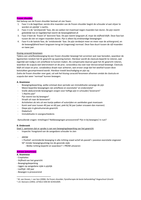
By Johan. J Graafland, summarized by Joshua Paas
Chapter 1. Introduction
What is economics?: it is the study of the economy. It is the science which studies human behaviour as a
relationship between ends and scarce means which have alternative uses. This rests of 4 axioms:
1. The ends of human beings are various.
2. Ends have different importance and are capable of being distinguished.
3. The time and means for achieving these ends are limited. Life is short and nature is niggardly.
4. The time and means are capable of alternative application for different ends.
Only if these four axioms are fulfilled, we have economic behaviour. For these reasons, economics is a
descriptive study.
What is ethics?: it is the study of morality. Morality concerns the standards that an individual or a group
has about what is right and wrong. These standards are imperative in nature and may imply moral duties.
The do not refer to what people actually do or how the world is, but rather what ought to be done or
ought to be. Ethics is therefore a normative study. Moral standards evaluate human behaviour in
categories of good or bad. One follows the prescriptive statements given by moral standards, or one
does not. Also, they overrule other, non-moral standards. Even if it is in our personal interest to cheat,
moral standards tell us that we should not do so. Even more, moral standards are impartial; they are
evaluated from a point of view that goes beyond the interests of a particular individual or group to a
universal standpoint in which everyone’s interests are impartially counted (universalizability). Moral
standards deal with issues that have serious consequences for the welfare of human beings.
Morality includes values, objects we believe are morally right or wrong, and norms, the kinds of
actions we believe are right or wrong. Examples of values are freedom, respect and justice. They can be
both intrinsic and extrinsic in nature. Norms on the other hand give an answer to the question: what
should we do? Don’t cheat, don’t steal, are examples of norms. In many circumstances, dilemmas can
arise if one has to choose between conflicting principles that seem to obligate a person to perform two
mutually exclusive actions. People must intuit as best they can which potential duty has the greater
weight in the case of two conflicting obligations. Several ethical theories have been developed to
objectify these dilemmas.
Emotivism: it is a doctrine that all evaluative judgments and more specifically all moral judgment is not
to be secured by any rational method. It gives a simple explanation for the plurality in values and norms.
However, it implies moral relativism. If we accept emotivism, we have no moral grounds to address
one’s responsibility. Moreover, if emotivism is widely believed to be true, ethics runs the risk of
becoming a manipulative instrument. If ethical statements are only expressions of personal feelings or
preferences, one cannot appeal to impersonal criteria, for there aren’t any.
By Johan. J Graafland, summarized by Joshua Paas
Chapter 1. Introduction
What is economics?: it is the study of the economy. It is the science which studies human behaviour as a
relationship between ends and scarce means which have alternative uses. This rests of 4 axioms:
1. The ends of human beings are various.
2. Ends have different importance and are capable of being distinguished.
3. The time and means for achieving these ends are limited. Life is short and nature is niggardly.
4. The time and means are capable of alternative application for different ends.
Only if these four axioms are fulfilled, we have economic behaviour. For these reasons, economics is a
descriptive study.
What is ethics?: it is the study of morality. Morality concerns the standards that an individual or a group
has about what is right and wrong. These standards are imperative in nature and may imply moral duties.
The do not refer to what people actually do or how the world is, but rather what ought to be done or
ought to be. Ethics is therefore a normative study. Moral standards evaluate human behaviour in
categories of good or bad. One follows the prescriptive statements given by moral standards, or one
does not. Also, they overrule other, non-moral standards. Even if it is in our personal interest to cheat,
moral standards tell us that we should not do so. Even more, moral standards are impartial; they are
evaluated from a point of view that goes beyond the interests of a particular individual or group to a
universal standpoint in which everyone’s interests are impartially counted (universalizability). Moral
standards deal with issues that have serious consequences for the welfare of human beings.
Morality includes values, objects we believe are morally right or wrong, and norms, the kinds of
actions we believe are right or wrong. Examples of values are freedom, respect and justice. They can be
both intrinsic and extrinsic in nature. Norms on the other hand give an answer to the question: what
should we do? Don’t cheat, don’t steal, are examples of norms. In many circumstances, dilemmas can
arise if one has to choose between conflicting principles that seem to obligate a person to perform two
mutually exclusive actions. People must intuit as best they can which potential duty has the greater
weight in the case of two conflicting obligations. Several ethical theories have been developed to
objectify these dilemmas.
Emotivism: it is a doctrine that all evaluative judgments and more specifically all moral judgment is not
to be secured by any rational method. It gives a simple explanation for the plurality in values and norms.
However, it implies moral relativism. If we accept emotivism, we have no moral grounds to address
one’s responsibility. Moreover, if emotivism is widely believed to be true, ethics runs the risk of
becoming a manipulative instrument. If ethical statements are only expressions of personal feelings or
preferences, one cannot appeal to impersonal criteria, for there aren’t any.