Week 1
Introduction to Historical Archaeology
North-West Europe in the Early Middle Ages
Byzantine Empire
I structured this summary by following the subchapters of ‘By Steppe, Desert and Ocean’ (each
marked like this). Subsequently I inserted information from the lectures and web lectures in a
chronological order. I coloured the different pieces of text, so the source is easily traceable for you.
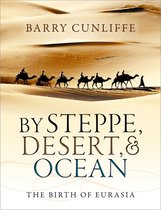
Black: Summaries from Cunliffe, B. (2017). By Steppe, Desert, and Ocean: The Birth of Eurasia. Oxford
University Press. All mandatory literature of week 1 is covered, except pages 406-409.
Blue: Added information from lecture 1
Orange: Added information from some (parts) of the web lectures week 1.
Literature of “Introduction to Medieval Europe 300-1500” is not included.
Introduction to Historical Archaeology
Historical archaeology: study of humankind and its material cultures
Material culture research based on written sources, pictorial evidence, or a combination of both.
This course: focus on Middle Ages Eurasia, with an accent on Europe. Europe interacted with Africa
and Asia.
When?
Most of the time: 500-1500 AD
Differs per region.
Start and end: scholars differ in opinion.
Blockmans & Hoppenbrouwers: 300-1500 AD
General major processes: political and socio-economic
- Fragmentation/decentralisation/regionalisation of political power
o Upheaval fall of Roman Empire
o Upcoming cultures: Franks, Saxons, Vikings
o Large-scale migrations from barbarian groups
- Christianisation and Islamisation
o Growing importance of churches and mosques
o Important religious and ideological superstructures
o Influence is obvious in the landscape
- Mediterranean to the North
o Byzantine obects exported to the north west: solidus, exotic objects of
glass, metal or precious stone
o New western states all had coins imitating the existing Roman and
Byzantine coins, e.g. Frankish silvercoin.
o Vikings from north to south
- Commercialisation of exchange, and development of market economy
o Monetisation
, o Production
o Merovingian period: global exchange system 6th century
- Urbanization
o More people live in towns. Historical records don’t reveal much → mapping
is necessary
o Much of our urban network (Europe) is the result of Medieval urbanism
o Archaeological research: design and planning of towns
- Social differentiation
o Peasants, warriors, aristocracy etc. Work, or pray, or fight.
- Transformation of the rural world
Sources
Wide variety of material culture:
Landscape
Cities, villages
Buildings, such as: palaces, castles, monestaries, churches
Graves, sculpture
Artefacts, such as: textiles, jewellery, metal work, glass vessels, pottery, coins, etc.
“Dark Ages”
Definite negative connotation.
Fransesco Petrach (14th century), humanist and poet: humanist and poet. Introduced concept of
“darkness” of the interim period between classical period and his own, the 14th century. To him the
“Dark Ages” were a period in which civilization was in decline.
Could also mean: a period for which we have no/few written sources.
Academic debate
For example: Start Middle Ages: end of civilization, or rise of Christianity?
Middle Ages:
Term often used for pragmatic reasons.
It has intrinsic merit: Millennium between 500-1500 contains enough distinctive processes of
historical change.
Used to set off against preceding period (Late Antiquity) and following period (Renaissance).
.
Fernand Braudel, French historian
Emphasizing large scale, long term social economic factors in historiography, and against classical
historiography.
Introduced Different temporal aspects of historical processes:
- History of singular events (histoire evenementiele)
- History of structures (conjucture)
- History of long-term development (longue duree)
These are labels of convenience, loosely defining cohesions in history (cultural, political, religious,
geographical)
Jacques Legoff: quote 2015 about periodization
- Judgement of value
- Artificial, provisional
Periods are a tool for historians and archaeologists:
- To organize facts
, - For easy reference
- To memorize
No ontological existence
Periods can become traditional and institutionalized.
Chronologies and timetables
- Not static
- Time boundaries: dependent on field of study / focus
Combination possible
Conclusions
- Boundaries of the Middle Ages are arbitrary.
- Many sub-periods and periods differ per region.
- Main subdivisions: Early (500-1000), Central (900/2000-1250), Late (1250-1500)
- Careful with using subjective terms (“Dark Ages”) or hard boundaries
- Useful to group social phenomena together, to recognize archaeological patterns.
Archaeology of North-west Europe in the Early Middle Ages (c. 400-1000 AD)
Archaeology of:
- Burials
- Settlements
- Trade and connectivity
Merovingian & Early Anglo-Saxon graves, 5th – 7th centuries
Inhumations, cremations
Frequent grave goods, incl. gold and precious objects
➔ Peasants had access to wealth
“Princely burials”:
- Childeric’s grave. Tournai, Belgium. c. 480
- Sutton Hoo. England. 7th century
(inside a ship! Movie “The Dig”
Settlements
- Rural settlement: Grubenhaus / sunken-featured building
Often auxiliary buildings, e.g. weaving shed
- Posthole building: Main dwellings: different types
Longhouse: humans and animals under 1 roof
Sometimes very hard to recognize archaeologically.
Example: Vorbasse (Denmark)
8 phases, 1st c BC – 11th c AD
Between 1st - 5th c AD: increase of 50 m
➔ Prosperity and stability, while Western Roman Empire was facing a crisis.
- Royal Palaces: Charlemagne’s Palace in Aachen: 8th – 9th centuries.
Stone-built, in a former Roman spa-town
Introduction to Historical Archaeology
North-West Europe in the Early Middle Ages
Byzantine Empire
I structured this summary by following the subchapters of ‘By Steppe, Desert and Ocean’ (each
marked like this). Subsequently I inserted information from the lectures and web lectures in a
chronological order. I coloured the different pieces of text, so the source is easily traceable for you.
Black: Summaries from Cunliffe, B. (2017). By Steppe, Desert, and Ocean: The Birth of Eurasia. Oxford
University Press. All mandatory literature of week 1 is covered, except pages 406-409.
Blue: Added information from lecture 1
Orange: Added information from some (parts) of the web lectures week 1.
Literature of “Introduction to Medieval Europe 300-1500” is not included.
Introduction to Historical Archaeology
Historical archaeology: study of humankind and its material cultures
Material culture research based on written sources, pictorial evidence, or a combination of both.
This course: focus on Middle Ages Eurasia, with an accent on Europe. Europe interacted with Africa
and Asia.
When?
Most of the time: 500-1500 AD
Differs per region.
Start and end: scholars differ in opinion.
Blockmans & Hoppenbrouwers: 300-1500 AD
General major processes: political and socio-economic
- Fragmentation/decentralisation/regionalisation of political power
o Upheaval fall of Roman Empire
o Upcoming cultures: Franks, Saxons, Vikings
o Large-scale migrations from barbarian groups
- Christianisation and Islamisation
o Growing importance of churches and mosques
o Important religious and ideological superstructures
o Influence is obvious in the landscape
- Mediterranean to the North
o Byzantine obects exported to the north west: solidus, exotic objects of
glass, metal or precious stone
o New western states all had coins imitating the existing Roman and
Byzantine coins, e.g. Frankish silvercoin.
o Vikings from north to south
- Commercialisation of exchange, and development of market economy
o Monetisation
, o Production
o Merovingian period: global exchange system 6th century
- Urbanization
o More people live in towns. Historical records don’t reveal much → mapping
is necessary
o Much of our urban network (Europe) is the result of Medieval urbanism
o Archaeological research: design and planning of towns
- Social differentiation
o Peasants, warriors, aristocracy etc. Work, or pray, or fight.
- Transformation of the rural world
Sources
Wide variety of material culture:
Landscape
Cities, villages
Buildings, such as: palaces, castles, monestaries, churches
Graves, sculpture
Artefacts, such as: textiles, jewellery, metal work, glass vessels, pottery, coins, etc.
“Dark Ages”
Definite negative connotation.
Fransesco Petrach (14th century), humanist and poet: humanist and poet. Introduced concept of
“darkness” of the interim period between classical period and his own, the 14th century. To him the
“Dark Ages” were a period in which civilization was in decline.
Could also mean: a period for which we have no/few written sources.
Academic debate
For example: Start Middle Ages: end of civilization, or rise of Christianity?
Middle Ages:
Term often used for pragmatic reasons.
It has intrinsic merit: Millennium between 500-1500 contains enough distinctive processes of
historical change.
Used to set off against preceding period (Late Antiquity) and following period (Renaissance).
.
Fernand Braudel, French historian
Emphasizing large scale, long term social economic factors in historiography, and against classical
historiography.
Introduced Different temporal aspects of historical processes:
- History of singular events (histoire evenementiele)
- History of structures (conjucture)
- History of long-term development (longue duree)
These are labels of convenience, loosely defining cohesions in history (cultural, political, religious,
geographical)
Jacques Legoff: quote 2015 about periodization
- Judgement of value
- Artificial, provisional
Periods are a tool for historians and archaeologists:
- To organize facts
, - For easy reference
- To memorize
No ontological existence
Periods can become traditional and institutionalized.
Chronologies and timetables
- Not static
- Time boundaries: dependent on field of study / focus
Combination possible
Conclusions
- Boundaries of the Middle Ages are arbitrary.
- Many sub-periods and periods differ per region.
- Main subdivisions: Early (500-1000), Central (900/2000-1250), Late (1250-1500)
- Careful with using subjective terms (“Dark Ages”) or hard boundaries
- Useful to group social phenomena together, to recognize archaeological patterns.
Archaeology of North-west Europe in the Early Middle Ages (c. 400-1000 AD)
Archaeology of:
- Burials
- Settlements
- Trade and connectivity
Merovingian & Early Anglo-Saxon graves, 5th – 7th centuries
Inhumations, cremations
Frequent grave goods, incl. gold and precious objects
➔ Peasants had access to wealth
“Princely burials”:
- Childeric’s grave. Tournai, Belgium. c. 480
- Sutton Hoo. England. 7th century
(inside a ship! Movie “The Dig”
Settlements
- Rural settlement: Grubenhaus / sunken-featured building
Often auxiliary buildings, e.g. weaving shed
- Posthole building: Main dwellings: different types
Longhouse: humans and animals under 1 roof
Sometimes very hard to recognize archaeologically.
Example: Vorbasse (Denmark)
8 phases, 1st c BC – 11th c AD
Between 1st - 5th c AD: increase of 50 m
➔ Prosperity and stability, while Western Roman Empire was facing a crisis.
- Royal Palaces: Charlemagne’s Palace in Aachen: 8th – 9th centuries.
Stone-built, in a former Roman spa-town