NCLEX: Chronic Illness and Older Adults | Questions with 100% Correct Answers | Verified | Latest Update
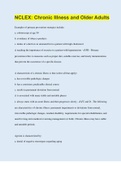
Examples of primary prevention strategies include: a. colonoscopy at age 50 b. avoidance of tobacco products c. intake of a diet low in saturated fat in a patient with high cholesterol d. teaching the importance of exercise to a patient with hypertension - B - Primary prevention refers to measures such as proper diet, suitable exercise, and timely immunizations that prevent the occurrence of a specific disease. A characteristic of a chronic illness is that (select all that apply): a. has reversible pathologic changes b. has a consistent, predictable clinical course c. results in permanent deviation from normal d. is associated with many stable and unstable phases e. always starts with an acute illness and then progresses slowly - C and D - The following are characteristics of chronic illness: permanent impairments or deviations from normal, irreversible pathologic changes, residual disability, requirements for special rehabilitation, and need for long-term medical or nursing management (or both). Chronic illness may have stable and unstable periods. Ageism is characterized by: a. denial of negative stereotypes regarding agingb. positive attitudes toward the elderly based on age c. negative attitudes toward the elderly based on age d. negative attitudes toward the elderly based on physical disability - C - Ageism is a negative attitude based on age.

Geschreven voor
- Instelling
- NCLEX
- Vak
- NCLEX
Documentinformatie
- Geüpload op
- 3 februari 2023
- Aantal pagina's
- 9
- Geschreven in
- 2022/2023
- Type
- Tentamen (uitwerkingen)
- Bevat
- Vragen en antwoorden
Onderwerpen
-
nclex chronic illness and older adults

Ook beschikbaar in voordeelbundel