Psychopathology
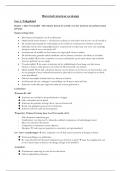
Diagnostic and classification issues
Criteria of abnormality
• Personal distress
• Deviance from cultural norms
• Statistical infrequency
• Impaired social functioning
Prominent theory of anormal psychology à Wakefield à the harmful dysfunction theory
Disorders are seen as harmful dysfunctions hence taking into account both scientific and
social values in the contexts of which the behavior takes place
Dysfunction refers to the failure of mechanism to perform a natural function for which it was
designed by evolution, whereas harmful refers to social norms
DSM-5
Mental disorder à clinically significant disturbance in “cognition, emotion regulation, or
behavior” that indicates a dysfunction in mental functioning, that is, usually associated with
significant distress or disability in work, relationships, or other areas of functioning
Important to note that the DSM has been outlined reflecting a medical model of
psychopathology in which each disorder is a categorically defined entity featuring a list of
specific symptoms.
Diagnostic labels are important in several ways. For starters, the presence or absence of a
label for a particular condition/experience has an impact on the attention it receives from
clinical psychologists. Moreover, for clients, the presence of a label and diagnostic criteria
may have beneficial consequences. For example, it could help identify and demystify an
otherwise nameless experience as well as getting access to treatment. Nevertheless, it is
important to notice that the consequences could also be harmful for example by carrying a
stigma, leading to stereotyping, or have effects on legal issues
DSM HISTORY
Around 400 BCE Hippocrates was the first to associated natural causes to psychopathology.
In the 19th century throughout Europe and the United States the first mental institutions were
established with the objective of treatment as opposed to imprisonment and abuse.
Furthermore, the first terminology started to be developed to organize patients in categories.
These included melancholia, dementia, and mania. Around 1900 E. Kraepelin started the use
of more specific labels such as “manic-depressive psychosis”, contributing in being
recognized as the founding father of the current diagnostic system. Finally, a great influence
on the outline of the current DSM was given by the military categorization system.
, Only contained three broad categories of disorders: psychoses,
neuroses, character disorders. The language reflected the
DSM-I à 1952 predominance of the psychoanalytic approach of the time.
DSM-II à 1968 Descriptions of clinical conditions were vague. The diagnostic
categories had limited generalizability and offered little practical
utility
DSM-III à 1980 Had a different approach to defining mental disorders
• Relied more on empirical data
• Used specific diagnostic criteria to define disorders
• Dropped allegiance to any particular theory of
therapy/psychopathology
• Introduced the multiaxial assessment system which allowed
to describe psychiatric problems on each of five distinct axes
o Axis 1: Episodic disorders
o Axis 2: Stable and long-lasting disorders
o Axis 3 & 4: Place to list medical conditions and
psychosocial/environmental problems
o Axis 5: Global Assessment Functioning which
provided an opportunity to place the client on a 100-
point continuum describing the overall level of
functioning
DSM-5 à 2013 shifted from using roman numbers to Arabic numbers as a way to
allow for more frequent and smaller changes (e.g., using
denomination 5.2) which indicated that the manual is ever-changing.
This is also demonstrated by the addition of the “Emerging Measures
and Models” section, which prompts researchers and clinicians to
consider conditions that have not yet been officially included but may
eventually be included in future editions.
Moreover, the multiaxial assessment system was officially dropped.
Finally, it introduced a number of new disorders:
• Premenstrual dysphoric disorder (PMDD)
• Disruptive mood dysregulation disorder (DMDD)
• Binge eating disorder (BED)
• Mild neurocognitive disorder (mild NCD)
• Somatic symptom disorder (SSD)
• Hoarding disorder
Revised disorders in DSM-5
• Bereavement for the death of a loved one excluded from major depressive episode
• Developmental disorders such as autistic disorder, Asperger’s and related ones were
combined into autism spectrum disorder to enhance its continuum nature
• ADHD à age from 7 to 12 y/o and number of symptoms required for adult diagnosis
was specified as 5 as opposed to 6 for kids
• Frequency of binge eating for bulimia nervosa was dropped from twice to once a
week. For anorexia nervosa the requirement that menstrual periods stop has been
, omitted and the definition of low body weight as been extended to take into account
age, sex, development, and physical health
• Substance abuse and substance dependence have been combined into substance use
disorder
• Mental retardation was renamed intellectual disability (intellectual developmental
disorder), while learning disabilities were renamed specific learning disorder
• OCD was removed from anxiety disorders and placed into its own category
• Mood disorders were split in two: depressive disorders and bipolar disorders
CRITICISM OF THE DSM-5
• Diagnostic overexpansion à diagnoses now cover too much of normal life running
the risk of labeling as mentally ill people who are not dysfunctional. Critics argue that
the expansion resulted in a list of mental disorders, including some experiences, that
should not be categorized as forms of mental illness
• Transparency of the revision process à too vague and selective about what was
shared
• Membership of the work groups à those who were invited to the revision proves
were, predominantly, researchers. Thus, possibly lacking full-time clinical practice
• Field trial problems à critics suggest that some of the reliability ratings that the field
tests that were conducted produced were too low
• Price à cost has almost tripled from the previous version
Strengths of the most recent versions of the DSM include their emphasis on empirical
research, the use of explicit diagnostic criteria, inter-clinician reliability, and atheoretical
language. It has also facilitated communication between researchers and clinicians by
providing common professional language
Another issue that the critics have addressed regarding more recent versions of the DSM is
that some cutoffs regarding symptoms are controversial in that they seem to be arbitrary.
Moreover, some terminology used to identify the severity of symptoms such as “significant
distress or impairment” seem too vague and do not explain what constitutes “significant
distress”. It has been argued that a result of this may be upcoding, that is, the falsely reporting
of a diagnosis in order to ensure that the client receives health insurance benefits.
Cultural issues have arisen as well. Although the DSM-5 has brought considerable advances
with regard to cultural issues, the newer versions still face shortcomings related to culture and
diversity. For starters, the recent versions were only a revision of older versions of the
manual that was predominantly written by white males. Critics have also questioned the
extent to which culturally diverse populations are included among the participants of
empirical studies, suggesting that the experiences of minorities may not be fully reflected.
Furthermore, critics have pointed out gender biases that the manual currently faces. This
includes some disorders being diagnosed more often in males than females and vice versa.
The argument is that the DSM has diagnostic categories that are biased toward pathologizing
one gender more than the other, especially those that represent an exaggeration of socially
encouraged gender roles. Studies have found that clinicians tend to define mental health
, differently for males and females and that clients of different gender with identical symptoms
often receive different diagnoses.
Finally, another point to take into account is that some nonempirical influences such as
politics and public opinions may have intruded on the process of determining diagnostic
categories.
Alternative directions in diagnosis and classification
Noncategorical approaches to psychopathology has received significant attention in recent
years and the dimensional approach has been proposed. According to this approach the issue
is where on the continuum the client’s symptoms fall, thus, avoiding a yes or no answer to the
question regarding a particular disorder.
Proponents of this approach suggest that we all share the same fundamental characteristics,
but we differ in the amounts that we each possess. What makes us abnormal is an unusually
high or low level of one or more of these characteristics.
A leading candidate to describe these fundamental characteristics is the five-factor model of
personality. That is, each of our personality contains the same five basic factors
(neuroticisms, extraversion, openness to experience, agreeableness, and conscientiousness).
The dimensional model offers interesting advantages, including allowing for a more thorough
description of clients and fore more detailed placement on a particular dimension.
Nevertheless, it is still argued that a categorical approach is unavoidable to more easily
understand and communicate about mental disorders.
Global burden of mental illness
Mental health à state of well-being in which every individual realizes their own potential,
can cope with the normal stresses of life, can work productively, and is able to make
contributions to their community
This state is disrupted in 1of every 3 individuals during their lifetime. Despite the incidence,
policy makers still fail to recognize the severity of the social, economic, and human impact
mental illness represents. Consequently, people with mental illness are often neglected and
faced with stigma as well as discrimination.
Mental disorders are a major drive of the growth of overall morbidity and disability globally.
Five types of mental illness are in the top 20 causes of global burden of disease
1. Major depression
2. Anxiety disorders
3. Schizophrenia
4. Dysthymia
5. Bipolar disorder
The article presents 5 reasons as to why burden of mental illness has been underestimated:
• Overlap between psychiatric and neurological disorders
If the syndrome had a clear neuroanatomical or neuro- physiological basis it was
considered neurological; if not, it was deemed psychiatric. For example, epilepsy,
typically considered a neurological disorder, includes conditions such as temporal-
Diagnostic and classification issues
Criteria of abnormality
• Personal distress
• Deviance from cultural norms
• Statistical infrequency
• Impaired social functioning
Prominent theory of anormal psychology à Wakefield à the harmful dysfunction theory
Disorders are seen as harmful dysfunctions hence taking into account both scientific and
social values in the contexts of which the behavior takes place
Dysfunction refers to the failure of mechanism to perform a natural function for which it was
designed by evolution, whereas harmful refers to social norms
DSM-5
Mental disorder à clinically significant disturbance in “cognition, emotion regulation, or
behavior” that indicates a dysfunction in mental functioning, that is, usually associated with
significant distress or disability in work, relationships, or other areas of functioning
Important to note that the DSM has been outlined reflecting a medical model of
psychopathology in which each disorder is a categorically defined entity featuring a list of
specific symptoms.
Diagnostic labels are important in several ways. For starters, the presence or absence of a
label for a particular condition/experience has an impact on the attention it receives from
clinical psychologists. Moreover, for clients, the presence of a label and diagnostic criteria
may have beneficial consequences. For example, it could help identify and demystify an
otherwise nameless experience as well as getting access to treatment. Nevertheless, it is
important to notice that the consequences could also be harmful for example by carrying a
stigma, leading to stereotyping, or have effects on legal issues
DSM HISTORY
Around 400 BCE Hippocrates was the first to associated natural causes to psychopathology.
In the 19th century throughout Europe and the United States the first mental institutions were
established with the objective of treatment as opposed to imprisonment and abuse.
Furthermore, the first terminology started to be developed to organize patients in categories.
These included melancholia, dementia, and mania. Around 1900 E. Kraepelin started the use
of more specific labels such as “manic-depressive psychosis”, contributing in being
recognized as the founding father of the current diagnostic system. Finally, a great influence
on the outline of the current DSM was given by the military categorization system.
, Only contained three broad categories of disorders: psychoses,
neuroses, character disorders. The language reflected the
DSM-I à 1952 predominance of the psychoanalytic approach of the time.
DSM-II à 1968 Descriptions of clinical conditions were vague. The diagnostic
categories had limited generalizability and offered little practical
utility
DSM-III à 1980 Had a different approach to defining mental disorders
• Relied more on empirical data
• Used specific diagnostic criteria to define disorders
• Dropped allegiance to any particular theory of
therapy/psychopathology
• Introduced the multiaxial assessment system which allowed
to describe psychiatric problems on each of five distinct axes
o Axis 1: Episodic disorders
o Axis 2: Stable and long-lasting disorders
o Axis 3 & 4: Place to list medical conditions and
psychosocial/environmental problems
o Axis 5: Global Assessment Functioning which
provided an opportunity to place the client on a 100-
point continuum describing the overall level of
functioning
DSM-5 à 2013 shifted from using roman numbers to Arabic numbers as a way to
allow for more frequent and smaller changes (e.g., using
denomination 5.2) which indicated that the manual is ever-changing.
This is also demonstrated by the addition of the “Emerging Measures
and Models” section, which prompts researchers and clinicians to
consider conditions that have not yet been officially included but may
eventually be included in future editions.
Moreover, the multiaxial assessment system was officially dropped.
Finally, it introduced a number of new disorders:
• Premenstrual dysphoric disorder (PMDD)
• Disruptive mood dysregulation disorder (DMDD)
• Binge eating disorder (BED)
• Mild neurocognitive disorder (mild NCD)
• Somatic symptom disorder (SSD)
• Hoarding disorder
Revised disorders in DSM-5
• Bereavement for the death of a loved one excluded from major depressive episode
• Developmental disorders such as autistic disorder, Asperger’s and related ones were
combined into autism spectrum disorder to enhance its continuum nature
• ADHD à age from 7 to 12 y/o and number of symptoms required for adult diagnosis
was specified as 5 as opposed to 6 for kids
• Frequency of binge eating for bulimia nervosa was dropped from twice to once a
week. For anorexia nervosa the requirement that menstrual periods stop has been
, omitted and the definition of low body weight as been extended to take into account
age, sex, development, and physical health
• Substance abuse and substance dependence have been combined into substance use
disorder
• Mental retardation was renamed intellectual disability (intellectual developmental
disorder), while learning disabilities were renamed specific learning disorder
• OCD was removed from anxiety disorders and placed into its own category
• Mood disorders were split in two: depressive disorders and bipolar disorders
CRITICISM OF THE DSM-5
• Diagnostic overexpansion à diagnoses now cover too much of normal life running
the risk of labeling as mentally ill people who are not dysfunctional. Critics argue that
the expansion resulted in a list of mental disorders, including some experiences, that
should not be categorized as forms of mental illness
• Transparency of the revision process à too vague and selective about what was
shared
• Membership of the work groups à those who were invited to the revision proves
were, predominantly, researchers. Thus, possibly lacking full-time clinical practice
• Field trial problems à critics suggest that some of the reliability ratings that the field
tests that were conducted produced were too low
• Price à cost has almost tripled from the previous version
Strengths of the most recent versions of the DSM include their emphasis on empirical
research, the use of explicit diagnostic criteria, inter-clinician reliability, and atheoretical
language. It has also facilitated communication between researchers and clinicians by
providing common professional language
Another issue that the critics have addressed regarding more recent versions of the DSM is
that some cutoffs regarding symptoms are controversial in that they seem to be arbitrary.
Moreover, some terminology used to identify the severity of symptoms such as “significant
distress or impairment” seem too vague and do not explain what constitutes “significant
distress”. It has been argued that a result of this may be upcoding, that is, the falsely reporting
of a diagnosis in order to ensure that the client receives health insurance benefits.
Cultural issues have arisen as well. Although the DSM-5 has brought considerable advances
with regard to cultural issues, the newer versions still face shortcomings related to culture and
diversity. For starters, the recent versions were only a revision of older versions of the
manual that was predominantly written by white males. Critics have also questioned the
extent to which culturally diverse populations are included among the participants of
empirical studies, suggesting that the experiences of minorities may not be fully reflected.
Furthermore, critics have pointed out gender biases that the manual currently faces. This
includes some disorders being diagnosed more often in males than females and vice versa.
The argument is that the DSM has diagnostic categories that are biased toward pathologizing
one gender more than the other, especially those that represent an exaggeration of socially
encouraged gender roles. Studies have found that clinicians tend to define mental health
, differently for males and females and that clients of different gender with identical symptoms
often receive different diagnoses.
Finally, another point to take into account is that some nonempirical influences such as
politics and public opinions may have intruded on the process of determining diagnostic
categories.
Alternative directions in diagnosis and classification
Noncategorical approaches to psychopathology has received significant attention in recent
years and the dimensional approach has been proposed. According to this approach the issue
is where on the continuum the client’s symptoms fall, thus, avoiding a yes or no answer to the
question regarding a particular disorder.
Proponents of this approach suggest that we all share the same fundamental characteristics,
but we differ in the amounts that we each possess. What makes us abnormal is an unusually
high or low level of one or more of these characteristics.
A leading candidate to describe these fundamental characteristics is the five-factor model of
personality. That is, each of our personality contains the same five basic factors
(neuroticisms, extraversion, openness to experience, agreeableness, and conscientiousness).
The dimensional model offers interesting advantages, including allowing for a more thorough
description of clients and fore more detailed placement on a particular dimension.
Nevertheless, it is still argued that a categorical approach is unavoidable to more easily
understand and communicate about mental disorders.
Global burden of mental illness
Mental health à state of well-being in which every individual realizes their own potential,
can cope with the normal stresses of life, can work productively, and is able to make
contributions to their community
This state is disrupted in 1of every 3 individuals during their lifetime. Despite the incidence,
policy makers still fail to recognize the severity of the social, economic, and human impact
mental illness represents. Consequently, people with mental illness are often neglected and
faced with stigma as well as discrimination.
Mental disorders are a major drive of the growth of overall morbidity and disability globally.
Five types of mental illness are in the top 20 causes of global burden of disease
1. Major depression
2. Anxiety disorders
3. Schizophrenia
4. Dysthymia
5. Bipolar disorder
The article presents 5 reasons as to why burden of mental illness has been underestimated:
• Overlap between psychiatric and neurological disorders
If the syndrome had a clear neuroanatomical or neuro- physiological basis it was
considered neurological; if not, it was deemed psychiatric. For example, epilepsy,
typically considered a neurological disorder, includes conditions such as temporal-