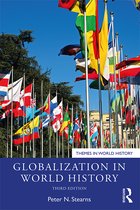
SAMENVATTING Globalization in World History – Peter Stearns
What is Globalisation?
- Long term process, not individuals
- Intensification of contacts, creation of networks and a combination of economical,
political technological and socialcultural forces
200 000BP: Homo sapiens-> homo sapiens sapiens
- PROBABLY survived because they had more sophisticated culture
- Hunting and Gathering
After dispersion, huge distances started to seperate large groups-> seperate “cultures”
- There were contacts, but difference in habit made “globalisation” difficult
10.000BC: Almost all area’s in the world inhabited
Agriculture
Made localizing tendencies worse
- World history began on a local level
Motivations for global interaction
1. Goods, food, and later scholary travel
2. Curiosity
3. Local conditions
Localism long predominated, but not without recurring and sometimes productive
tensions from people who saw benefits from wider horizons
CHAPTER 2: Emerging patterns of contact (1200BCE-1000CE)
Contact patterns 1200BCE-1000CE
Backdrop! NOT an early version of globalisation
- Before 1000CE, the challenge was to build networks WITHIN larger regions
Migrations
Early migration caused no durable pattern of back and forth
interaction-> people stayed in the place they moved to
Trade
Early back and forth interaction-> not sure when it started to get
beyond local interactions, because we don’t know for sure if goods
moved from place to place or if it was transported in one long
distance
Flint, precious stones
Primitive shipping-> asian societies
Developements overland trade: animal domestication
Developments interregional trade: river valley civilizations
using shipping
o Gold, ivory, slaves, spices
o In small hops
Literary subject:
1200BCE: Gilgamesh
, o -> showed interest
Limitations
- Neighbouring regions
- Interuptions
Invasions, migrants staying where they moved, merchants confusing people
to keep them out of trade
- Merchants were distrusted because
Not much urban area’s that did long distance trade
- Long distance initiatives didn’t lead anywhere
- BUT medium distance trade did lead to later patterns
Trade based contacts in early agricultiral society reflected an futhered thinking that
would later feed into globalisation
800BCE: classical civilisations
- Streched over large territory
- Internal networks
Han dynasty, Greek world etc.
Took priority away from interregional contacts: started seeing each other as inferior
BUT the bigger the empire got, the more regions were brought into regular contact
Tourism: “Seven wonders of the world”
Infrastructure
Persians: high ways, inn’s
->primarily for internal contacts, but also helped
interregional contacts
Chinese: high ways, postal system, canals
Romans: high ways
SILK ROAD (silk in exchange for horses and manufactured goods)
- New consumer taste
- East China connections
- Imbalance between China and other empires
Ocean routes (INDIAN OCEAN TRADE)
- India, south east asia etc.
- >1000BCE: ships and sailing methods improved
- Spices etc.
- Promoted by merchants and government (->Roman Empire)
Romans could put more goods in oceanic trade, but imbalance remained
Gold
Southeast Asians exported raw materials and manufactured items
Economic globalisation: BUT was it setting a foundation, or launching the process?
Limitations
1. Most energy went into regional things: construction of regional civilization, NOT
bridges between these civilizations
, 2. Focus on luxury products
3. Contact rested on trade: almost no other notable influences
4. Limited interregional knowledge: products moved far, people didn’t
5. Critics and skeptics
6. Fall classical empires
7. Religion made divisions
Religion
- Buddism, Islam and Christianity
- Spread was key development in postclassical history
1. Reflected established contacts
2. Encourage new contacts
a. Missionairies
b. As religions spread, people might feel welcome in different places
because of their shared religion
3. “religious map” set of new divisons
CONCLUSION
- Contact patterns between 1200BCE-1000CE were mainly regional, more seperation
than contact. Energy went more into regional things than crosscutting initiatives. The
spread of religion changed this in some ways, but also set up new barries. This phase
cannot yet be seen as the start of globalisation, but more as a phase in which some
foundations were laid out
Chapter 3: 1000CE as turning point
1000CE as turning point
First network that can bes een as globalisation
- Before 1000CE: society was regional, contacts weren’t that important
- After 1000CE: society increasingly responded to contacts
World historians: decisive shift; what happened after are “after shocks”
Proto/archaïc globalisation
There wasn’t one particular change/invention that marked the beginning, but multiple
developments
1. Wide ranging international travel
- New capacity to use existing routes
- Trade, exploration, entertainers etc.
2. Mapping: more accurate
3. Dependence on long distance trade
- Eurasia and Africa
- Not only elites were consuming foreign products
Ships found with products from different regions
4. Spread of religion
5. General growth of trade (with Arab leaders)
What is Globalisation?
- Long term process, not individuals
- Intensification of contacts, creation of networks and a combination of economical,
political technological and socialcultural forces
200 000BP: Homo sapiens-> homo sapiens sapiens
- PROBABLY survived because they had more sophisticated culture
- Hunting and Gathering
After dispersion, huge distances started to seperate large groups-> seperate “cultures”
- There were contacts, but difference in habit made “globalisation” difficult
10.000BC: Almost all area’s in the world inhabited
Agriculture
Made localizing tendencies worse
- World history began on a local level
Motivations for global interaction
1. Goods, food, and later scholary travel
2. Curiosity
3. Local conditions
Localism long predominated, but not without recurring and sometimes productive
tensions from people who saw benefits from wider horizons
CHAPTER 2: Emerging patterns of contact (1200BCE-1000CE)
Contact patterns 1200BCE-1000CE
Backdrop! NOT an early version of globalisation
- Before 1000CE, the challenge was to build networks WITHIN larger regions
Migrations
Early migration caused no durable pattern of back and forth
interaction-> people stayed in the place they moved to
Trade
Early back and forth interaction-> not sure when it started to get
beyond local interactions, because we don’t know for sure if goods
moved from place to place or if it was transported in one long
distance
Flint, precious stones
Primitive shipping-> asian societies
Developements overland trade: animal domestication
Developments interregional trade: river valley civilizations
using shipping
o Gold, ivory, slaves, spices
o In small hops
Literary subject:
1200BCE: Gilgamesh
, o -> showed interest
Limitations
- Neighbouring regions
- Interuptions
Invasions, migrants staying where they moved, merchants confusing people
to keep them out of trade
- Merchants were distrusted because
Not much urban area’s that did long distance trade
- Long distance initiatives didn’t lead anywhere
- BUT medium distance trade did lead to later patterns
Trade based contacts in early agricultiral society reflected an futhered thinking that
would later feed into globalisation
800BCE: classical civilisations
- Streched over large territory
- Internal networks
Han dynasty, Greek world etc.
Took priority away from interregional contacts: started seeing each other as inferior
BUT the bigger the empire got, the more regions were brought into regular contact
Tourism: “Seven wonders of the world”
Infrastructure
Persians: high ways, inn’s
->primarily for internal contacts, but also helped
interregional contacts
Chinese: high ways, postal system, canals
Romans: high ways
SILK ROAD (silk in exchange for horses and manufactured goods)
- New consumer taste
- East China connections
- Imbalance between China and other empires
Ocean routes (INDIAN OCEAN TRADE)
- India, south east asia etc.
- >1000BCE: ships and sailing methods improved
- Spices etc.
- Promoted by merchants and government (->Roman Empire)
Romans could put more goods in oceanic trade, but imbalance remained
Gold
Southeast Asians exported raw materials and manufactured items
Economic globalisation: BUT was it setting a foundation, or launching the process?
Limitations
1. Most energy went into regional things: construction of regional civilization, NOT
bridges between these civilizations
, 2. Focus on luxury products
3. Contact rested on trade: almost no other notable influences
4. Limited interregional knowledge: products moved far, people didn’t
5. Critics and skeptics
6. Fall classical empires
7. Religion made divisions
Religion
- Buddism, Islam and Christianity
- Spread was key development in postclassical history
1. Reflected established contacts
2. Encourage new contacts
a. Missionairies
b. As religions spread, people might feel welcome in different places
because of their shared religion
3. “religious map” set of new divisons
CONCLUSION
- Contact patterns between 1200BCE-1000CE were mainly regional, more seperation
than contact. Energy went more into regional things than crosscutting initiatives. The
spread of religion changed this in some ways, but also set up new barries. This phase
cannot yet be seen as the start of globalisation, but more as a phase in which some
foundations were laid out
Chapter 3: 1000CE as turning point
1000CE as turning point
First network that can bes een as globalisation
- Before 1000CE: society was regional, contacts weren’t that important
- After 1000CE: society increasingly responded to contacts
World historians: decisive shift; what happened after are “after shocks”
Proto/archaïc globalisation
There wasn’t one particular change/invention that marked the beginning, but multiple
developments
1. Wide ranging international travel
- New capacity to use existing routes
- Trade, exploration, entertainers etc.
2. Mapping: more accurate
3. Dependence on long distance trade
- Eurasia and Africa
- Not only elites were consuming foreign products
Ships found with products from different regions
4. Spread of religion
5. General growth of trade (with Arab leaders)