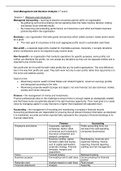
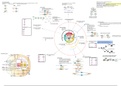
Cost Management and Decision Analysis (1st exam)
Session 1: Welcome and introduction
Managerial Accounting = learning to become a business partner within an organisation
o By gathering and communicating internal operating data that helps improve decision-making
and boosts future-oriented results
o By measuring and evaluating performance; so it becomes a joint effort and fosters business
partnership within the organisation
Business = any organisation that sells goods and services which satisfy society’s needs and/or wants
for a profit
• The main goal of a business is that such aggregate profits result in sustainable cash flows
Non-profit = a separate legal entity created for charitable purposes. Generally, it accepts donations
and/or contributions and is not required to pay income taxes
Non-for-profit = an organisation that conducts operations for specific purposes, earns profits, but
neither can distribute this profits, nor can accept any donations as they are not separate entities and is
required to pay income taxes
Non-profit and non-for-profit do both make profits like any for-profit-organisations. The only difference
lies in the way their profits are used. They both work not only to earn profits rather their top priority is to
first serve and address society
Goal of a firm:
• Maximising owners’ wealth (United States and United Kingdom): maximum earnings (profits)
and being paid according to the risks
• Maximising corporate wealth (Europe and Japan): not only financial, but also technical, market,
society and human resources
Finance = the management of money and investments
Finance professionals take on the challenge to ensure there is enough capital as strategically needed
and that these funds are optimally placed in the right business opportunity. Their main goal is to create
value by managing capital in a way that earns a higher-than-expected risk-adjusted return
Accounting = the management of recording and maintaining a company’s financial records
Accounting professionals are responsible for ensuring that all relevant financial information as disclosed
it is maintained, accurate and when reported fairly represents the company’s financial standings in its
financial statements
Finance Accounting
Employers and clients Corporates, operating Public accounting firms, tax
companies, banks (retail, services firms and operating
commercial and investment), companies (businesses)
insurance companies and
research companies
Corporate functions Business funding, capital Bookkeeping, revenues and
formation (debt and equity), expenses tracking, internal
cost of capital optimisation, reporting, financial reporting,
corporate strategy, financial auditing and risk management
forecasts, mergers and
acquisitions
Focus Forward looking Backward looking
Business purpose Formulating how to add value Communicating the financial
position
Rationale used Analysis based on cash flows Rules based
Financial statements Analysis Assembly
, Branches of Accounting:
• Financial Accounting = reporting to external users, usually through a set of financial
statements produced in accordance with GAAP. Financial accounting thus has a historical focus
• Managerial Accounting = reporting to internal users, generally by compiling internal data and
present it in such a way that enables sound decision making in the management of an
organisation. Examples: investment risk, strategic planning, budgeting and other decision-
making duties where boosting net income is sought
• Cost Accounting = supports both financial and management accounting. Information about the
cost of resources acquired and consumed by an organisation underlies effective reporting for
both internal and external users
Cost Management is at the heart of management accounting. Hotel Management and Facility
Management professionals face regularly cost management decisions. These require knowledge and
understanding of cost terminology, primarily when numerical calculations are involved in its application
Income Statement • Revenues are sales that have been earned
• I/S classifies operating costs generally in two
Nett Revenues
Less: Cost of Goods Sold (COGS)* groups: Cost of Good Sold and SG&A
= Gross Profit (Selling, General and Administrative
Less: Selling Expenses Expenses)
Administrative Expenses • COGS* = Beginning Inventory + Purchases –
Depreciation Expenses Ending Inventory, or simply BI + P – EI
= Operating Income (EBIT) • This approach is quite useful, as it enables
Less: Interest Expense tracking product costs through inventory on
= Income before taxes (EBT) the balance sheet
Less: Income Taxes • Interest Expense is the cost of borrowing
= Net Income
• Income Tax is generally applied to Income
before taxes
*COGS is generally used in the context of a product as a cost object (either through purchasing or
production). A similar term, COS or Cost of Sales (cost of revenues) is generally used in a non-
production/non-manufacturing setting. These terms are used interchangeably, simply as they are
clearly direct costs associated with a particular cost objective and therefore the selling of revenues
Cost = a measurement in monetary terms of the amount of resources used to achieve a specific
objective. The term by itself is not operational, rather we make it operational when attached a term to it
that defines its purpose examples: variable cost, fixed cost, incremental cost or acquisition cost
Cost object = anything (any entity) to which costs can be attached (accumulated)
Examples: products, product lines, customers, processes, employees and organisational business
units, such as rooms, F&B and facilities departments
o Direct costs = costs that can be associated with a particular cost object in an economically
feasible way > these costs can be traced to that object
Examples: for direct labour, hourly wages costs related to a product or service within a
department and all related material and labour when offering FM ancillary services
o Indirect costs (overheads) = costs that cannot be associated with a particular cost object in an
economically feasible way and thus must be allocated* to that object
Examples: mainly, all costs that are not direct material and labour > wages of supervisors,
janitorial staff and facility operating costs, such as utilities, real estate taxes and insurance
Session 1: Welcome and introduction
Managerial Accounting = learning to become a business partner within an organisation
o By gathering and communicating internal operating data that helps improve decision-making
and boosts future-oriented results
o By measuring and evaluating performance; so it becomes a joint effort and fosters business
partnership within the organisation
Business = any organisation that sells goods and services which satisfy society’s needs and/or wants
for a profit
• The main goal of a business is that such aggregate profits result in sustainable cash flows
Non-profit = a separate legal entity created for charitable purposes. Generally, it accepts donations
and/or contributions and is not required to pay income taxes
Non-for-profit = an organisation that conducts operations for specific purposes, earns profits, but
neither can distribute this profits, nor can accept any donations as they are not separate entities and is
required to pay income taxes
Non-profit and non-for-profit do both make profits like any for-profit-organisations. The only difference
lies in the way their profits are used. They both work not only to earn profits rather their top priority is to
first serve and address society
Goal of a firm:
• Maximising owners’ wealth (United States and United Kingdom): maximum earnings (profits)
and being paid according to the risks
• Maximising corporate wealth (Europe and Japan): not only financial, but also technical, market,
society and human resources
Finance = the management of money and investments
Finance professionals take on the challenge to ensure there is enough capital as strategically needed
and that these funds are optimally placed in the right business opportunity. Their main goal is to create
value by managing capital in a way that earns a higher-than-expected risk-adjusted return
Accounting = the management of recording and maintaining a company’s financial records
Accounting professionals are responsible for ensuring that all relevant financial information as disclosed
it is maintained, accurate and when reported fairly represents the company’s financial standings in its
financial statements
Finance Accounting
Employers and clients Corporates, operating Public accounting firms, tax
companies, banks (retail, services firms and operating
commercial and investment), companies (businesses)
insurance companies and
research companies
Corporate functions Business funding, capital Bookkeeping, revenues and
formation (debt and equity), expenses tracking, internal
cost of capital optimisation, reporting, financial reporting,
corporate strategy, financial auditing and risk management
forecasts, mergers and
acquisitions
Focus Forward looking Backward looking
Business purpose Formulating how to add value Communicating the financial
position
Rationale used Analysis based on cash flows Rules based
Financial statements Analysis Assembly
, Branches of Accounting:
• Financial Accounting = reporting to external users, usually through a set of financial
statements produced in accordance with GAAP. Financial accounting thus has a historical focus
• Managerial Accounting = reporting to internal users, generally by compiling internal data and
present it in such a way that enables sound decision making in the management of an
organisation. Examples: investment risk, strategic planning, budgeting and other decision-
making duties where boosting net income is sought
• Cost Accounting = supports both financial and management accounting. Information about the
cost of resources acquired and consumed by an organisation underlies effective reporting for
both internal and external users
Cost Management is at the heart of management accounting. Hotel Management and Facility
Management professionals face regularly cost management decisions. These require knowledge and
understanding of cost terminology, primarily when numerical calculations are involved in its application
Income Statement • Revenues are sales that have been earned
• I/S classifies operating costs generally in two
Nett Revenues
Less: Cost of Goods Sold (COGS)* groups: Cost of Good Sold and SG&A
= Gross Profit (Selling, General and Administrative
Less: Selling Expenses Expenses)
Administrative Expenses • COGS* = Beginning Inventory + Purchases –
Depreciation Expenses Ending Inventory, or simply BI + P – EI
= Operating Income (EBIT) • This approach is quite useful, as it enables
Less: Interest Expense tracking product costs through inventory on
= Income before taxes (EBT) the balance sheet
Less: Income Taxes • Interest Expense is the cost of borrowing
= Net Income
• Income Tax is generally applied to Income
before taxes
*COGS is generally used in the context of a product as a cost object (either through purchasing or
production). A similar term, COS or Cost of Sales (cost of revenues) is generally used in a non-
production/non-manufacturing setting. These terms are used interchangeably, simply as they are
clearly direct costs associated with a particular cost objective and therefore the selling of revenues
Cost = a measurement in monetary terms of the amount of resources used to achieve a specific
objective. The term by itself is not operational, rather we make it operational when attached a term to it
that defines its purpose examples: variable cost, fixed cost, incremental cost or acquisition cost
Cost object = anything (any entity) to which costs can be attached (accumulated)
Examples: products, product lines, customers, processes, employees and organisational business
units, such as rooms, F&B and facilities departments
o Direct costs = costs that can be associated with a particular cost object in an economically
feasible way > these costs can be traced to that object
Examples: for direct labour, hourly wages costs related to a product or service within a
department and all related material and labour when offering FM ancillary services
o Indirect costs (overheads) = costs that cannot be associated with a particular cost object in an
economically feasible way and thus must be allocated* to that object
Examples: mainly, all costs that are not direct material and labour > wages of supervisors,
janitorial staff and facility operating costs, such as utilities, real estate taxes and insurance