Chapter 1 The science and practice of abnormal child psychology
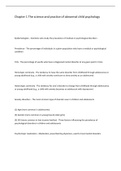
Epidemiologists - Scientists who study the prevalence of medical or psychological disorders Prevalence - The percentage of individuals in a given population who have a medical or psychological condition 15% - The percentage of youths who have a diagnosed mental disorder at any given point in time Homotypic continuity - The tendency to have the same disorder from childhood through adolescence or young adulthood (e.g., a child with anxiety continues to show anxiety as an adolescent) Heterotypic continuity - The tendency for one's disorder to change from childhood through adolescence or young adulthood (e.g., a child with anxiety becomes an adolescent with depression) Anxiety disorders - The most common type of disorder seen in children and adolescents (1) Age (more common in adolescents) (2) Gender (more common on young boys & older girls) (3) SES (more common in low-income families) - Three factors influencing the prevalence of psychological disorders in children and adolescents Psychotropic medication - Medication, prescribed by physicians, used to treat mental disorders 5.2% - Percent of children and adolescents in the general population who are currently prescribed a medication for a psychological disorder (1) Financial hardship (2) Limited access to high quality treatment (3) Too few experts in child mental health/therapy (4) Stigma - Four barriers to children's access to mental health services (Tolan & Dodge, 2005) Statistical devaincy - An approach to defining abnormality that is based on the infrequence of a behavior (Note: the approach is generally not used in DSM-5) (1) Psychological distress (2) Disability/impairment - Two ways of defining abnormality that are part of the DSM-5 definition of a mental disorder; usually people with mental disorders have at least one of these two features Cultural deviancy - An approach to defining abnormality that is based on behavior that is atypical for one's society or group (Note: the approach is generally not used in DSM-5) Behavioral rigidity - An approach to defining abnormality that is based on the tendency to engage in behaviors in situations where they are no longer adaptive (e.g., an abused child acts timid and scared around all adults, even loving parents and teachers; Note: the approach is generally not used in DSM-5)

Geschreven voor
- Instelling
- Chapter 1
- Vak
- Chapter 1
Documentinformatie
- Geüpload op
- 20 november 2022
- Aantal pagina's
- 7
- Geschreven in
- 2022/2023
- Type
- Tentamen (uitwerkingen)
- Bevat
- Antwoorden
Onderwerpen
-
epidemiologists scientists who study the prevalence of medical or psychological disorders prevalence the percentage of individuals in a given population who have a medical or psychological condit

Ook beschikbaar in voordeelbundel